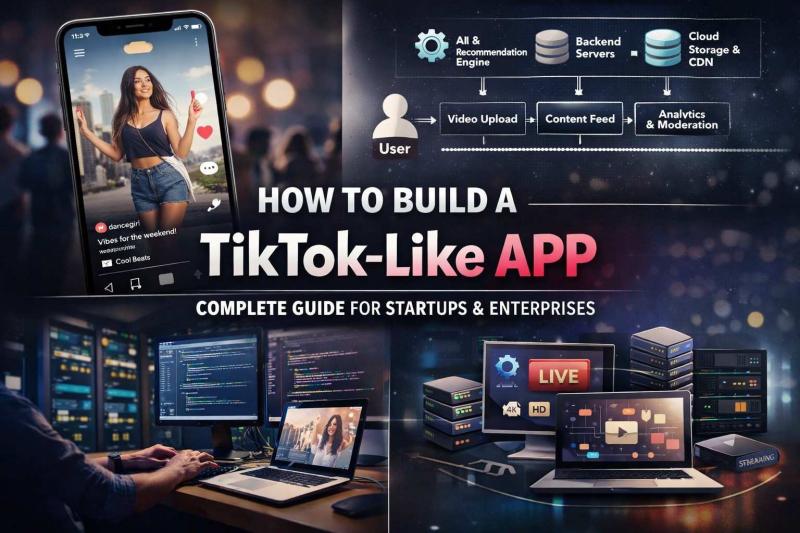
Short-form video platforms have transformed how people consume content, interact with creators, and discover brands. The success of platforms like TikTok has proven that immersive, algorithm-driven video experiences can scale rapidly across global markets.
For startups, this model opens doors to creator-led monetization, influencer economies, and community-driven growth. For enterprises, it creates opportunities to launch niche video platforms focused on education, fitness, ecommerce, or internal engagement. This growing demand has made TikTok-like app development a strategic investment rather than an experimental idea.
Unlike traditional social apps, short video platforms rely heavily on real-time processing, AI-driven recommendations, and scalable infrastructure. Understanding this foundation is critical before moving into product planning and execution.
Defining the Core Concept of a TikTok-Like App
A TikTok-style application is built around continuous video discovery. Users do not search for content actively; instead, the platform learns user preferences and delivers personalized videos in a vertical feed.
At its core, such an app combines three essential elements: content creation tools, intelligent content distribution, and high-performance video streaming. When planning tiktok clone app development, businesses must decide whether the platform targets a broad audience or a specific niche such as regional creators, professional learning, or brand storytelling.
Clear positioning helps define feature priorities, moderation rules, and monetization strategies early in the development cycle.
Essential Features Required to Build a TikTok-Style Platform
User Onboarding and Profile Management
A seamless onboarding experience improves retention from day one. Users should be able to sign up using email, phone numbers, or social logins. Profile customization, creator verification, follower management, and privacy controls form the backbone of long-term engagement.
Profiles should also support creator analytics, allowing users to track views, engagement, and audience growth.
Short Video Creation and Editing Tools
Video creation is the heart of the platform. Built-in recording tools must support trimming, speed control, filters, transitions, and audio overlays. A strong music and sound library enhances creativity and encourages trends.
For scalable tiktok clone solutions, video compression and background processing are essential to ensure fast uploads without compromising quality.
AI-Powered Content Feed and Discovery
The “For You” style feed is powered by machine learning models that analyze watch time, likes, comments, shares, and replays. This recommendation engine determines how quickly content goes viral.
During tiktok clone app development, investing in data pipelines and real-time analytics is crucial. The recommendation system must continuously adapt as user behavior evolves.
Social Interactions and Community Engagement
Likes, comments, shares, duets, and follows turn passive viewers into active participants. Community features such as hashtags, challenges, and trending topics help content spread organically.
Moderation tools, reporting systems, and automated content review ensure platform safety and compliance with regional regulations.
Notifications, Messaging, and Retention Mechanics
Push notifications alert users about new followers, trending videos, and creator activity. In-app messaging and comment replies strengthen creator-fan relationships.
Retention-focused features like streaks, creator rewards, and personalized reminders keep users coming back daily.
Technology Stack for TikTok-Like App Development
Frontend Development
The frontend must support smooth animations, gesture-based navigation, and instant video playback. Native development using Swift for iOS and Kotlin for Android ensures high performance, while frameworks like Flutter or React Native can speed up cross-platform delivery when optimized carefully.
Backend Infrastructure and APIs
The backend handles authentication, video uploads, feed generation, notifications, and analytics. Scalable microservices architecture is recommended to manage traffic spikes.
Cloud platforms such as AWS or Google Cloud provide auto-scaling, CDN integration, and storage solutions necessary for video-heavy platforms.
Video Streaming and Storage
Efficient video delivery requires adaptive bitrate streaming and global content distribution networks. Video processing pipelines should handle transcoding, thumbnail generation, and moderation checks in parallel.
This layer is often the most resource-intensive part of tiktok like app development and should be planned with long-term scalability in mind.
AI, Machine Learning, and Analytics
Machine learning models analyze user behavior and content performance. These insights drive recommendations, ad targeting, and creator monetization.
Enterprises building advanced tiktok clone platforms often integrate real-time analytics dashboards for content and business performance monitoring.
Step-by-Step Process to Build a TikTok-Like App
Market Research and Product Strategy
Begin with competitor analysis and user research to identify gaps in existing platforms. Define the target audience, core differentiators, and compliance requirements.
This stage shapes the scope and prevents feature overload in later phases.
UX/UI Design and Prototyping
Designers create intuitive interfaces focused on one-handed usage and immersive viewing. Prototypes help validate user flows before development begins.
Testing early designs reduces costly rework during engineering.
MVP Development and Core Feature Implementation
An MVP focuses on essential features such as video upload, feed, likes, and comments. This allows faster market entry and real-world feedback.
Startups often choose an MVP-first approach for tiktok clone app development to validate assumptions and attract early users or investors.
Testing, Security, and Performance Optimization
Load testing, security audits, and device compatibility checks ensure stability. Video apps must handle peak traffic without buffering or crashes.
Data privacy, encryption, and compliance with regional regulations are critical at this stage.
Launch, Scaling, and Continuous Improvement
Post-launch, user behavior data guides feature updates and algorithm tuning. Scaling infrastructure gradually helps control costs while maintaining performance.
Regular updates keep the platform competitive and aligned with user expectations.
Monetization Models for TikTok-Style Applications
Short video platforms support multiple revenue streams. Advertising remains the primary model, including in-feed ads and branded challenges. Creator monetization through virtual gifts, subscriptions, and revenue sharing builds loyalty.
Enterprises may also explore ecommerce integrations, allowing creators to promote products directly through videos. Choosing the right mix depends on the target audience and business goals behind the tiktok clone initiative.
Cost Factors Involved in TikTok Clone App Development
Development costs vary based on features, technology choices, and geographic location of the development team. An MVP with core features requires significantly less investment than a full-scale platform with advanced AI and monetization systems.
Key cost drivers include video infrastructure, machine learning development, UI complexity, and ongoing maintenance. Planning budgets realistically ensures sustainable growth rather than rushed launches.
Challenges and Best Practices to Ensure Long-Term Success
High infrastructure costs, content moderation, and user retention are common challenges. Investing in automation, scalable architecture, and clear community guidelines reduces operational risks.
Best practices include launching with a focused niche, partnering with early creators, and iterating features based on data rather than assumptions. These strategies improve the success rate of any tiktok like app development project.
Conclusion
Building a TikTok-style platform is a complex but rewarding endeavor for startups and enterprises alike. Success depends on combining engaging video experiences with intelligent recommendations and scalable technology. By following a structured development approach, investing in the right infrastructure, and aligning features with user behavior, businesses can create competitive platforms in the short video ecosystem. Thoughtful planning and execution turn a TikTok clone idea into a sustainable digital product.
Frequently Asked Questions
How long does it take to build a TikTok-like app?
The timeline depends on the scope and complexity. An MVP can take a few months, while a full-featured platform with advanced AI and monetization may require six to twelve months or more.
What is the difference between a TikTok clone and a custom TikTok-like app?
A tiktok clone typically replicates core features for faster launch, while a custom TikTok-like app focuses on unique branding, niche audiences, and tailored functionality.
Is AI mandatory for TikTok-style apps?
AI is not mandatory for initial launches, but it becomes essential for personalized feeds, content discovery, and long-term user engagement as the platform scales.
Can enterprises use TikTok-style apps for internal or niche use cases?
Yes, many enterprises adopt short video platforms for training, marketing, community building, or industry-specific creator ecosystems.
How scalable is tiktok clone app development for global audiences?
With cloud infrastructure, CDN integration, and modular architecture, TikTok-style apps can scale globally while maintaining performance and reliability.

Comments