Why Global Capability Centers Are Choosing Coworking Spaces Near World Trade Center Kharadi
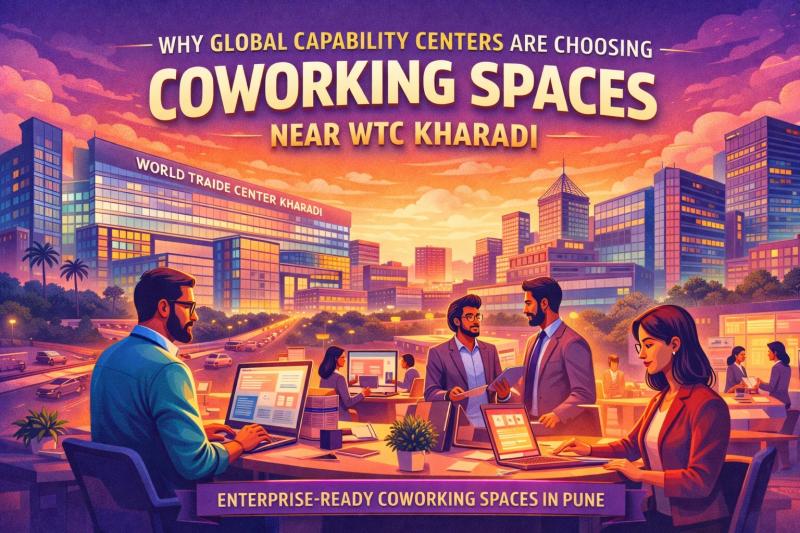
India’s Global Capability Center (GCC) landscape has matured rapidly over the last decade, moving far beyond cost arbitrage into innovation, product ownership, and global operations. As this shift accelerates, workspace strategy has emerged as a critical lever — and Pune, particularly the Kharadi corridor, has become a preferred destination for GCC expansion.
At the heart of this transformation lies World Trade Center (WTC) Kharadi, a commercial district that combines global-grade infrastructure with proximity to talent, connectivity, and a growing flexible office ecosystem.
Pune’s GCC Momentum Is Reshaping Office Demand
Pune has steadily positioned itself as one of India’s top GCC destinations alongside Bengaluru and Hyderabad. Factors such as a strong engineering talent base, lower operating costs, and stable infrastructure have made the city attractive for multinational firms setting up or expanding global delivery centers.
As GCCs evolve from captive back offices to strategic hubs handling engineering, analytics, product development, and global operations, their space requirements have changed significantly. Instead of committing to long-term, single-use offices from day one, many GCCs now prefer modular, scalable office environments that can support phased growth.
This is where flexible and coworking spaces around WTC Kharadi are playing a decisive role.
Why WTC Kharadi Has Emerged as a GCC Magnet
World Trade Center Kharadi is not just another commercial tower — it is part of a broader, globally networked World Trade Center ecosystem designed to support international businesses.
Key advantages include:
-
Strategic location with seamless access to Kharadi, Viman Nagar, Hadapsar, and Magarpatta
-
Proximity to EON IT Park, one of Pune’s largest technology clusters
-
Strong connectivity to Pune Airport and major residential catchments
-
An ecosystem that naturally attracts multinational firms, consultants, and service providers
For GCCs, this translates into faster go-to-market, easier talent acquisition, and improved global visibility.
Why GCCs Prefer Coworking Over Traditional Offices (Initially)
While large GCCs may eventually move into fully customized offices, the initial and mid-growth phases increasingly favor coworking and managed workspaces — especially in premium business districts like Kharadi.
Common drivers include:
1. Speed to Market
Coworking spaces allow GCCs to become operational within weeks rather than months. This is critical when global teams are under pressure to demonstrate value quickly.
2. Phased Team Expansion
Most GCCs start with smaller teams — pilots, centers of excellence, or extended engineering units — before scaling. Flexible offices allow headcount to grow without renegotiating leases or relocating.
3. Enterprise-Grade Infrastructure Without CapEx
Modern coworking operators around WTC Kharadi offer:
-
Secure IT infrastructure
-
Dedicated private cabins
-
Access control and compliance readiness
-
Meeting rooms and collaboration zones
This makes them suitable not just for startups, but for enterprise workloads as well.
The Rise of Enterprise-Ready Coworking in Kharadi
Unlike early coworking models that focused on freelancers and startups, today’s flexible workspace providers near WTC Kharadi are deliberately designing offerings for large teams and multinational occupiers.
These spaces are increasingly being used by:
-
Engineering and product teams
-
Global support and analytics units
-
Sales enablement and regional operations teams
As a result, demand for enterprise-ready coworking spaces in Pune has grown sharply, particularly in business districts that already house global firms and technology ecosystems.
Talent Access and Retention Play a Major Role
For GCCs, workspace decisions are as much about people strategy as real estate efficiency.
Kharadi’s location gives employers access to talent living across:
-
Viman Nagar
-
Kalyani Nagar
-
Hadapsar
-
Wagholi
-
Magarpatta
Flexible offices near WTC reduce commute friction, support hybrid work policies, and help GCCs position themselves as modern, employee-centric workplaces — a key advantage in competitive hiring markets.
Coworking as a Strategic, Not Temporary, Choice
An important shift is underway: coworking is no longer viewed as a “temporary stopgap” for GCCs.
Many organizations now:
-
Retain flexible offices for innovation teams
-
Use coworking for overflow or project-based teams
-
Combine managed offices with traditional leased campuses
This hybrid real estate strategy allows GCCs to remain agile while maintaining cost discipline and operational resilience.
Conclusion: WTC Kharadi Is Setting the Template for GCC Workspaces
The growing preference for coworking spaces near WTC Kharadi reflects a larger change in how global enterprises think about offices in India. Speed, flexibility, talent access, and enterprise readiness now matter as much as square footage and long-term leases.
As Pune continues to strengthen its position as a GCC hub, business districts like Kharadi — supported by premium infrastructure and a mature flexible workspace ecosystem — will remain at the center of this evolution.
For global organizations planning their next phase of growth, aligning with locations that offer scalable, enterprise-grade workspace options is fast becoming a strategic necessity, not just a real estate decision.
Post Your Ad Here
Comments