Building Healthcare Software That Works When Lives Depend on It
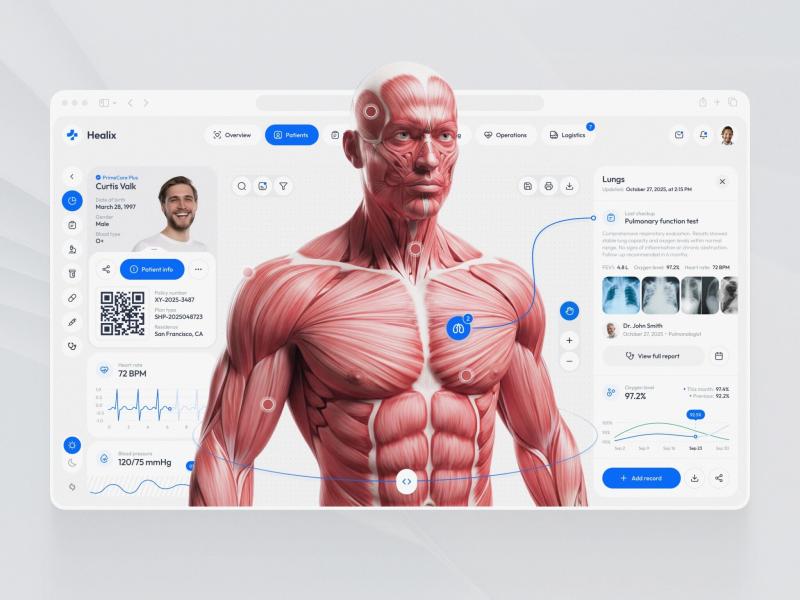
Healthcare software is where code stops being cute and starts being clinical. You are not just pushing pixels; you are touching diagnoses, prescriptions, and billing codes that someone in a hospital will rely on at 3 a.m. That changes how you design everything—from your domain model to your deployment scripts. It is also why teams with solid React development experience still get surprised the first time they plug into a hospital’s production environment.
Healthcare vs. Pharma: Same Data, Different Panic
There are really two overlapping worlds here.
Healthcare software is everything around delivering care: EHRs, telemedicine, patient portals, intake forms, remote monitoring, scheduling. It lives close to the patient and usually has humans staring at the UI all day. Latency, UX, and uptime hurt immediately when you get them wrong.
Pharma software sits further “upstream”: clinical trial systems, manufacturing and batch records, pharmacovigilance tools, supply-chain and serialization platforms. The UI might be boring, but the audit logs are sacred. Here, every click is evidence for an inspector six years from now.
They share the same hard problems: interoperability (HL7, FHIR, custom SOAP horrors), privacy (HIPAA, GDPR), and security (ransomware is not a theoretical risk). The overlap gets even tighter with personalized medicine, where trial data, EHR data, and manufacturing all have to line up without anyone fat-fingering a patient ID.
What You Actually Have to Build
Most first-time founders arrive with something like “Uber for meds” or “Netflix for chronic care.” Underneath the pitch deck, the shape of the system is usually simpler:
A way to identify the user securely (MFA, proper session handling, roles).
A reliable model of “things that happen” (prescriptions, refills, appointments, clinical events).
A workflow engine that moves those things forward (approve, ship, escalate, notify).
A reporting layer that keeps compliance and operations people from emailing CSVs around.
If you are building an online pharmacy, for example, your real product is not the mobile UI. It is the path from “doctor wrote a script” to “patient actually took the dose on time,” with dozens of failure modes: insurance denials, stockouts, address issues, drug interactions, expired licenses, and so on.
The trap is to overbuild the “app” and underbuild everything around it: integrations, monitoring, auditability, and support tools. In healthcare, those “boring” parts are the product.
Process: How Not to Ship a Prototype into a Regulator’s Inbox
A reasonable approach looks something like this:
Discovery with real users, not just stakeholders. Talk to nurses, pharmacists, coordinators, and front-desk staff. They are the ones clicking.
Define the smallest useful workflow. For a pharmacy product, that might be “login → see prescriptions → refill → pay → track delivery.” Everything else is an add-on.
Prototype flows, not screens. Can a 70-year-old with poor eyesight reorder in three steps? What happens when the insurer says no? Where do you explain that?
Build in short iterations with aggressive QA. Automated tests are not a luxury; they are how you prove you did not break controlled-substance logging last Tuesday.
Pilot carefully. Release to one clinic, one pharmacy, one trial site. Watch every error. Log everything. Fix the workflow before you scale it.
None of this is exotic. It is just normal engineering with the knobs turned all the way up on “consequences.” Languages and frameworks like Python backend development help because their ecosystems already have solid libraries for security, data processing, and integrations—but the discipline still has to come from the team.
Picking a Stack That Will Survive an Audit
Most successful projects converge on a relatively boring stack:
A mainstream frontend (React, Angular, maybe Flutter/React Native for mobile).
A backend that your team can debug at 2 a.m. (Node.js, Python, Java, .NET—pick competence over fashion).
PostgreSQL or another serious relational database for anything regulated.
Cloud infrastructure on AWS/Azure/GCP configured for encryption, IAM, backups, and logging from day one.
CI/CD that runs tests, scans dependencies, and refuses to deploy “this works on my machine” builds.
On top of that, you layer domain-specific plumbing: FHIR/HL7 adapters, e-prescribing gateways, device APIs for IoMT, DSCSA/serialization components for pharma logistics, and so on. If you design your system as a set of small, testable services with clear boundaries, you can swap out these integrations as partners, regulations, or countries change.
Cost, Time, and the “First Serious Release”
Most teams underestimate the gap between a demo and something a hospital CIO will sign.
A lean MVP that does one workflow well—say, basic refills with payment and tracking—can be done in 4–6 months with a small team. Once you add real integrations (EHR, e-prescribing, insurance), hard compliance work, and enterprise features like role-based access, audit reports, and SSO, you are looking at 8–14 months and a noticeably larger budget.
The rule of thumb: every time your product crosses a new regulatory or organizational boundary (new country, new health system, new regulator), expect to spend more time on analysis and validation than on writing new code.
If you accept that constraint and design for it, healthcare becomes a rewarding domain rather than a minefield. You get to ship software that does more than nudge conversion rates—it keeps people on their meds, catches errors early, and makes clinicians’ days slightly less chaotic. With the right architecture and partners experienced in healthcare software projects, that is a very achievable bar, not a miracle.

Comments