How Base Paper Quality Determines the Performance of Matte Coated Photo Paper
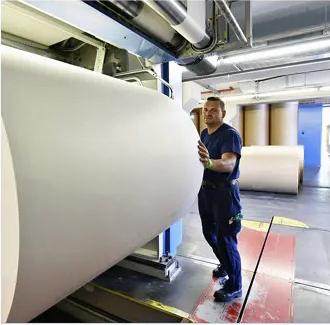
Photo paper is made of several layers, including the base paper, the pre-coat, the functional ink-receiving layer, the top protective layer, and the back coating.
Each layer has its own purpose. The pre-coat improves adhesion, the functional layer handles ink absorption and color reproduction, the top layer improves water resistance, and the back coat reduces curl.
But the layer that defines structural stability is always the base paper. It affects stiffness, feeding stability, coating adhesion, and final color performance.
Industry studies and supplier data show that problems such as low white point, uneven surface, unstable pH, or poor cleanliness will weaken coating performance. These findings align with ISO 534, ISO 2470, and TAPPI T 401.
So for importers and distributors of matte coated photo paper, base paper evaluation should always be the first step before reviewing coating performance.
As a professional coated photo paper manufacturer, KoalaPaper has compiled four key base paper technical attributes and provides procurement teams with verifiable metrics and practical testing methods.
Key Base Paper Attributes and How to Verify Them
Bulk and Stiffness: The foundation of handling and logistics
Bulk is one of the core physical indicators. It is measured according to ISO 534.
Higher bulk gives better hand-feel and more stable feeding. It also reduces the roll volume, which helps lower shipping costs.
Typical industry ranges:
-
150–190 g/m² matte base paper bulk: 1.1–1.4 cm³/g
-
Stiffness is tested following ISO 5629 and is crucial for smooth feeding
Many manufacturers use Indonesian base paper to balance feel, stability, and cost. This is a common practice in the photo paper industry.
Acid-Free Structure: The key to durability and yellowing resistance
The pH level of base paper is measured with TAPPI T 509 or ISO 6588.
Acidic paper yellows faster. Acid-free paper (pH 7–9) offers better long-term stability.
Suitable for:
-
Fine-art printing
-
Display graphics
-
Markets with high humidity
European base paper often has better fiber cleanliness, more stable pH, and higher long-term durability. It is widely used for high-end imaging applications.
Surface Uniformity: The main factor for coating stability
Surface quality can be measured with TAPPI T 555 or CCD surface scanning systems.
Minor defects such as fiber clumps, pits, or particles will become visible streaks or dots after coating.
Reliable suppliers usually keep surface-scan records for incoming base paper.
Whiteness and Cleanliness: The starting point of color performance
Whiteness is measured using ISO 2470 (CIE whiteness). Cleanliness follows TAPPI T 213.
Typical ranges:
-
Matte photo paper whiteness: CIE 90–100
-
Visible impurities: ≤ 3–5 dots/m² (varies by supplier)
Higher whiteness improves color vibrancy and clarity, especially in skin tones and light backgrounds.
Koala’s Base Paper Strategy: Multi-source, data-driven, and standard-based
To reduce quality risks for B2B customers, Koala uses a multi-origin base paper system.
Selection and inventory management follow traceable procedures and standard testing.
Indonesian vs. European base paper (based on data, not marketing)
| Attribute | Indonesian Base Paper | European Base Paper |
|---|---|---|
| Bulk | Higher | Medium-high and more stable |
| Whiteness | High | Higher and more consistent |
| Cleanliness | Stable | Excellent (fewer spots) |
| pH | Neutral or slightly alkaline | Consistently alkaline |
| Best for | General printing and wholesale | Fine-art and high-end imaging |
Most importers use a mixed-origin strategy.
This approach improves cost flexibility and reduces the risk of supply disruption.
Supply stability: Inventory control and verifiable production capacity
Koala maintains:
-
Multi-origin paper sourcing
-
Incoming base paper scanning
-
Material inventory for peak-season production
-
In-house coating lines (design capacity around 200 million m²/year)
Batch stability is recorded through:
-
Whiteness variation ranges (such as ±1–2 CIE)
-
Surface defect rates
-
pH history
-
Moisture level tests (TAPPI T 412)
These records can be shared before large orders to help customers evaluate stability.
Procurement Checklist with Verifiable Questions
Importers and distributors can use these questions during supplier evaluation.
Question 1: What is the base paper origin, grade, and testing standard?
Ask for:
-
Country of origin
-
Grade and classification
-
Testing standards (ISO 2470 / ISO 534 / TAPPI T 555)
Question 2: What are the exact parameters?
Request:
-
Bulk, whiteness, pH, cleanliness
-
Testing reports
-
Parameter ranges, not single values
Question 3: Are multiple base paper options available?
This helps you:
-
Reduce supply chain risks
-
Cover multiple price segments
-
Improve inventory planning
Question 4: Are batch-level QA records available?
Ask for:
-
Surface scan data
-
Whiteness variation
-
pH records
-
Moisture records
These signals show whether the supplier has a mature and stable QC system.
Action Guide: Choose Base Paper Based on Data and Application
Koala evaluates base paper using ISO and TAPPI standards and aligns material selection with each customer’s application.
We support China, Indonesia, and Europe paper origins and provide:
-
Base paper specification sheets
-
Testing standards
-
Batch data samples
-
Inventory and delivery plans
With the right base paper choice, you can improve print consistency, reduce return rates, and secure long-term supply stability.
If you are planning a new matte coated photo paper or looking to optimize your supply chain, our technical team can offer a data-backed solution.
Post Your Ad Here
Comments (1)
Chris І6
Allied Driving Instructors
If you are planning a new matte coated photo paper or looking to optimize your supply chain, our technical team can offer a data-backed solution.