Building Financial Software That Actually Works
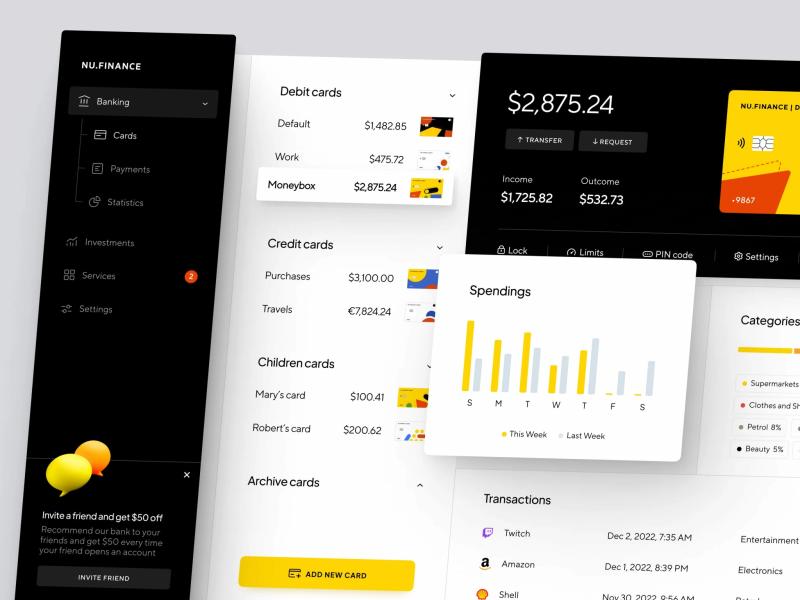
Software in finance is a paradox: it has to be airtight, compliant, and boringly reliable—but also fast, scalable, and pleasant to use. Most teams discover this the hard way: halfway through building their “innovative” platform, they’re suddenly buried under compliance checklists, broken APIs, and an architecture that wheezes under real traffic.
Before you even open Figma or write a line of code, there’s one question worth asking: what kind of software do you actually need—and who’s building it? There’s a world of difference between a prototype that barely runs and a platform engineered for scale. That’s where modern low-code development and flexible architectures come in—they let financial companies ship faster, iterate without rewriting, and stay compliant while doing it.
Why Custom Beats Off-the-Shelf
In the financial world, “good enough” software is rarely good enough. Off-the-shelf solutions often feel like renting a suit that almost fits. It’ll do for now, but you’ll regret it the moment your business scales or regulations shift.
Custom development gives you three things that templates can’t:
-
Control. You own the roadmap, not a vendor’s update cycle.
-
Security. Sensitive data isn’t shared across thousands of identical installations.
-
Scalability. Your product grows without hitting technical ceilings.
And let’s not forget user experience. People tolerate clunky internal tools, but not when it comes to their money. Clean interfaces and instant feedback loops aren’t luxuries—they’re trust builders. Financial apps that respect users’ time earn something more valuable than attention: retention.
The Tech That Keeps the Lights On
Fintech is no longer a niche. It’s an entire ecosystem of personal finance platforms, payment gateways, and lending apps that thrive on data transparency and automation. Modern fintech development uses a combination of Python, TypeScript, and cloud infrastructure (AWS or Azure) to process millions of transactions with minimal latency.
The real challenge isn’t building features; it’s building confidence. Every line of code must pass tests for security, compliance, and performance. Every integration—whether it’s a third-party API or a blockchain ledger—has to survive the scrutiny of regulators and auditors alike.
In this environment, “move fast and break things” is not a compliment. It’s a cautionary tale. You move carefully, test relentlessly, and automate where you can. Smart teams know this balance—speed without chaos, innovation without fragility.
Data, Compliance, and the Human Factor
Behind every sleek app interface is a mess of financial data pipelines, risk models, and reporting dashboards. What turns that mess into something useful is design—not just UX design, but architectural design. Systems that anticipate regulatory shifts (GDPR, PCI DSS, SOX) are cheaper to maintain than those patched in panic later.
Automation and AI also play a growing role. Machine learning can flag anomalies faster than any human auditor, and predictive analytics can turn static reports into living dashboards. But AI isn’t a magic wand; it’s a multiplier. If your core systems are solid, AI amplifies them. If they’re messy, it amplifies the mess.
Getting It Right From the Start
A successful financial platform isn’t born from a great idea—it’s born from alignment. Teams that plan well spend less time firefighting later. Discovery, roadmap, iterative design, rigorous testing, controlled deployment: that’s the rhythm of software that lasts.
And yes, it takes longer at the start. But those extra weeks upfront prevent the six-month disaster nobody budgets for. The end goal isn’t just launch day. It’s stability, compliance, and the confidence to scale without fear of collapse.
If your goal is to move fast without breaking everything—to build financial products that endure—look for partners who understand both finance and software on a structural level.
Because at the intersection of security, performance, and user empathy lies the real advantage. And that’s where thoughtful SaaS financial solutions are quietly redefining what “digital banking” really means.

Comments