Designing Trading Software That Survives the Real World
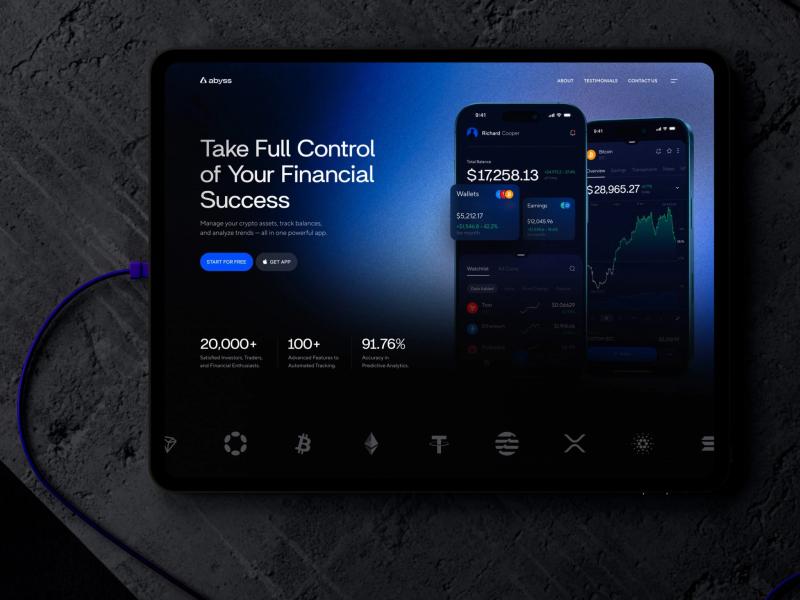
Every trading system starts with the same ambition: real-time data, zero latency, and flawless execution. And then reality intervenes—APIs choke, market feeds freeze, and your beautiful concurrency model collapses under live volume.
In fintech, you don’t build software to work. You build it to keep working when the market turns chaotic.
If you’ve ever launched a mission-critical system—a payment engine, an exchange integration, or even a Web3 protocol—you already know this tension. The line between elegance and reliability is razor-thin. (It’s something we see more and more as traditional finance meets Web3 development).
Step One: Define What “Fast” Really Means
When teams say they want “speed,” they usually mean two things that rarely coexist: execution speed and development speed. The best platforms balance both.
If your trades clear in 10 milliseconds but your deployments take 10 days, you’re still slow.
That’s why architecture choices matter more than visual polish. Start with the performance numbers that actually impact your users. Don’t optimize for theoretical benchmarks—optimize for the latency that changes outcomes.
A platform that’s consistently fast beats one that’s occasionally brilliant.
Step Two: Control the Flow—and the Chaos
Most failures in trading systems don’t happen because of one big bug. They happen because of thousands of small, untested assumptions. A missing edge case. A rounding error. A data feed that comes in two milliseconds late.
The answer isn’t more code—it’s less. Keep your pipeline observable. Make logging a first-class citizen. And treat every external dependency like it might fail at any moment, because one day it will.
This is where seasoned fintech development teams earn their keep. They’ve been through compliance reviews, latency audits, and those awful nights when the system “almost” scales. They know that clarity in architecture beats cleverness every single time.
Step Three: Treat Security as a User Experience
Security in trading isn’t about paranoia. It’s about communication.
Users need to feel safe without thinking about it. That means encryption, access control, and compliance—yes—but it also means predictable workflows and auditability built into the core of the product.
When done well, security fades into the background. It doesn’t slow trades or interrupt logic. It just works, silently, every time.
Step Four: Test Like It’s Already Broken
In trading, bugs are expensive. The kind you measure not in hours but in dollars.
A reliable system comes from testing not for success but for failure. Simulate load. Replay past market crashes. Drop data connections on purpose and see what happens.
When your system survives that, you’re close to ready. When it doesn’t, you’ve just saved yourself from a much more expensive lesson.
Step Five: Scale with Discipline
Success creates its own problems. As usage grows, latency creeps in, queues back up, and once-stable modules start showing cracks. Scaling isn’t about adding servers — it’s about keeping complexity under control.
Good teams treat scalability as part of the design, not an afterthought. They build feedback loops, watch metrics, and refactor before failure forces them to.
The Tools That Keep You Sane
At some point, you’ll realize the hardest part of trading software isn’t trading—it’s everything else: debugging, monitoring, deployment, and maintenance. That’s why so many teams still turn to pragmatic stacks that let them move fast and stay readable.
Reliable systems often grow on foundations like Python development—not because it’s flashy, but because it’s maintainable. Clean, testable code is the ultimate hedge against chaos.
Final Thought
Trading platforms don’t win because they have the most features. They win because they hold up when everything else is falling apart.
If you design for trust first, speed follows.
And in markets that never stop moving, trust—in your code, your data, and your process—is the only real competitive advantage left.

Comments