The Dry Mix Advantage: What Drives Concrete Plant Choice in Australia's Concrete Market
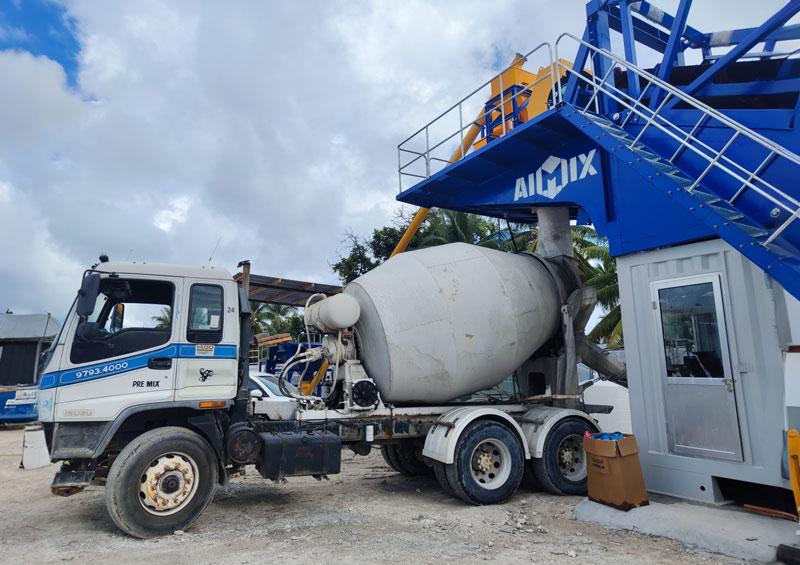
Australia's concrete industry is witnessing a paradigm shift as dry mix plants gain unprecedented traction across construction projects from Perth's suburbs to Queensland's coastal developments. This transition stems from a confluence of environmental regulations, logistical challenges, and evolving project requirements that favor the inherent flexibility of dry mix systems. Unlike traditional wet mix plants that dominate urban areas, dry mix facilities offer distinct advantages in Australia's unique market conditions where vast distances and extreme climates test the limits of conventional concrete delivery.
The operational superiority of dry mix technology becomes particularly evident when examining Australia's diverse geography. From the mineral-rich Pilbara region to Tasmania's temperate zones, dry mix concrete plant demonstrates remarkable adaptability to local material availability and weather patterns. Their ability to store raw materials separately until the final mixing stage solves critical shelf-life issues that plague pre-mixed concrete in remote locations, while simultaneously reducing water consumption—a crucial factor in drought-prone regions.
Logistical Superiority in Australia's Vast Landscape
Extended Shelf Life for Remote Projects
Dry mix concrete's delayed activation capability revolutionizes supply chains for Australia's mining and infrastructure sectors. Where wet mix concrete might begin setting during 12-hour truck journeys to Outback sites, dry components can be transported thousands of kilometers and mixed on-demand. This eliminates the costly practice of establishing temporary batching plants at remote locations—a game-changer for projects like the Snowy Hydro 2.0 expansion where concrete must reach difficult alpine terrain.

Moisture Control in Tropical Zones
Northern Australia's humidity presents unique challenges that dry mix plants overcome through climate-controlled silos. These specialized storage systems maintain precise moisture levels in cement and additives, preventing the premature clumping that compromises mix integrity in Darwin's wet season. The result is consistent quality regardless of monsoon conditions—something wet mix plants struggle to achieve without expensive dehumidification systems.
Environmental Compliance and Sustainability
Reduced Water Dependency
With water scarcity affecting nearly 60% of Australia's landmass, dry mix concrete plant for sale offer a responsible alternative to water-intensive traditional methods. Their precise metering systems can adjust water content down to 0.1% accuracy, ensuring optimal hydration without waste. This precision becomes invaluable in regions like South Australia where concrete production must comply with strict water conservation mandates while maintaining structural grade standards.
Lower Carbon Footprint Operations
The modular nature of dry mix plants allows for strategic placement near material sources, dramatically cutting transport emissions. A Western Australian gold mine recently documented 38% lower CO2 emissions by sourcing local aggregates and fly ash for their on-site dry mix operation instead of importing pre-mixed concrete. When combined with solar-powered mixing systems—now commonplace in Australian dry mix plants—the carbon savings become even more substantial.

Technological Advancements Driving Adoption
Automated Quality Control Systems
Modern Australian dry mix facilities employ laser particle analyzers that continuously monitor aggregate gradation, automatically adjusting mix designs to maintain specification compliance. This real-time optimization surpasses the capabilities of most wet mix plants, particularly valuable when working with variable local materials like crushed laterite in Northern Queensland or recycled concrete aggregates in urban renewal projects.
Mobile Batching Innovations
Australia's leading equipment manufacturers have developed trailer-mounted dry mix systems that bring industrial-grade concrete production to temporary sites. These compact batching units contain all the precision of stationary batching plants while occupying less space than a standard shipping container—perfect for inner-city infill developments where space premiums exceed material costs. Sydney's Barangaroo project utilized such systems to maintain continuous pours despite stringent CBD access restrictions.
Integration with Digital Construction
The dry mix process naturally aligns with Australia's push toward Building Information Modeling (BIM). Material data from each batch can be digitally tagged to specific structural elements, creating an auditable quality trail from plant to placement. This traceability satisfies the stringent documentation requirements of projects funded by the National Infrastructure Pipeline while providing contractors with unprecedented material performance analytics.

Post Your Ad Here