Louis Vuitton China stores have closed nearly 20% of
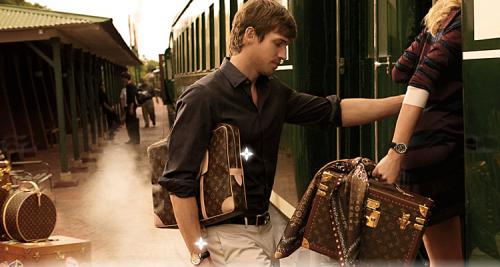 LV and other luxury goods stores in the country is now "closed shop tide" Why is there such a situation? Do people have the luxury not love it?
End of last year, Louis Vuitton has gradually closed in Guangzhou, Harbin, Urumqi, Shanghai, Taiyuan, Tianjin, Suzhou 7 brand stores. LVMH latest results, the Group announced the slow rate of expansion in mainland China and Hong Kong and close unreasonable stores, which, LV store in China years ago shut down nearly 20% this year.
Why would close shop in China it? LV side said, it is due to the expiration of the lease as well as some shops mismanagement. Industry analysis, the direct cause of the closed shop is a continuous decline in its performance over the past few years. LVMH Group recently released performance report shows that three quarters of the Group's overall sales of 9.138 billion euros. Although LV leather fashion brand based unit achieved € 3.106 billion revenues, but the real sector in the first three quarters of revenue growth from the same period last year plummeted 16% 1%, the worst performance for eight years, leading to an increase in real income LVMH Group from 18% last year fell 4%.
Poor performance in recent years, so that LV since last year to adjust the layout of stores in China: Stop continues to expand in China second and third tier cities, stores have launched an integrated strategy in the Chinese market, the strategy includes close Chinese Hong Kong, Mainland second and third tier city stores, bigger line city stores or stores in first-tier cities will be transferred to the core business district.
A little attention can be found not only LV, many luxury brand's flagship store in the country shut down.
Starting in 2013, Patek Philippe, HUGOBOSS, Boucheron, D & G, even settled nearly 10 years GiorgioArmani flagship store are quietly withdrew from the Shanghai Bund. 2014, HUGOBOSS closed seven stores in China, Zegna closed 6, Burberry closed four. Dior (ChristianDior) also in the Guangzhou market Withdraw. Prada greatly reduced the number of stores is three percent. According to RET Rui Yide Chinese commercial real estate research center statistics, last year, Louis Vuitton, Gucci and other luxury brands totaled 11 large closed shop 34, only 14 new stores numbers.
2015, 83% of luxury brands in China in various forms closed shop, experts predict this year will be 95% of the luxury brand select a strategic initiative closed shop. The reason behind this is not the people are no longer keen to buy luxury goods, but they do not buy the major stores.
Electricity suppliers, purchasing, travel purchase to snatch the market is well known that the same goods, the domestic price than the store lot more expensive abroad. Since the luxury market has always been a seller's market, multinational companies will maximize profit-oriented, for different prices in different regions. In addition to pricing strategies, resulting in higher domestic prices of luxury goods stores factors include high tariffs, exchange rate instability and the like.
Ministry of Commerce survey showed that, in watches, luggage, clothing, liquor, electronics and other 20 kinds of consumer goods, high-end brands, the market price is higher than the mainland China, Hong Kong 45%, 51% higher than the US, 72% higher than in France .
In LV products, for example, this year a new large CITY STEAMER bag, China sells for 28,500 yuan each, while in Paris, the price of 3,000 euros, equivalent to RMB 22,500 yuan, the price difference of up to 6000 yuan.
The difference in the drive, along with the cross-border electricity supplier, the rise of overseas sites, and the information level, the level of consumption continues to rise, and domestic consumers are no longer the city's luxury flagship store as the only purchase channels. Purchase overseas travel and overseas purchasing, cross-border electricity supplier has become the main channel for purchase. Major domestic brand stores reduced to a commodity exhibition. Some media said the Chinese luxury goods store has 10 consecutive years "experience" stores. Fortune Character Research Institute released "China Luxury Report" showed that Chinese consumers of domestic consumption in 2014 amounted to $ 25 billion, down 11 percent year on year, the Chinese luxury goods market share of global luxury market rose from 13% in 2013 It fell to 11% in 2014. At the same time, Chinese consumer consumption abroad was further strengthened in 2014, overseas luxury consumption of up to 81 billion US dollars, an increase of more than 9%. 2015 overseas luxury consumption of up to $ 91 billion, to buy luxury goods overseas trend further strengthened.
In 2014 and 2015 for two consecutive years, the Chinese luxury consumer spending abroad accounted for 76% and 78% of total consumption of luxury goods, respectively. In other words, eighty percent of the Chinese luxury consumption is "overseas bargains" in. Overseas travel purchases and overseas purchasing which became the core of the way. "Nielsen China Outbound Travel Monitor report" shows that nearly half of Chinese tourists will choose to buy luxury goods when traveling abroad. This led directly to the neighboring countries and in some areas the rise of the luxury market. Western European and Japanese luxury goods market has been recovering, South Korea and Southeast Asia also take rise.
Bain & Company Bain & Company and FondazioneAltagamma Italian luxury goods industry associations jointly issued "WorldwideLuxuryMarketsMonitor (global luxury market surveillance)" Spring 2015 report shows that Japan has become the number one tourist destination for Chinese tourists, Japan's luxury market in 2015 to 5 % -7% of the rest of the world leader in growth. Europe benefited from the depreciation of the euro will also achieve a 3% -5% of rapid growth (an increase of 2 percent last year), mainly driven by expenditure in the euro area and the United States Chinese tourists.
In terms of cross-border electricity supplier, according to Amazon to statistics, from January to September 2015, Chinese consumers in the Amazon US overseas orders grew nearly 10 times.
In many purchase funnel fierce competition to seize the market, the major luxury brands are not standing still, have launched their own online store. September 2015, LVMH Group's senior watch brand TAG Heuer Tiger first settled in Jingdong, senior watch open first flagship store across the network. Van Cleef & Arpels is also China's e-commerce platform formally launched, Cartier online boutique was officially opened.
McKinsey has published data show that online sales accounted for 4% of the total market, and to double the overall growth in the luxury goods industry increased. If you continue to grow at this rate, after 5 years, online spending luxury industry can reach 20 billion euros. Rising labor, the cost of store rent overwhelmed
2 people like it


Advertise on APSense
This advertising space is available.
Post Your Ad Here
Post Your Ad Here
Comments