Electrical Waveform Basics by Top Engineering Colleges in India Professors
Today, large numbers of individuals opt to design innovative Electronic Circuits after completing their education in the engineering or technological sector. However, none of the Electronic Circuit design is possible without possessing good knowledge about basics of electronics. Based on the fact, experienced faculty members working under few of the top engineering colleges in India have attempted to explain about basics of Signal Waveforms by the help of this article.
Electronics Circuits designs usually require production of Signal Waveforms, like Rectangular Waves, Square Waves, Triangular Waves and Sawtoothed Waves, along with various types of spikes and pulses. Later on, circuit designers apply these signal waveforms to fulfil different objectives related to clock signals, timing signals and as trigger pulses. Irrespective of any specific waveform, students of good B.E. institutes, like for instance Shri Ram Institute of Technology has to understand and develop familiarity with basic features constituting Electrical Waveforms.
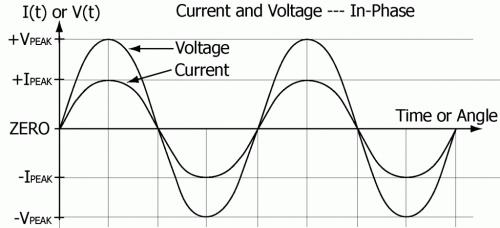
According to professors of top engineering colleges in India, Electrical Waveforms imply visual representations to display variation of current or voltage with passage of time. In simple words, whenever you plot current or voltage variations on a graph paper against the X-axis as base of time denoted by t, resulting drawing or the plot would represent a specific shape of Waveform, as depicted in this article.
Types of Electrical Waveforms or Signal Waveforms
Students of top engineering colleges in India will be able to know about electrical waveforms categorized into two different groups.
Unidirectional Waveforms
Unidirectional waveforms are of negative or positive in nature and flows in forward direction only because of the fact that they never cross zero axis point. Common types of unidirectional waveforms include Trigger pulses, Clock pulses and Square-wave type of timing signals.
Bidirectional Waveforms
Bidirectional waveforms or alternating waveforms alternate them from negative to positive direction and vice-versa constantly by crossing the point of zero axes. These waveforms proceed based on periodic variations in their amplitudes and until now, they remain present in electronic circuits as Sinusoidal or Sine Waves.
Characteristics of Electrical Waveforms
Cream students of reputable Shri Ram Institute of Technology should also know about specific characteristics of Electrical Waveforms. For this, professors have explained that irrespective of waveform type or pattern, it possesses three characteristics in common, which include
Period
Period means time length expressed in terms of seconds, which a particular waveform takes for repeating itself from its start to its end. Experts have called this value as Periodic Time denoted by T of Pulse Width for Square Waves and for Sine Waves.
Frequency
Frequency refers to numbers of times, for which a particular waveform repeats itself within one-second period. Frequency has its standard unit as Hertz or Hz and its value is reciprocal to period.
Amplitude
Lastly, amplitude implies intensity or magnitude of any signal waveform measured either in amperes or in volts.
Post Your Ad Here
Comments