Drill Composition and Parts Details for Mechanical Engineering Candidates
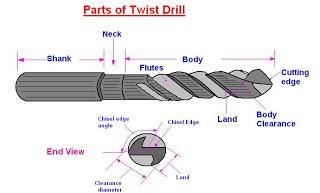
Drilling operation or simply drill refers to a process of originating or cutting a hole of round-shape from any particular solid material. It is one of the common tasks to be known by Mechanical engineering aspirants pursing their courses from one of the top engineering colleges in India. In this method, the drill or the tool instead of any work piece revolves and feds within the material along with its axis.
Currently, engineers will get the opportunity to learn or classify drills in various ways. These will include classification based on types and numbers of used flutes, materials used and size of the drill, type of chosen shank, like taper or straight shape and geometry across the cutting point and many more. In this article, B.E. Mech. Students will be able to get a detailed overview on fluted drill, as depicted here.
Composition of Fluted Drill
Fluted drill comprises of a round-shape tool material and incorporates three major parts named as the body, the point and the shank. Students studying in top engineering colleges in India with B.E. Mech. Stream should know that the operation starts with positioning and rotation of the drill done by the help of attached shank.
In addition, point consists of suitable cutting elements and body is responsible for guiding the drill during its operation. In addition, one will find fluted drill’s body comprises of two helical grooves commonly referred as flutes. These flutes coming from cutting surfaces also help in easy removal of chips out from the drilled hole.
Parts of Flute/Twisted Drill
Now, let us look over few of the important parts present in flute or twisted drill as
Point
Point is an end of conical shape that mainly performs the cutting job. Main components will include
· Dead center or a sharp edge present at extreme tip of any drill. Experts associated with Mechanical sector working under top engineering colleges in India always recommend keeping it exactly at the central part of the drill.
· After this, lips act as cutting edges of any drill.
· Thirdly, you will find heel of the point or a portion that remains placed backward from cutting edge.
Shank
Shank refers to a part of any drill, by the help of which individuals can clamp the drill inside spindle. Individuals associated with drilling jobs mainly keep the shank in tapered or in straight shape.
Straight type of shank drills has found their usages by the help of chucks. On the other side, tapered type of shank drills are available with self-holding tapes, which fit directly within the spindle of drill press. Above the taper shank, you will find another component referred as tang that fits within a slot present in sleeve of spindles.
Body
Body of any fluted or twisted drill, as explained by Mech. Experts of top engineering colleges in India is the portion that presents in between the shank and the point. It mainly comprises of three different parts, as
Flutes
Flutes are available as two or more than two different types of spiral grooves, which run in length across body of the drill. Flutes do four different activities, as helping from any particular cutting edge present in drilling point, curling of any chip tightly to allow its easy removal. In addition, flutes provide support from channels, by using which chips will be able to escape from drilled holes. Fourth, the component allows lubricant and coolant to get down into its cutting edge.
Margin
Margin implies any narrow strip that extends back towards actual length of any flute. In other words, one should consider this part as complete diameter of any drill.
Body Clearance
Body clearance present in drill’s body reduces to cut down the level or intensity of friction caused in between wall and drill of any hole.
Post Your Ad Here
Comments