A Guide to Data Center Migration: Key Aspects and Best Practices
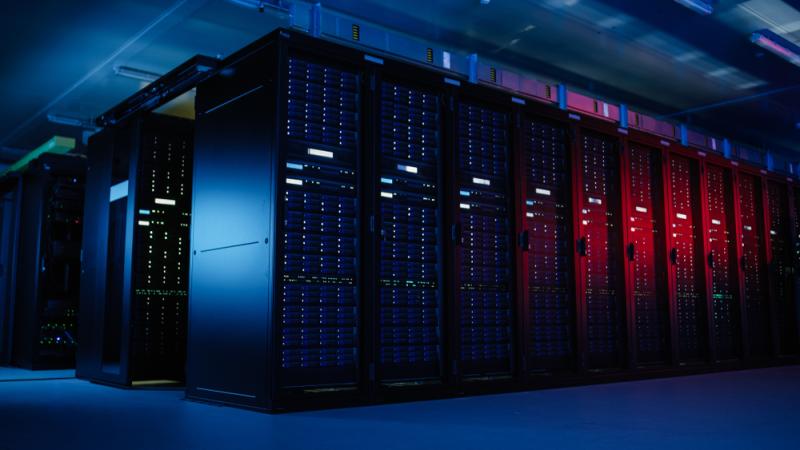
Maintaining an on-premises data center is no longer sufficient to support the demands of today's rapidly changing digital world. Once the standard, on-prem data centers can't keep up with today's load of artificial intelligence (AI), machine learning (ML), and increasingly distributed infrastructures. As a result, enterprises are turning to colocation data centers, not just to stay competitive but also to future-proof their infrastructure against disruptions through strategic data center migration.
Moving away from on-prem solutions or providers with outdated infrastructure options is, however, more than a logistics decision. Migrating to an up-to-date solution is a strategic decision that can unlock the agility, efficiency, and resilience so necessary today.
This data center migration trend is driven by an urgent need to accommodate rising power density, expand interconnection capacity, and prepare for the surging compute demands that AI-centric workloads place on digital infrastructure.
In this blog, we'll explore data center migration and the key steps that define its success or failure. Let's dive in.
Why the Time Is Right for Colocation
Many old on-premises data centers have become outdated due to the quick transformations of the past few years. These old data center facilities were designed when workloads were still predictable, and infrastructure needs were relatively static.
However, digital transformation has been happening in the meantime, and what worked then doesn't work with today's changed needs. Today, enterprises are managing increasingly complex workloads across public, private, and hybrid cloud environments.
Compute-heavy applications like generative AI models, high-performance analytics, and global-scale SaaS platforms are becoming the norm, and organizations need facilities that can support them in meeting today's challenges and prepare them for what the future holds. Data center migration is emerging as the most important step leading to a solution that can meet these evolving requirements.
How Colocation Can Help
Colocation data centers are purpose-built environments engineered to handle the dense power and cooling requirements of modern workloads. They are typically equipped and ready to maintain rigorous uptime SLAs and offer adherence to regulatory compliance standards as well.
As colocation users, enterprises can benefit from high-quality physical infrastructure without relinquishing control over their hardware or workload governance. Also, colocation facilities can offer the benefits of proximity to cloud on-ramps and interconnection ecosystems, making hybrid architecture integration seamless. These are some of the most important points to consider in data center migration planning.
This hybrid-ready infrastructure is one reason why colocation has seen explosive growth recently. In the U.S., colocation occupancy has surged over 30% since 2020, a trend fueled by both enterprise migration and the expansion of hyperscale providers. For organizations investing heavily in AI and digital transformation, data center migration to colocation presents a low-latency, high-reliability alternative to building and managing data centers in-house.
Understanding Data Center Migration
First, let's start by clarifying what data center migration is.
By data center migration, we understand the relocation of IT assets: servers, applications, networking equipment, and storage from one environment to another. The concept might sound simple; however, executing a successful data center migration is a complex process that requires careful planning, risk mitigation, and stakeholder coordination as well.
There can be many reasons for enterprises choosing to migrate. Some are prompted by aging infrastructure and escalating operational costs. Others are influenced by merger and acquisition activity, data sovereignty regulations, or a desire to centralize fragmented IT environments. As a tendency, however, the decision to migrate is primarily based on the need to align infrastructure capabilities with strategic initiatives. AI deployment, multi-cloud integration, or geographic expansion all require a different approach, and can become the basis for the decision to change things.
Today's enterprises cannot operate efficiently with the limitations of on-premises data centers. These can be constrained by limited power capacity, delayed construction timelines, and an inability to scale on demand. With power density requirements for AI hardware frequently exceeding 50 kilowatts per rack, legacy environments are simply not built to keep up.
Colocation providers, on the other hand, can fill the gap by offering high-density configurations, redundant power and cooling systems, and hardened physical security. All this is delivered within a consumption-based model that shifts capital expenditure (CapEx) to operational expenditure (OpEx). This financial flexibility is another key factor motivating data center migration.
Types of Migrations: Choosing the Right Path
A data center migration strategy depends on the organization’s existing infrastructure and also on its predictable future needs. There are three main forms of data center migration:
Cloud Migrations: Moving workloads between cloud providers or into a hybrid cloud configuration can unlock cost savings and performance improvements, but only when workloads are properly matched to the right environment. An improperly managed data center migration to the cloud can result in ballooning expenses and vendor lock-in, not to mention poor latency.
Data Center Consolidations: Enterprises with sprawling or other infrastructure inefficiencies can often benefit from consolidating multiple facilities. This approach is very efficient at reducing overhead and improving visibility into performance metrics.
Colocation Migrations: For organizations migrating out of on-premises environments, colocation can become the bridge between self-managed infrastructure and the flexibility of the cloud. These migrations often require adopting a mixed approach: physical asset relocation, virtualization, and re-architecture to optimize workload performance. In many cases, a colocation-based data center migration unlocks the performance and compliance capabilities organizations need but can’t build internally.
Whatever the approach, the guiding principle should be achieving a workload-centric design: selecting the environment that best supports performance, security, scalability, and cost-efficiency based on each application’s needs.
The Financial Logic of OpEx over CapEx
One of the strongest arguments in favor of colocation is the ability to shift from large upfront CapEx investments to a more flexible OpEx model. On-premises data centers often require millions of dollars in upfront costs for equipment, facility build-out, and power provisioning, which requires capital that could otherwise be directed toward innovation.
Colocation offers an alternative. Enterprises can deploy their infrastructure in state-of-the-art facilities without taking on the full cost burden of ownership. Moreover, with the growing need for elastic compute and storage resources, an OpEx model allows organizations to align spending more closely with actual demand, scaling up or down as needed without waste.
IT leaders must, however, consider both onboarding and offboarding costs when evaluating data center migration providers. The most effective strategies include cost modeling for various scenarios, taking into account bandwidth, cross-connects, and the lifecycle of physical infrastructure. This kind of detailed cost analysis is essential for long-term infrastructure planning and successful data center migration execution.
Optimizing AI and Hybrid Cloud with Colocation
AI has radically changed the infrastructure game. Traditional data center environments are not designed for the power-hungry GPUs and dense compute clusters required for training and running AI models. Colocation providers have responded by upgrading power delivery systems, increasing cooling capacity, and offering dedicated interconnects to cloud platforms, all essential for supporting AI initiatives at scale. This evolution is why data center migration to high-density colocation environments is accelerating across industries.
Leveraging colocation helps enterprises run AI and ML workloads closer to the data source, reducing latency and improving throughput. At the same time, direct connections to cloud service providers, often offered by leading colocation vendors, enable seamless hybrid deployment. This is especially advised for organizations that want to keep sensitive workloads on private infrastructure and still integrate with public cloud services for less critical applications.
The combination of dedicated hardware control and cloud adjacency creates an optimal architecture for modern digital operations. As more AI applications emerge, having already completed a data center migration can be a safety net guaranteeing that the enterprise can scale without delay.
Key Steps to a Successful Data Center Migration Strategy
While the benefits of colocation are clear, the road to data center migration can be full of challenges and risks. Successful transitions start with meticulous planning and constant, close collaboration with experienced partners. Here are a few of the foundational elements to consider:
Security: For a successful transition, enterprises have to ensure that all data in transit and at rest is encrypted and that physical access to equipment is strictly controlled. Partnering with providers that meet international security certifications is a must.
Downtime Mitigation: The data center migration process should include redundancy planning, testing, and scheduled cutovers to reduce the possibility of business disruption to a minimum. Many enterprises choose to phase their migrations over several stages to avoid outages.
Regulatory Compliance: For companies operating in highly regulated industries or across international borders, the geographic footprint and compliance posture of the colocation provider are critical. Adhering to data sovereignty and privacy laws must be addressed early in the data center migration planning process to avoid later surprises.
Compatibility and Integration: Legacy applications and infrastructure components have to function properly in the new environment, and this can often become a major hurdle. Rigorous testing and validation procedures have to be incorporated into the data center migration plan.
Visibility and Monitoring: Once the infrastructure is live in the colocation facility, ongoing monitoring is required. Most providers offer advanced data center infrastructure management (DCIM) tools that allow enterprises to monitor power usage, temperature, and equipment health in real time.
Partnering for the Future
Data center migration to colocation is not a one-size-fits-all process, and enterprises that try to go it alone often struggle with surprises in the end: hidden costs, delays, and integration issues. That’s why selecting the right colocation partner, preferably one with flexible service models and a deep understanding of modern workloads, is so crucial.
By partnering with an experienced provider, enterprises can get access to a robust ecosystem of interconnection, cloud integration options, and what's rarely mentioned, but can be a crucial factor: operational support. This not only ensures a smoother data center migration but also sets the stage for long-term scalability and innovation.
As digital transformation is speeding things up, the enterprises best positioned for success are those that view infrastructure not just as a fixed asset, but as a dynamic platform for growth. And data center migration is the first step in that evolution.

Post Your Ad Here
Comments