Connectivity Options in Colocation: A Networking Guide
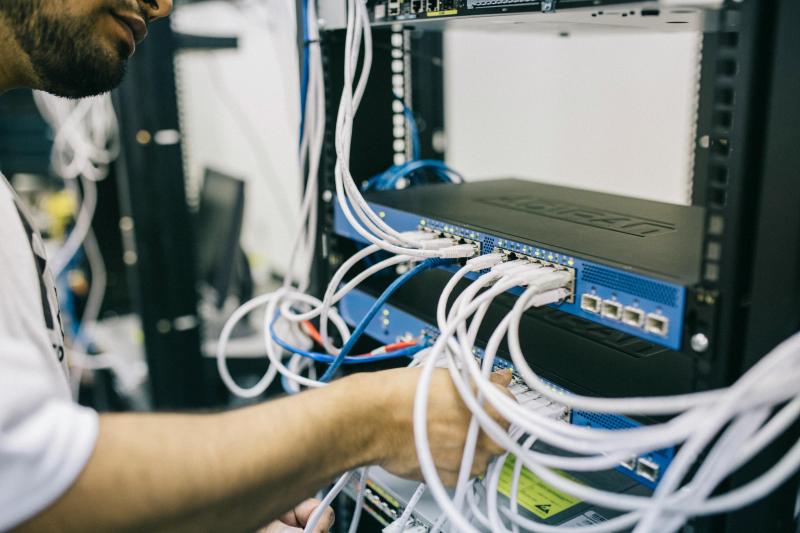
Connectivity represents many things: it’s a path of exchange for mutual business benefits, it’s the link between service providers and customers for delivering applications, and it’s the enabler of data transmission across faraway locations. In fact, it’s the foundation of everything that’s collaboration, and looking at our increasingly data-driven society, it’s essential to all technology running in the background of our comfortable lives.
Looking at it from the enterprise point of view, connectivity is essential to operating efficiently, overcoming challenges with resilience, and driving innovation. Connectivity options in colocation often offer a wide range of choices, which can be crucial to thriving in a world where needs fluctuate and evolve rapidly, and therefore, flexibility and agility are key to success.
Connectivity options in colocation can be categorized into two types: connecting from the outside to the facility, or connecting within the walls of the facility. This guide will break down both types of connectivity to help you make informed networking decisions. Let’s dive in!
Connectivity to the Data Center From the Outside
Connectivity coming from the outside encompasses both private and public networking solutions in the data center. These connections move data and workloads from outside of the data center into the data center facility, or can be links between two data centers.
Private Connectivity Options in Colocation
When companies explore connectivity options in colocation, they are looking for reliable and secure ways to connect their offices, other data centers, and cloud environments to the infrastructure in the colocation site. Private connectivity is a stable alternative to internet-based connectivity, which is much more secure, low-latency, and all things considered, yields better performance results. Private connections are ideal for mission-critical applications and workloads under strict compliance requirements.
Private connectivity options in colocation facilities offer dedicated bandwidth, and granular control over the network. Not only are these a plus compared to the public internet: these “extras” can be downright mandatory for organizations requiring high security and custom features.
These private solutions frequently provide the connectivity between enterprise branches or between the enterprise and the colocation data center. They can also be used for DCI (short for data center interconnect), which allows multiple data centers - regardless of the distance between their locations - to connect to each other.
These are the most common private connectivity options in colocation:
MPLS
MPLS or Multiprotocol Label Switching is a private wide area network (WAN) technology that routes data based on pre-defined labels instead of IP addresses, offering reliable and efficient delivery across locations.
Dark Fiber
Latent or privately leased fiber optic cabling that businesses can light and manage themselves, which gives them full control over bandwidth and performance. This solution is especially effective for organizations planning for long-term scaling.
Point-to-Point (P2P) Layer 2
Direct Ethernet or fiber links between two sites, providing a dedicated, high-speed pathway for secure data transfer.
Private networking solutions typically come with fixed long-term contracts, fixed pricing, and very predictable performance. They come with clearly defined SLAs, as well as QoS (quality of service) mechanisms, both of which help prioritize critical traffic and maintain consistent performance. On the downside, they offer less flexibility when it comes to scaling bandwidth quickly, compared to software-defined networking or internet-based options.
Public Connectivity Options in Colocation
Public connectivity options in colocation refer to network connections, primarily via the public internet, that allow external access to data center resources using affordable, scalable, but generally less predictable pathways.
The Internet
The most common form of public connectivity into a colocation facility is via the internet. One popular method is using an internet-based VPN (Virtual Private Network), which establishes an encrypted tunnel over the public internet to provide secure access to data and applications.
Internet connectivity is typically an affordable option, which is also very quick to deploy. It offers flexible bandwidth, making it a practical choice for many organizations. On the downside, it lacks the consistent performance and quality of service (QoS) guarantees that come with private connections. Internet VPNs are often used as a convenient way to connect offices across different locations, and it is also used for accessing data center applications remotely.
SD-WAN
Sometimes organizations choose to combine multiple types of connections to access their data center resources, leveraging the benefits of each. In those setups, a Software Defined Wide Area Network (SD-WAN) is often used as an overlay to simplify and centralize network management. SD-WAN works across existing public and private links, which permits easier network observability and management by enhanced monitoring and intelligent routing.
This approach is useful when connecting multiple sites, and also works well when direct internet and cloud access is required, like in multicloud environments, for example.
Connectivity Options Within a Data Center
Businesses and service providers need connectivity with each other within the walls of the data center as well. Connectivity options in colocation include a wide range of physical and digital networking solutions to connect to providers like content and media providers, SaaS providers, network service providers, or different clouds.
These connections can be:
Physical Fiber Connectivity
For businesses that need fast, reliable, and consistent network performance, physical connections are often the go-to solution. In colocation environments, the most common physical option is the fiber cross-connect: a direct, point-to-point link between two parties within the same facility.
These dedicated connections are designed for speed and stability. This makes them ideal for high-bandwidth traffic and latency-sensitive operations, and they’re often the preferred choice for enterprises running critical applications that can’t afford delays or interruptions. Cross-connects also offer a strong return on investment when measured by cost per unit of bandwidth.
Setting one up involves some physical infrastructure, so it can’t be installed instantly. But once in place, the connection is rock solid. Cross-connects are typically routed through a meet-me room, a central hub that lets the facility manage and reuse physical links efficiently, enabling multiple interconnection options across the data center.
Virtual SDI Connections
Connectivity options in colocation include virtual networking, which is most often handled through software-defined interconnection (SDI). This approach uses a single physical port to access a digital platform, which allows multiple private connections to be created and managed through software. Once set up, new links can be added quickly, and no new hardware is required. SDI has become increasingly popular in today’s cloud-centric landscape thanks to its agility. Businesses can launch new connections in minutes and adjust bandwidth on the fly, making it ideal for dynamic workloads and shifting network demands.
This type of connectivity is especially useful for reaching cloud services, partners, and remote locations without the delays or complexity of physical cabling. SDI is somewhat like a virtual meet-me room, but instead of plugging in cables, you define the connections in software as needed. Common use cases for SDI include multicloud networking, branch-to-data center links, edge deployments, and third-party integrations.
Flexibility for the Future: Hybrid Connectivity Options in Colocation
Today’s enterprise IT environments are almost always multicloud, spanning across various infrastructure and software providers. Meanwhile, AI is reshaping how businesses operate, pushing the need for flexible, adaptive networking to the forefront.
With change happening faster than ever, rigid infrastructure can quickly become a roadblock. No single type of connectivity – physical or virtual, public or private – can meet every need on its own. To stay competitive, businesses have to find the perfect mix that can balance performance, cost, and flexibility. A hybrid approach to networking allows organizations to tailor connectivity to each workload, instead of being locked into a single option. Companies that commit too early to a single method risk limiting their ability to scale or innovate. The smarter, more forward-looking move is to focus on outcomes: choosing connectivity models that suit specific needs, and building in the flexibility to shift and evolve as those needs change.
Conclusion
There are many colocation connectivity options to consider for enterprises looking for the perfect solution to fit their needs. Flexibility is becoming just as critical, especially as IT environments grow more complex. There’s no universal solution that fits every workload, so businesses need to weigh cost, speed, and adaptability to find the right mix. With hybrid multicloud now being the standard, networking strategies are evolving in the same direction. The future is hybrid, and companies need infrastructure that can support that shift.
To learn more about connectivity options in colocation, contact us at Volico Data Centers.
Post Your Ad Here
Comments