Crushed to Perfection: The Art of Aggregate Manufacturing with Mobile Stone Crushers
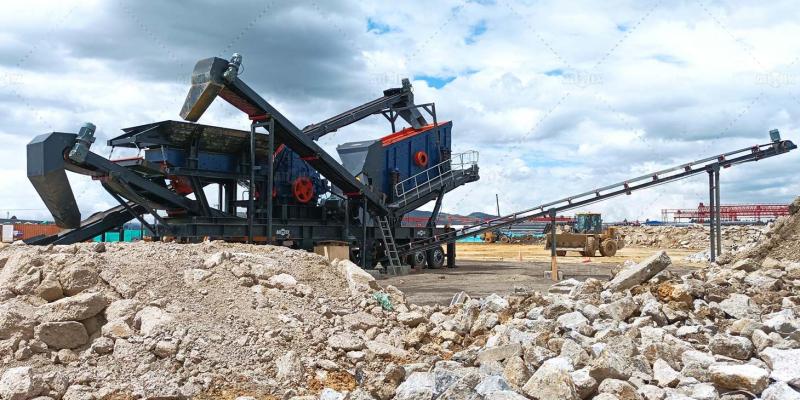
Aggregate manufacturing has long been perceived as a static, place-bound industrial activity, confined to the distant quarry and governed by the economies of mass haulage. This traditional model, however, is being fundamentally disrupted by the ascendancy of mobile crushing technology. The art of producing high-quality crushed stone, sand, and gravel is no longer solely about brute force reduction at a stationary rock crusher plant; it is increasingly a dynamic discipline of precision, logistics, and strategic material science conducted at the very point of need. Mobile crushers represent more than mere machinery; they embody a reconfigurable factory, capable of transforming heterogeneous feed material—from virgin rock to construction demolition debris—into meticulously graded, project-spec aggregates with an efficiency and specificity the old paradigm cannot match.
The Mobile Paradigm: A Strategic Reconfiguration of Aggregate Production
The core innovation of the mobile stone crusher plant is its radical reconfiguration of the production geography. Instead of transporting raw, unprocessed material over long distances to a central plant—a process incurring monumental fuel, labor, and vehicle wear costs—the processing plant travels to the material source. This inversion of the logistics calculus is transformative. It eliminates the non-value-added haulage of waste product and oversize material, focusing transportation efforts solely on the finished, certified aggregate. This mobility grants producers and contractors an almost alchemical agility. A single machine, or a compact train of units, can be deployed to a remote quarry face, a large infrastructure corridor, or an urban demolition site. It allows for an agile response to project-specific material specifications, producing a bespoke blend for asphalt, concrete, or drainage works on-demand, thereby minimizing stockpiling and ensuring freshness of product.
The Precision Engineering of Particle Morphology
Modern aggregate manufacturing is an exercise in controlled fragmentation, not indiscriminate pulverization. The objective transcends simple size reduction to encompass the deliberate engineering of particle morphology—the shape, texture, and surface characteristics of each grain. Different crusher types—robust jaw crushers for primary reduction, versatile cone crushers for secondary shaping, and impactful vertical shaft impactors for tertiary finishing—are tools in this artistic pursuit. A cone crusher, for instance, can be configured to produce a more cubical product, which is paramount for high-strength concrete as it enhances interlocking and reduces the void content. Conversely, an impact crusher can generate a more fractured, angular shape ideal for asphalt binding. The most advanced systems operate in closed-circuit, where material is continuously recirculated until it passes the desired screen size, ensuring gradation consistency and actively managing the production of filler material, or "fines."
The Operational Alchemy: From Raw Feedstock to Certified Product
The transformation of blasted rock or rubble into specification aggregate is a calibrated, multistage process. It begins with astute feed control, often involving a mobile scalping screen deployed ahead of the primary crusher to remove undersize material and deleterious fines that could congest the crushing chamber. The primary crushing stage accepts the raw feed, executing the initial, coarse reduction. This material is then conveyed to a secondary crusher, which refines the size and begins the critical work of shaping. Tertiary and quaternary stages, when employed, focus on final grain shaping and the production of specific chip sizes. Throughout this sequence, screening is the maestro, directing the flow. Vibrating screens meticulously sort the crushed material into precise size fractions—0-4mm sand, 4-8mm chips, 8-16mm aggregate, and so forth. This final sorting is what delivers the consistent, predictable gradation curves required by engineers and specifications, turning raw feedstock into a certified construction product.
The Economic and Environmental Calculus of Mobility
The financial and ecological arguments for mobile crushing are compelling and synergistic. Economically, it creates site-centric efficiencies: a radical compression of the supply chain slashes transport overhead, reduces double-handling, and minimizes inventory carrying costs. The ability to process material directly at a demolition site—a practice termed "urban mining"—converts a cost center (waste disposal) into a revenue stream (recycled aggregate), a powerful economic arbitrage. Environmentally, the benefits are profound. By drastically reducing truck movements, the carbon footprint associated with aggregate production plummets. Localized processing curtails dust emissions from long-haul roads and enables tighter control of particulate matter on-site. Furthermore, the mass recycling of concrete and asphalt rubble conserves virgin quarry resources and diverts immense volumes of material from overburdened landfills. In this light, the mobile crusher is not just a tool for production, but an instrument of sustainable, circular economy principles, proving that operational efficiency and environmental stewardship can be perfectly aligned.
Post Your Ad Here