How Remote Work Is Redefining Ergonomics in the Modern Home Office
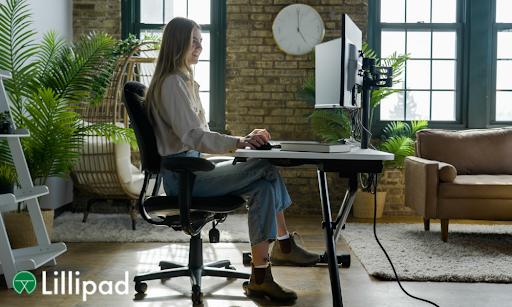
Waukesha, Wisconsin – November 13, 2025 Five years after the global shift to remote and hybrid work, the modern home office is undergoing a transformation unlike anything seen in previous decades. What began as a temporary solution has become a permanent fixture in millions of households, and in that transition, one theme has risen above the rest: ergonomics is no longer optional, it has become the foundation of productivity, presence, and daily rhythm.
This shift isn’t about wellness trends or workplace fads. Research is documenting major behavior changes, changes that directly reshape how people work, move, and interact with their environments.
A large-scale behavioral analysis published through Nature Portfolio found that remote employees experience longer uninterrupted sitting periods than their in-office counterparts. Without natural “walk cues” like commuting between rooms or interacting with coworkers, remote professionals take fewer spontaneous movement breaks.
A complementary study published by Springer Nature revealed that workers in home-based environments report higher total sitting time, fewer posture shifts, and more rigid routines. What was once occasional has become a norm: long stretches of stillness, often without conscious awareness.
These findings point to a clear reality: remote work has redefined not only where work happens, but how the human body engages with work itself. And that evolution is reshaping home office design.
The Rise of Movement-Focused Work Culture
In the early stages of the remote-work era, few people had thoughtfully designed home offices. Kitchen tables became desks. Dining chairs doubled as task seating. Laptops sat on stacked books. Functionality took a back seat to whatever was available.
Today, that improvisation has evolved into intention.
Across industries, professionals are now prioritizing:
Dynamic posture — shifting positions throughout the day
Mid-day movement — walking, stretching, or resetting between tasks
Flexible positioning — adapting work height and angle based on task
Workstations built for flow — not rigidity
The shift represents a broader cultural awakening: movement isn’t just about comfort, it fuels clarity, focus, and creativity.
A recent analysis of hybrid work environments published on ResearchGate summarized it well:
“Modern workspaces must support change, change of posture, pace, and environment.”
Instead of static setups, today’s home offices encourage variation. Standing can spark ideation. Sitting supports precision tasks. A minute of micro-movement refreshes focus before the next video call.
The home office is no longer a fixed point. It’s a responsive environment that adapts to the worker.
Electric Sit-Stand Desks: The Natural Response to Evolving Work Rhythms
As the culture shifts, furniture design has evolved with it. Electric sit-stand desks, once reserved for Silicon Valley offices or corporate headquarters, have become a mainstream staple of modern homes.
The reason is simple: they support the natural ebb and flow of the workday.
Professionals use adjustable desks to:
Stand during high-focus brainstorming
Sit during long writing sessions
Adjust height for reading, planning, or digital collaboration
Shift posture instantly without disrupting workflow
These desks aren’t framed as “health tools.” Instead, they’re positioned as cognitive architecture, furniture that enhances focus, supports movement, and complements the rhythm of creative and analytical work.
A workstation review published in the National Library of Medicine highlighted that workers who vary their posture report greater comfort, engagement, and attention, noting that uninterrupted sitting is a barrier to productivity, not because of medical concerns, but because of stagnation.
Adjustability, variation, and flow now define the modern workstation. And electric sit-stand desks sit naturally at the center of that transformation.
A Cultural Shift, Not a Temporary Trend
Modern ergonomic thinking extends far beyond furniture. It’s a cultural mindset reshaping the way people design their environments, manage their energy, and structure their days.
Remote professionals are asking new questions:
“How do I build movement into my routine without breaking concentration?”
“What workspace supports creativity instead of restricting it?”
“Which tools help me maintain rhythm throughout long work blocks?”
Home office design reflects this shift. Adjustable desks, modular surfaces, multi-height setups, and flexible room layouts are no longer luxuries. They are becoming the baseline for sustainable, long-term remote work.
Hybrid work accelerated this evolution. Instead of being places to “get through the day,” home offices are now spaces built around intentional movement, mental clarity, and flow-based productivity.
The remote worker isn’t asking for a prettier office; they’re asking for a smarter one.
Where Lillipad Fits Into the New Standard
Within this broader movement, companies like Lillipad, based in Waukesha, Wisconsin, represent the natural next step in adaptable workspace design. Their electric adjustable desks illustrate what the future of the home office looks like: environments that move with the user, adjusting to tasks, pace, and preference.
Rather than dominating the narrative, Lillipad fits into a larger ecosystem of innovators contributing to more fluid, intentional, and movement-friendly workspaces.
The qualities that define this new standard include:
Flexibility in positioning
Control over work rhythm
Adaptability for varied tasks
Alignment with modern work habits
These are not luxuries, they are the functional priorities of contemporary remote professionals.
Those exploring active-desking solutions can see this cultural shift reflected in Lillipad’s adjustable workstation offerings, available on the company’s website.
A Future Built on Movement
Remote work is no longer an experiment, it is an established part of global culture. As it continues to evolve, ergonomics is shifting from a technical discipline into a core element of daily performance.
The future home office will be:
Flexible, designed around posture shifts and workflow variation
Adaptive, responding to mental and physical demands
Movement-friendly, integrating standing, sitting, and task-based positioning
Cognitively supportive, helping workers maintain flow throughout their day
Intentionally designed, with every element contributing to function
And at the center of that future sits one idea:
Work shouldn’t require stillness. Productivity comes from environments that allow people to move, think, and create freely.
Remote work didn’t just change the location of work, it changed the rhythm of it. Modern home offices are now catching up, becoming dynamic extensions of the worker rather than static containers for tasks.
Movement is no longer a bonus; it’s a standard.
About Lillipad
Lillipad designs modern adjustable workstations built for remote workers, hybrid professionals, and teams seeking flexibility in their daily workflow. Based in Waukesha, Wisconsin, the company focuses on adaptable, movement-friendly home office solutions that align with today’s evolving work habits.
Post Your Ad Here
Comments