Domestic vs Commercial Solar Installations
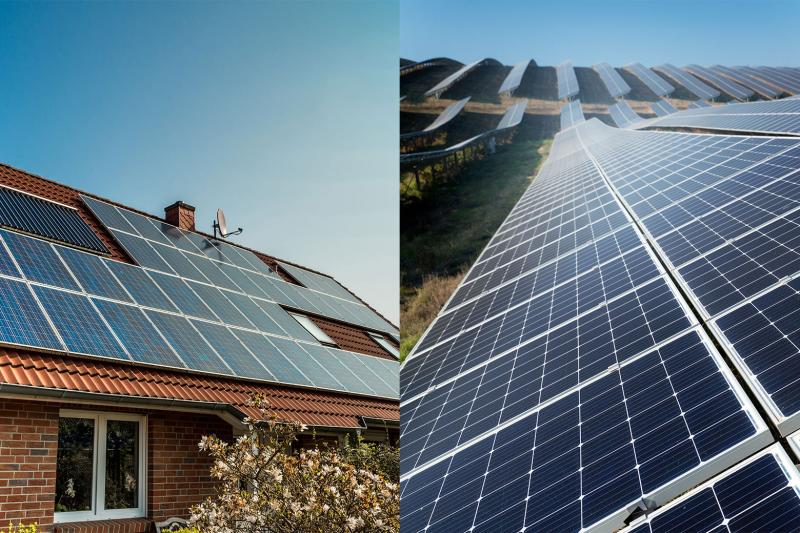
As the push toward renewable energy continues, solar power has become an increasingly popular choice for both homeowners and business owners. Installing solar panels offers significant benefits, including reduced energy bills, lower carbon footprints, and long-term energy independence. However, not all solar installations are created equal. The needs of a domestic property differ significantly from those of a commercial building, and understanding these differences is crucial for a successful solar project.
1. Energy Requirements and Consumption
One of the primary differences between domestic and commercial solar installations is energy demand. A typical household may consume between 3,000 and 6,000 kilowatt-hours (kWh) per year, depending on the size of the property and number of occupants. Domestic solar installations are designed to meet these levels of energy consumption, often generating just enough electricity to cover the household’s needs, with any surplus fed back into the grid.
Commercial properties, on the other hand, often have significantly higher energy demands. Manufacturing facilities, office complexes, and retail spaces can consume tens or even hundreds of thousands of kWh annually. Commercial solar systems need to be larger, more robust, and capable of handling high loads consistently. This often requires more advanced inverters, additional panels, and careful planning to match the building’s operational needs.
2. Roof Size and Orientation
The physical space available for solar panels is another key factor. Domestic properties usually have limited roof space, which constrains the number of panels that can be installed. Homeowners must maximize efficiency by carefully considering roof orientation, tilt, and shading. South-facing roofs with minimal obstructions are ideal for domestic solar installations.
Commercial buildings often have larger, flat roofs or open land areas, offering more flexibility for panel placement. This allows for the installation of larger arrays, which can significantly increase energy generation. However, commercial installations may also require structural assessments to ensure that the roof can support the weight of a large solar system and any additional equipment, such as inverters and battery storage.
3. Cost Considerations
Cost is always a major consideration for any solar project. Domestic solar installations are generally more affordable due to their smaller size. Homeowners may also benefit from government incentives, feed-in tariffs, or financing options that make the upfront investment more manageable.
Commercial installations involve higher initial costs due to the larger scale and complexity of the systems. They may require more sophisticated monitoring equipment, multiple inverters, and additional wiring to handle increased electrical loads. Despite the higher upfront investment, commercial solar systems can offer substantial long-term savings on energy bills and reduce operating costs significantly.
4. Installation Complexity
The installation process for domestic solar panels is typically straightforward. Most homes require a single array, connected to the home’s existing electrical system. A professional installer or licensed electrician ensures the system is safe and complies with local regulations. For instance, a trusted Electrician Hildenborough can handle both the installation and the integration of solar systems into a home’s electrical network, ensuring compliance and safety.
Commercial installations are more complex due to the size of the system, the electrical load, and potential integration with other building systems. Large installations may require multiple arrays, three-phase electrical connections, and coordination with building management systems. This makes professional expertise essential to ensure efficiency, safety, and long-term reliability.
5. Maintenance Requirements
Maintenance needs also differ between domestic and commercial solar systems. Residential systems typically require minimal upkeep. Routine cleaning and annual inspections are usually sufficient to maintain efficiency. Most homeowners can rely on their installer or a local electrician for periodic checks.
Commercial solar installations, however, often require more rigorous maintenance schedules. Larger systems have more components, which increases the likelihood of issues such as inverter failures or panel degradation. Commercial operators may need dedicated maintenance contracts to ensure the system continues to perform optimally and that any issues are promptly addressed.
6. Energy Storage Solutions
Energy storage is an important consideration for both domestic and commercial installations, but the approach differs. Domestic solar users may install small-scale battery systems to store excess energy for nighttime use or emergencies. This increases self-consumption and reduces reliance on the grid.
Commercial buildings often benefit from larger battery storage systems, which can provide backup power during outages, help manage peak demand, and reduce energy costs through load shifting. Advanced energy management systems are often integrated with commercial storage solutions to optimize performance and efficiency.
7. Return on Investment
The ROI for domestic solar installations is typically calculated based on savings on electricity bills, potential feed-in tariffs, and any government incentives. For many homeowners, solar panels can pay for themselves within 7 to 12 years, depending on energy usage and local conditions.
Commercial solar installations offer a different ROI scenario. While the upfront investment is higher, the potential savings are also substantial due to the larger scale of energy consumption. Businesses may also gain additional benefits, such as improved sustainability credentials, which can enhance brand value and appeal to environmentally conscious customers or clients.
8. Regulatory and Planning Considerations
Domestic solar installations usually face minimal regulatory hurdles, provided they comply with local building codes and electrical safety standards. Planning permission is generally not required for most standard rooftop installations.
Commercial projects, particularly larger systems, may involve more extensive regulatory requirements. Planning permission, structural assessments, and coordination with local authorities are often necessary. Electrical compliance standards for commercial buildings may also be more stringent, ensuring that large-scale installations do not pose risks to the building’s occupants or the local electrical grid.
9. Environmental Impact
Both domestic and commercial solar installations contribute to reducing carbon emissions and reliance on fossil fuels. While the impact of a single home installation is relatively modest, widespread adoption at the residential level can have a significant cumulative effect. Commercial installations, however, have the potential for much larger environmental benefits due to the scale of energy generation. Large businesses switching to solar can drastically reduce their carbon footprint and serve as industry leaders in sustainability.
Conclusion
Choosing between domestic and commercial solar installations involves understanding the differences in energy needs, costs, installation complexity, and long-term benefits. Residential systems focus on smaller-scale efficiency, safety, and simplicity, while commercial projects require careful planning, professional expertise, and ongoing maintenance to meet higher energy demands.
Whether for a home or a business, working with qualified professionals, such as an Electrician in Hildenborough, ensures that your solar installation is safe, efficient, and compliant with all relevant regulations. By understanding the unique requirements of domestic versus commercial solar systems, property owners can make informed decisions, save on energy costs, and contribute to a more sustainable future.
Also Prefer our other Article :
https://nichenest.xyz/how-an-electrician-can-tell-if-your-home-needs-a-rewire/

Post Your Ad Here
Comments