Recover Lost Revenue: The Power of Abandoned Basket Emails
UK e-commerce is grappling with a £38 billion
problem: 24% of online transactions end at the checkout. This challenge
actually offers a great chance for recovery that many retailers are just
starting to explore.
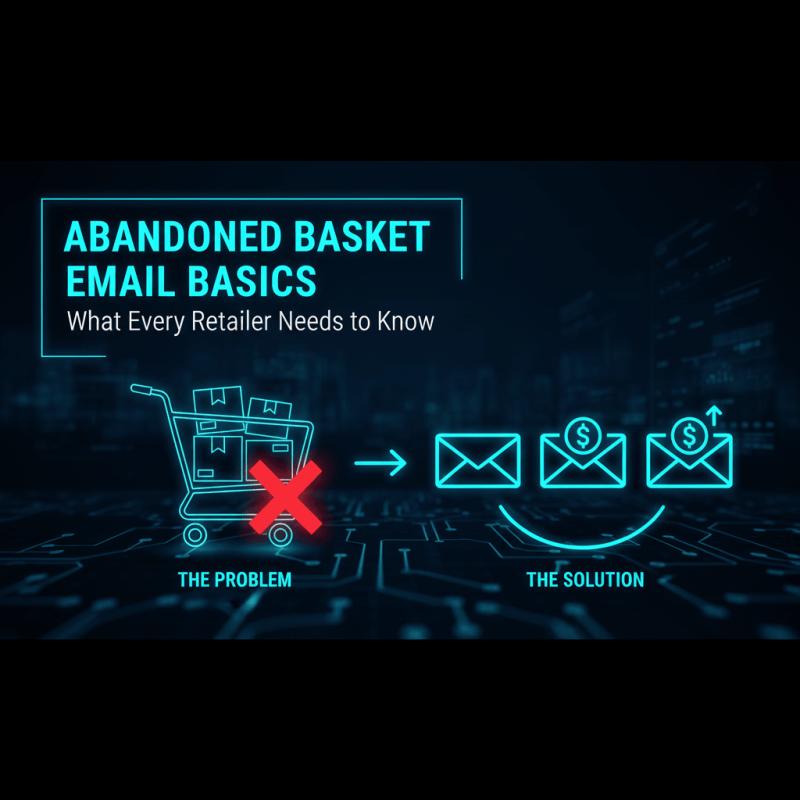
Abandoned basket emails are automated messages
sent to customers who add items to their cart but don’t complete the purchase.
These strategies focus on customers who are ready to buy, unlike broad
marketing campaigns or browse abandonment emails aimed at casual browsers.
Abandoned basket emails have impressive stats,
boasting 54% open rates and 25% conversion rates, which means they outperform
traditional marketing by 250%. This guide will help retailers craft an
actionable abandoned basket email framework that’ll ensure they capture revenue
that might otherwise be lost in the online maze.
Why Abandoned Basket Emails Are
Effective for UK Retailers
Abandoned
basket emails comply with GDPR rules since customers
share their emails during checkout. This approach simplifies communication and
eliminates complex consent issues. SMS campaigns see a 20% open rate, but
abandoned basket emails are hitting 54% in the UK market and cost 40% less than
retargeting ads.
European markets show abandoned basket emails'
universal power: France gets 50% open rates when delivery fees and return
policies are highlighted; Spain gets 10% with dynamic and behaviour-based
incentives; and Italy gets 40–45% with personalised emails with clear shipping
information. In the EU, multistep email sequences have a recovery impact three
times greater than single emails, and customisation boosts conversions by over
50%.
UK consumers have clear preferences for
to-the-point and professional communication, which works better than
hard-selling approaches. Free returns, next-day delivery, and providing
well-known payment options like PayPal, Klarna, and Apple Pay help establish
the trust needed for conversion. Given that 77% of cart abandonment in the UK occurs
on mobile devices, campaigns must prioritise mobile-responsive design and
user-friendly interfaces.
Recovering baskets can bring in an average of
£12-15 per email, so even a small 10% recovery rate can make a big financial
difference. Browse abandonment email campaigns
typically bring in £3-5 per email because of lower purchase intent. This shows
why it's important to prioritise basket-specific strategies.
The 3-Email Quick-Start Sequence
That Delivers
Successful abandoned basket emails use a
tried-and-true sequence that strikes a balance between being persistent and
respecting customers' decision-making timelines. This framework turns one-time
messaging into a consistent way to recover revenue.
Email
1: The Gentle
Reminder (1 Hour)
Act quickly while the interest is still fresh.
Subject lines such as "You left something behind" or "Your items
are waiting" do 35% better than more aggressive options. Make sure to add
clear product images, list the pricing, and have a noticeable "Complete
Purchase" button. These abandoned basket email best practices
leverage immediate memory without using pressure tactics.
Key elements are the customer's name, the
specific products they abandoned, clear pricing (with VAT included), and an
easy return-to-basket feature. Skip the discounts for now; customers often get
sidetracked and just need a little nudge to return to checkout.
Email
2: The Value Reinforcer (24 Hours Later)
Use social proof and trust signals to tackle
common hesitations. Ensure to incorporate customer reviews for products left
behind, highlight the return policy, and prominently display security badges.
UK consumers really value delivery guarantees and the availability of customer
service.
Use urgency wisely: "Popular item with
limited stock" is more effective than "Limited time offer!"
Referencing your abandoned basket
items directly, like saying, "The Nike trainers you picked are still
available," builds a personal connection that generic messages just can't
achieve.
Email
3: The Strategic Incentive (72 Hours)
Use incentives sparingly; not every recovery
needs discounts. Free delivery tends to work better than percentage discounts,
especially for smaller purchases. For more expensive items, think about getting
extended warranties or installation services instead of just price cuts.
Some alternative incentive strategies are
buy-now-pay-later options, unique colourways, or giving early access to sales.
The aim is to eliminate the last hurdle to buying, rather than getting
customers used to expecting discounts with every abandoned cart email.
Timing optimisation is really important in the
UK market. The best open rates happen Tuesday to Thursday from 10 AM to 2 PM,
while sending in the evening from 6 to 8 PM leads to better click-through
rates. Weekend performance is down by 15-20%.
Essential Setup Criteria and
Compliance for the UK
When implemented correctly, GDPR compliance
shifts from being a hurdle to a chance for growth. Recovering abandoned baskets
depends on legitimate interest provisions. When customers start the checkout
process, it shows their intent, which justifies reaching out to them. However,
transparent unsubscribe options and data retention policies are still required.
Setting
up Shopify in the UK
Shopify's abandoned cart recovery feature
offers basic email options, but it doesn't provide advanced personalisation or
timing controls. Third-party solutions such as SaleCycle, Klaviyo, or Omnisend
provide excellent targeting options, usually ranging from £20 to £100 per month
based on email volume. The investment covers its costs when recovery rates rise
from 8% to over 20%.
Connect your email service provider, create
mobile-friendly templates, and set your trigger timings to start quickly.
Several platforms provide UK-specific templates that highlight delivery
expectations and payment preferences that local consumers know well.
WooCommerce needs plugins to enable abandoned
basket email functionality. Abandoned Cart Lite offers free basic recovery. For
more features, premium options range from £50 to £150 annually, providing
advanced segmentation and personalisation. CartFlows and WooCommerce Recover
Abandoned Cart work smoothly with popular UK payment gateways.
Setting up usually takes about 30 minutes, and
customising the template adds roughly another hour. Focus on mobile
optimisation; ensure buttons are easy to tap and forms fill in automatically
for returning users.
Universal setup principles work for any
platform: grab emails early in the checkout, make sure templates match your
brand voice, and test thoroughly on different devices. Best practices for
abandoned basket emails involve emphasising payment security and buyer
protection programmes to ease purchase anxiety.
Evaluating Success and Quick
Fixes
In the first week, we look at key performance
indicators that help us make quick improvements. Aim for open rates over 40%,
click-through rates above 15%, and initial recovery rates between 10% and 15%.
These benchmarks set the baseline performance before we start optimising.
Monthly performance reviews show valuable
insights into customer lifetime value from recovered purchases. Customers who
convert via email recovery show 40% higher repeat purchase rates and 25% larger
average order values than first-time buyers, highlighting a significant
long-term impact.
Key A/B testing priorities are subject line
variations (gentle vs. urgent), optimising send times (morning vs. evening),
and testing different incentive levels. Test one variable at a time for two
weeks to get statistically significant results. Just adding customer names to
subject lines can boost open rates by 15-20%.
Your optimisation timeline should move forward
in a structured way: In Weeks 1-2, we’ll set up and do some basic testing.
Weeks 3-4 will focus on refining subject lines and timing. In Month 2, we’ll
dive into advanced personalisation, and Month 3 will cover multi-channel
integration.
For a deeper perspective on the art and science of
abandoned basket emails, explore the “Essential Guide to Recovering Lost Sales
in 2025”.
Growing with SaleCycle and Future
Outlook
Once basic abandoned basket emails show
success, there are plenty of chances to scale up quickly. SaleCycle turns basic
email recovery into a full revenue recovery system, starting with identity resolution that pinpoints up to 70% of anonymous
website visitors for targeted follow-up.
Advanced features include cross-device
tracking, behavioural triggers based on browsing patterns instead of just
abandonment, and predictive analytics that spot high-value abandoned cart recovery
opportunities before users leave.
Moving from basic to advanced abandoned basket
email systems usually doubles recovery rates with little extra effort needed.
SaleCycle's omnichannel integration links email recovery with SMS, push
notifications, and retargeting ads for smooth customer experiences.
The top UK retailers see abandoned basket
email best practices as something that evolves, not just a one-time campaign.
Begin with the basics, track your progress closely, and keep improving over
time. Your abandoned baskets show customers are interested. Offer them a gentle
reminder to finish their purchase; you may be surprised at the conversion rate
if you strategically implement some of the suggestions shared in this piece.
Comments