Nasal Drug Delivery Systems Market: The Future of Rapid, Non-Invasive Therapeutics
Executive Summary
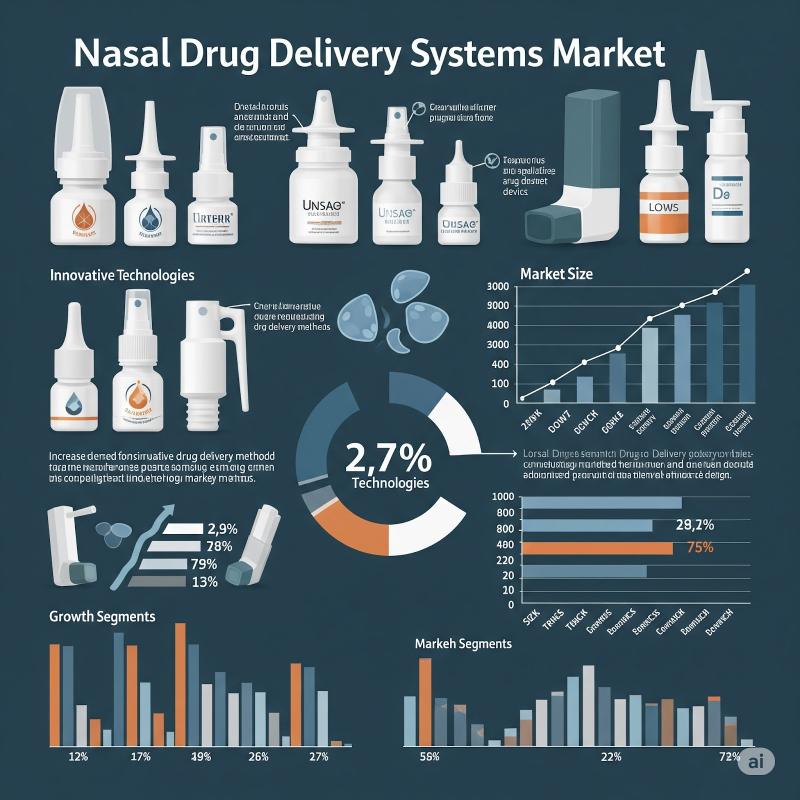
The Nasal Drug Delivery Systems Market is poised for significant growth through 2030, driven by its non-invasive nature, fast absorption, and increasing adoption for both local and systemic therapies. This mode of administration is particularly advantageous for treating respiratory conditions, central nervous system (CNS) disorders, and even as a route for needle-free vaccination—an area gaining traction post-COVID-19.
According to Prophecy Market Insights, advancements in device design, formulation science, and customized delivery systems are shaping the competitive landscape, opening new opportunities in both acute and chronic therapeutic spaces.
Market Segmentation At a Glance
By Dosage Form:
Nasal Sprays – Most common format for allergy relief and decongestion.
Nasal Drops – Widely used for pediatrics and OTC applications.
Nasal Gels & Powders – Gaining traction for longer retention and controlled release.
Others – Including experimental delivery systems and hybrid devices.
By Container Type:
Non-pressurized Containers – More economical and commonly used for traditional sprays and drops.
Pressurized Containers – Offer consistent dosage delivery and are ideal for high-precision formulations.
By System Type:
Multi-dose Systems – Cost-effective for chronic users; dominate current market share.
Bi-dose & Unit Dose – Suitable for emergency drugs (e.g., naloxone), vaccines, and specialty treatments requiring sterility and accuracy.
By Therapeutic Application:
Allergic & Non-Allergic Rhinitis
Nasal Congestion
Vaccination – A high-potential segment post-pandemic, especially for flu and COVID-19 boosters.
Others – Including migraine relief, hormonal therapy, and CNS drug delivery.
By Distribution Channel:
Hospital Pharmacies – Primary route for prescription-based and acute-care treatments.
Retail Pharmacies – Largest contributor to OTC nasal therapy sales.
Online Pharmacies – Fastest-growing channel, especially for chronic-use products and international brands.
Regional Outlook
North America remains the leading market, driven by high allergic rhinitis prevalence, advanced R&D, and early adoption of innovative delivery systems.
Europe follows closely, backed by strong healthcare infrastructure and supportive regulatory pathways for nasal vaccine development.
Asia Pacific is emerging rapidly, fueled by growing awareness, expanding middle-class healthcare spending, and rising respiratory health concerns.
Latin America, Middle East & Africa show potential, especially in urban centers where over-the-counter nasal treatments are in growing demand.
Key Industry Players
Market competition is characterized by pharmaceutical giants and device-focused companies working to improve bioavailability, mucosal absorption, and delivery efficiency. Notable players include:
Merck & Co.
GlaxoSmithKline plc.
AstraZeneca plc.
Johnson & Johnson
Pfizer Inc.
Valeant Pharmaceuticals
Novartis AG
Baxter International, Inc.
Becton, Dickinson and Company
These firms are actively developing next-generation formulations for neurological, anti-viral, and emergency-use applications via nasal routes.
Trends Shaping the Future
Needle-Free Vaccination: Nasal vaccines for influenza, COVID-19, and RSV offer massive public health and commercial potential.
CNS and Hormonal Applications: Nasal route being explored for pain, depression, hormone therapies, and Alzheimer’s treatments due to the blood-brain barrier bypass advantage.
Tech-Enabled Delivery Devices: Smart inhalers and app-integrated nasal systems are enhancing compliance and dosage tracking.
Regulatory Focus: Agencies are streamlining nasal device approvals, especially for emergency-use therapies like naloxone and epinephrine.
Market Outlook: Inhale the Innovation
As healthcare pivots toward patient-centric, non-invasive drug delivery, the nasal route stands out for its speed, convenience, and versatility. Its role will extend well beyond allergies and congestion—into neurology, immunization, and emergency medicine—defining it as a critical delivery pathway in modern therapeutics.
Post Your Ad Here
Comments