Safeguarding Circulation: Embolic Protection Devices Market Set to Advance Through 2030
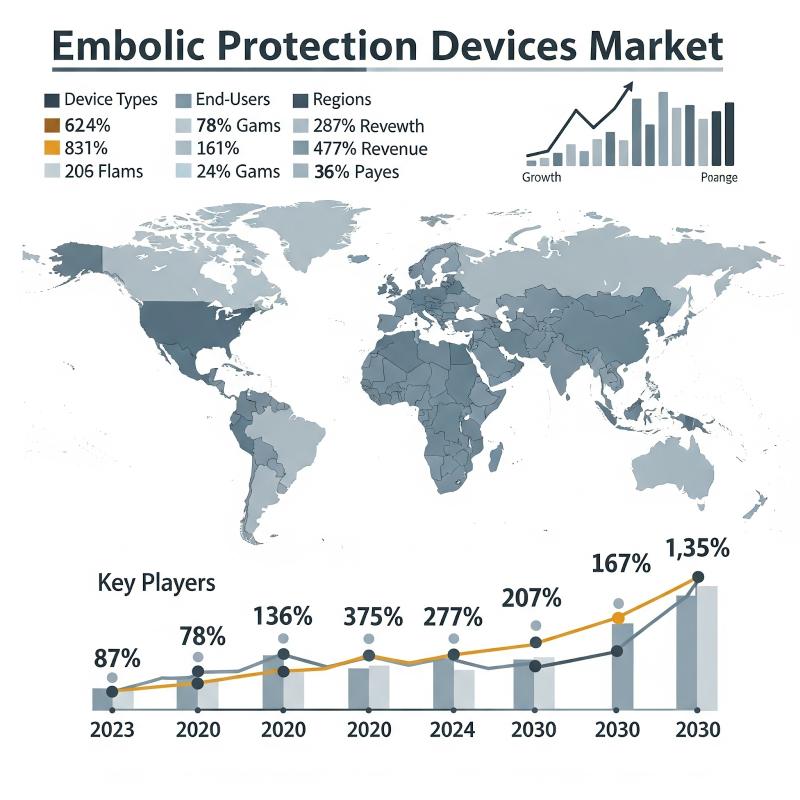
Industry Snapshot | Forecast to 2030
The Embolic Protection Devices (EPD) Market is undergoing significant evolution, fueled by a sharp rise in cardiovascular and neurovascular interventions worldwide. These devices play a critical role in preventing emboli—loosened clots or debris—from traveling to vital organs during interventional procedures, thereby reducing stroke risk and improving patient safety during angioplasty, stenting, and transcatheter surgeries.
According to Prophecy Market Insights, the market is positioned for robust growth through 2030, with innovation in device material, design, and application-specific engineering driving adoption across surgical centers and hospitals.
Market Segmentation Overview
? By Product Type:
Proximal Occlusion Devices – Deployed upstream of the lesion, preventing emboli from entering the bloodstream during procedures.
Distal Occlusion Devices – Positioned downstream to temporarily block blood flow and trap debris.
Distal Filter Devices – Capture embolic particles while allowing continued blood flow—ideal for coronary and carotid interventions.
? By Material:
Polyurethanes – Offering flexibility, biocompatibility, and enhanced filter precision.
Nitinol (Nickel Titanium Alloy) – Valued for shape memory and elasticity, widely used in self-expanding frames and filters.
? By Application:
Cardiovascular Diseases – Coronary artery disease (CAD), carotid artery disease, and aortic valve replacement remain major drivers.
Neurovascular Disease – Demand surging in ischemic stroke prevention, cerebral angioplasty, and carotid stenting.
Peripheral Disease – Rising use in lower limb and renal interventions to prevent embolic complications.
? By End-Use:
Hospitals – The primary user segment, owing to high-volume cardiac and neurovascular procedures.
Ambulatory Surgical Centers (ASCs) – Gaining traction for minimally invasive vascular procedures with faster recovery timelines.
Regional Landscape
North America continues to lead due to high procedural volume, strong reimbursement frameworks, and early tech adoption.
Europe follows closely with consistent product approvals and growing awareness of embolic protection in TAVR and neuro interventions.
Asia Pacific represents the fastest-growing region, fueled by rising cardiovascular disease prevalence, healthcare infrastructure upgrades, and expanded access to elective interventions.
Key Industry Players
A blend of established medtech giants and emerging innovators define the competitive landscape. Companies actively shaping the market include:
Abbott Laboratories
Boston Scientific Corporation
Medtronic Inc.
Cardinal Health Inc.
Silk Road Medical Inc.
L. Gore & Associates Inc.
Claret Medical Inc.
Contego Medical LLC
AngioSlide
Allium Medical Solutions Ltd
Transverse Medical
LEPU Medical Technology
Edward Lifesciences
These players are investing in miniaturization, integrated delivery systems, and next-gen filters compatible with complex anatomies.
Trends & Insights
Minimally Invasive Surge: EPDs are becoming standard in transcatheter aortic valve replacement (TAVR) and carotid artery stenting, as demand for minimally invasive procedures rises.
Neurovascular Focus: Stroke prevention during intracranial interventions is a high-growth niche, driving neuro-specific EPD development.
Material Science Innovation: Custom-blended polymers and flexible metals are reducing device profiles while improving capture efficiency.
Looking Ahead
As vascular procedures become more complex and safety standards rise, embolic protection devices are moving from optional to essential. The integration of real-time imaging, automated deployment systems, and smart filters could represent the next leap in this space.
Post Your Ad Here
Comments