Energy Healing for Anxiety, What People Report and What Research Shows
Anxiety has quietly become one of the most universal emotional experiences of our time. It shows up in the in-between moments, on morning commutes, in the glow of late-night screens, during workday pauses, or in the quiet that settles after a long day. Millions of people search for relief, grounding, or simply a moment to exhale. Yet as the need grows, a parallel reality emerges: finding support isn’t always easy.
According to the U.S. Health Resources & Services Administration, more than 160 million Americans live in areas with a shortage of health providers
This shortage translates into delayed care, long waitlists, and weeks or months of waiting for a first appointment. For many, the gap between wanting support and receiving it feels endless.
In this space of waiting, searching, and hoping, people are increasingly turning to complementary emotional support practices such as energy healing. Not because they expect treatment or solutions, but because they crave presence, connection, and something gentle enough to hold them until help arrives.
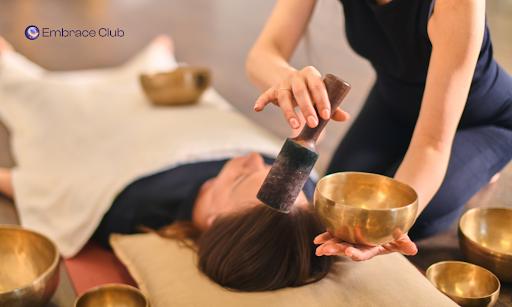
Energy healing, in its many forms, isn’t a clinical response to anxiety. Instead, it offers a moment to center oneself, to feel witnessed in a world that moves too quickly, and to reconnect with parts of the self that get lost in the noise. Platforms like Embrace Club, founded by Melissa Franks, are making these practices accessible to more people, digitally, ethically, and intentionally.
A System Stretched Thin and a Need That Doesn’t Wait
The emotional landscape of the United States continues to shift. The American Psychological Association reports that 56% of psychologists cannot take new clients, with anxiety-related concerns leading appointment requests
This ongoing strain means many individuals face:
Waitlists lasting 6–12 weeks
Providers unable to offer evening or weekend sessions
Limited insurance-covered options
A shortage of local specialists
Overbooked practices across both rural and urban areas
For those in emotional distress, weeks without support can feel like walking without a map. It’s not that people expect instant transformation, they simply want something to hold onto during the wait. Something reassuring. Something human.
This is where non-clinical, grounding practices like energy healing often become meaningful.
Energy Healing: A Gentle Way to Slow Down
While the term “energy healing” is often misunderstood, its core essence is simple and surprisingly universal: intentional presence.
Common elements include:
Slow, intentional breathwork
Gentle visualization
Somatic or body-based grounding
Mindful stillness
Moments of inward reflection
Guided emotional exploration
The comfort of group presence
While these practices are not clinical and do not serve as treatment, they offer something many people say they struggle to find in daily life: a ritual of slowing down.
This is the foundation on which Melissa Franks built Embrace Club, a digital sanctuary where people can step out of performance culture and into spaces designed for authenticity and connection.
What People Report Feeling During Energy Healing Practices
Experiences vary from person to person, but across hundreds of reflections shared in community circles and support spaces, common themes emerge. These are self-reported emotional experiences, not clinical outcomes, yet they illuminate why these practices resonate so strongly.
1. A sense of grounding in overwhelming moments
Participants often describe the sessions as a pause, an opportunity to settle their thoughts and reconnect with themselves.
2. Softening of emotional tension
Not resolution, but relief. A loosening that helps them breathe more fully.
3. Connection and belonging
Guided or group sessions help people feel seen and understood, especially during emotionally heavy weeks.
4. Emotional clarity
Stillness creates space for people to notice how they truly feel, something rare in fast-paced digital culture.
5. The comfort of routine
Consistent participation becomes a reassuring pillar in their week.
These experiences illustrate a simple truth: energy healing can be emotionally meaningful, not because it fixes, but because it supports.
What Research Suggests About the Power of These Practices
Energy healing is not a medical modality. But research on related emotional experiences, such as breathwork, mindfulness, intention-setting, and reflective practice- helps explain why people often describe positive emotional shifts.
Slower interaction reduces emotional overwhelm
The Stanford Social Media Lab found that slower, intentional digital interactions improve emotional regulation and trust.
Breathwork influences emotional states
NYU researchers show that specific breathing patterns can shape emotional perception
https://nyulangone.org/news/how-breathing-shapes-emotion.
Reflective practices increase emotional insight
Yale’s Center for Emotional Intelligence reports that guided emotional reflection improves emotional understanding and communication.
Ritual supports emotional stability
Psychological research consistently shows that rituals, even non-spiritual ones, provide grounding during uncertainty.
Connection matters
Pew Research Center found that 60% of adults feel emotionally disconnected despite daily online activity. This disconnection can be softened by spaces designed for real, present conversation.
Together, these findings create a clear picture: energy-based practices help people not by replacing therapy, but by offering emotional presence, grounding, and connection, three qualities many people lack in their daily lives.
Embrace Club: A Digital Sanctuary for Emotional Presence
If traditional social media is built for speed, Embrace Club is built for stillness.
Rather than rewarding performance, it encourages presence.
Rather than amplifying noise, it cultivates reflection.
Rather than measuring likes, it measures resonance.
Inside Embrace Club:
Members gather in small, private circles.
Sessions begin with grounding rituals.
Conversations unfold slowly.
People share voluntarily, without pressure.
There are no public metrics, no comparisons, no algorithmic manipulation.
It is, by design, the opposite of the mainstream digital experience.
Melissa calls the community’s ethos “radical honesty through gentleness.” In a world that asks people to hide their imperfections, Embrace Club creates a rare invitation: show up as you are.
Why Energy Healing Matters in This Moment
Across the world, loneliness is increasing. Emotional overwhelm is increasing. Disconnection is increasing, even as digital access becomes nearly universal.
Energy healing offers something the modern world rarely does:
A slower rhythm
Emotional spaciousness
A gentle invitation inward
A reminder that presence is still possible
A community that listens deeply
And while it does not replace therapy, diagnosis, or clinical care, it offers something meaningful in the in-between spaces, the moments when people need support the most.
About Embrace Club
Embrace Club is a digital community founded by Melissa Franks that blends energy-based emotional support, guided reflection, and mindful design. The platform offers a safe, ad-free environment where individuals can practice authentic communication, grounding rituals, and meaningful connection. By combining ethical technology with compassionate community principles, Embrace Club is redefining what it means to feel supported online.
Learn more at https://embraceclub.com.
Post Your Ad Here
Comments