Understanding Vitiligo: Why Skin Loses Its Color and How to Treat It
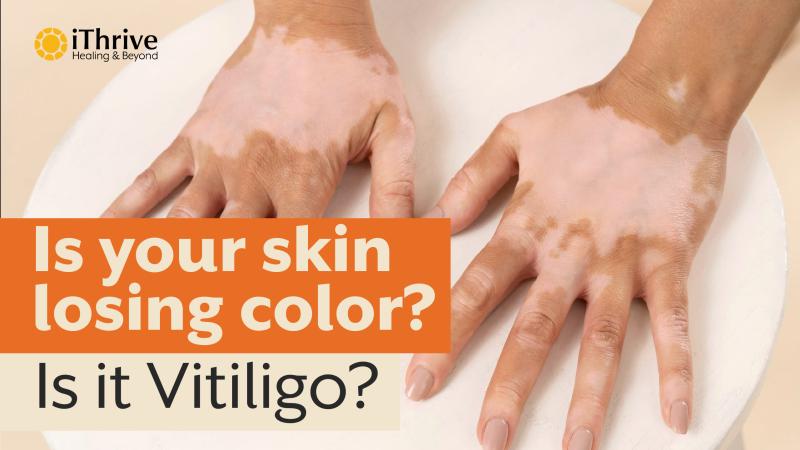
Does your skin also have many white patches that make you feel a bit odd from others? Does your confidence also tremble occasionally? Then you can relate to what Vitiligo is, it is a condition in which the skin loses pigment, forming white patches on the skin. It affects approximately 1% of the world's population which means approximately 70 million people are affected with vitiligo. Let's see what it is and why does skin lose color-
What is Vitiligo?
Vitiligo can make your skin look lighter than your original skin color or white, it is a chronic illness. The patches of skin that lose their color are referred to as macules (less than 1 centimeter in width) and patches (larger than 1 centimeter). It can also make your hair go white or silver. This occurs when the immune system of the body kills melanocytes, cells that produce melanin, the pigment that colors the skin, are destroyed or eliminated. You are aware 1000 out of every 100,000 individuals have vitiligo. Who can be affected by Vitiligo?
Vitiligo can affect both males and females, but as per some research, women are more likely to suffer from autoimmune skin diseases.
Researchers opine that half of the patients begin to show symptoms by 20 years of age, and vitiligo most often occurs through macules and patches before the age of thirty. Development of the disease in early childhood may be associated with family history. One may also develop Vitiligo by having a family member suffering from this disease or any autoimmune disease. It is more visible in individuals with darker complexion.
Some autoimmune illnesses have a greater risk of occurrence, such as:
Psoriasis
Anemia
Diabetes type 1
Addison's disease
Thyroid
Rheumatoid Arthritis
Alopecia Areata
What are the symptoms of Vitiligo
Vitiligo typically begins as a white patch of skin that gradually becomes entirely white. A patch can have a white center with surrounding paler skin. The patch can be faintly pink if it has blood vessels under the skin instead of being white.
Affected areas commonly involved by vitiligo are:
Armpits
Groins
Genitals
Mouth and eyes
Fingers and wrists
Inside your mouth
The most frequent vitiligo symptoms are as follows:
1. Patchy loss of skin color
2. Premature whitening or graying of hair on your head, eyelashes, beard, and eyebrows.
3. Loss of color in the mucous membranes, i.e., tissues lining the inside of your mouth and nose.
What are the causes of Vitiligo?
Vitiligo occurs when melanocytes (cells that produce pigment) die or cease to produce melanin (the pigment which gives color to your skin, hair, and eyes).
The affected areas first turn white or lighter. Some common causes of skin coloration such as:
1. Genetic predisposition - Gene mutation can elevate the risk as about 30% of individuals with this disease have relatives who are also battling it. Some gene mutations will boost the risk of Vitiligo.
2. Autoimmune responses- As you are already aware, vitiligo is an autoimmune condition in which the immune system of the body attacks melanocytes, the skin cells that produce pigment, by mistake, leading to loss of pigmentation and patchy appearance.
3. Environmental causes- Vitiligo may be triggered or exacerbated by a sunburn, or exposure to chemicals. Especially, late-onset vitiligo has an association with stress.
To Know More: https://www.ithrivein.com/blog/why-skin-loses-color-vitiligo
To Book a Free Consultation: https://www.ithrivein.com
Post Your Ad Here
Comments