Types of Construction Drawings: A Detailed Overview
 Construction drawings are essential
documents created by architects and engineers to guide the construction
process. These building construction drawings
provide detailed instructions on executing a project, ensuring proper
coordination, compliance, and accuracy. They can be categorized into several
types based on their purpose and discipline.
Construction drawings are essential
documents created by architects and engineers to guide the construction
process. These building construction drawings
provide detailed instructions on executing a project, ensuring proper
coordination, compliance, and accuracy. They can be categorized into several
types based on their purpose and discipline.
1.
Architectural Drawings
Architectural drawings represent the
design and layout of a building. These include:
- Concept Drawings
– Initial sketches to communicate design ideas.
- Site Plans
– A top-down view of the entire site, showing building placement, roads,
and utilities.
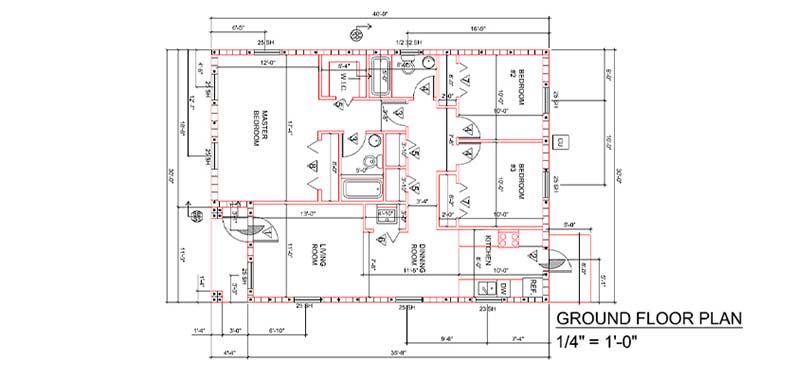
- Floor Plans
– Detailed layouts of rooms, walls, and fixtures.
- Section Drawings
– Cross-sectional views showing internal structures.
- Elevation Drawings
– Exterior views showing height, width, and appearance.
- Landscape Drawings
– Represent outdoor elements like trees, pathways, and lighting.
- Finishing Drawings
– Illustrate materials, textures, and interior finishes.
- Working Drawings
– Detailed blueprints used by contractors for execution.
2.
Structural Drawings
These focus on the structural
framework of the building, ensuring stability and load-bearing capacity. Key
types include:
- Foundation Plans
– Details of footings, beams, and slabs.
- Column Drawings
– Shows size, placement, and reinforcement details of columns.
- Wall Section Drawings
– Depict the construction of walls from foundation to roof.
- Roof Layouts
– Define the slope, drainage, and structural elements of roofs.
- Framing Plans
– Indicate the arrangement of beams, trusses, and other supports.
3.
MEP Drawings (Mechanical, Electrical, Plumbing)
MEP drawings focus on building
services, ensuring proper system integration:
- HVAC Drawings
– Heating, ventilation, and air-conditioning system layouts.
- Electrical Drawings
– Wiring, lighting, and electrical panel layouts.
- Plumbing Drawings
– Water supply, drainage, and pipe routing details.
- Fire Protection Drawings – Layouts for fire suppression systems like sprinklers
and alarms.
4.
Miscellaneous Drawings
Other construction drawings serve
specific purposes, such as:
- Shop Drawings
– Fabrication and installation details for components like doors and
windows.
- As-Built Drawings
– Revised drawings reflecting final construction changes.
- General Arrangement Drawings – Show relationships between different building
elements.
- Fabrication Drawings
– Provide manufacturing details for structural and MEP elements.
Conclusion
Construction drawings are crucial for ensuring accuracy, compliance, and efficiency in building projects. By understanding different types of construction drawings, stakeholders can improve communication, reduce errors, and enhance project execution.

Post Your Ad Here
Comments