Outsource Vs. In-house Ecommerce Data Entry Services
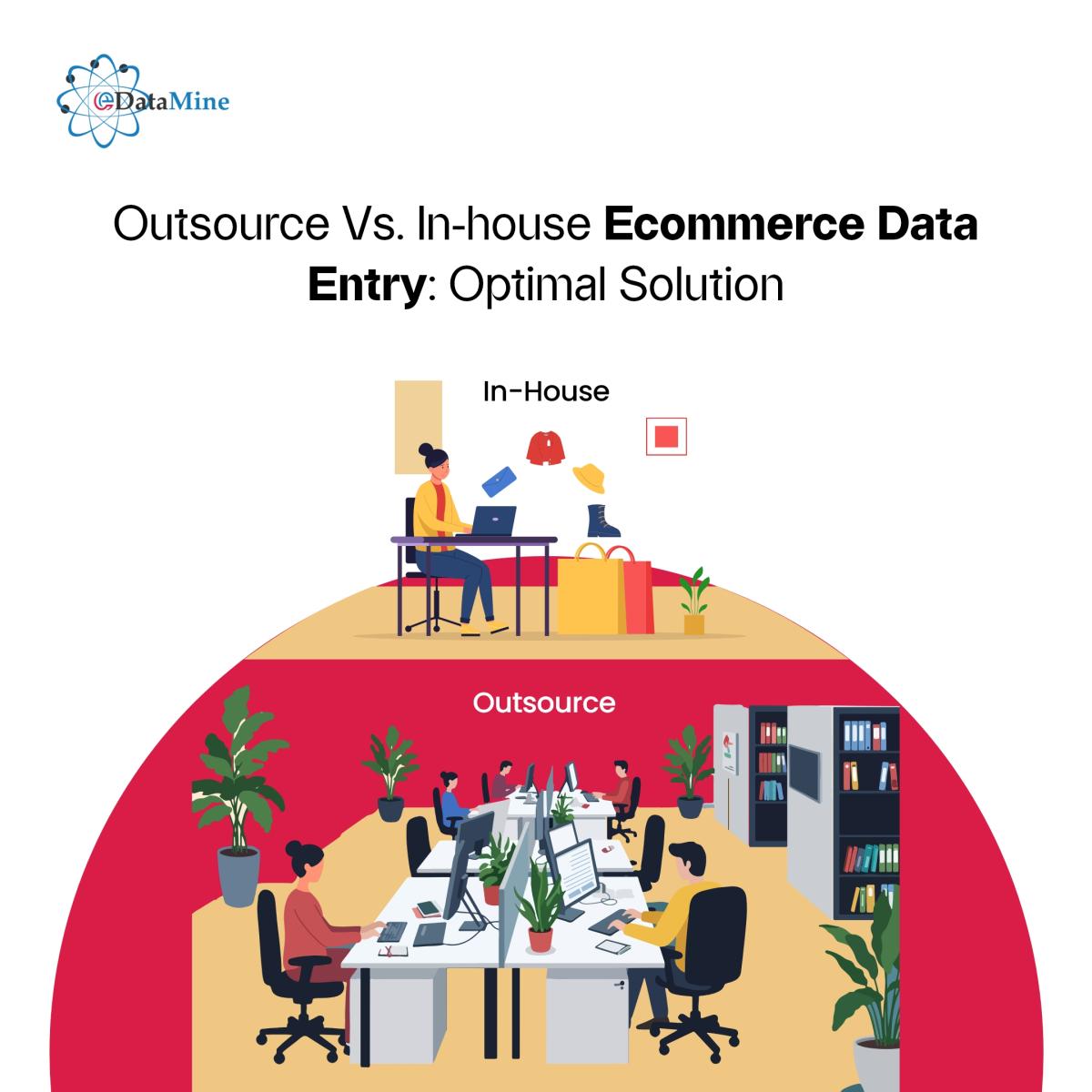
Outsourcing ecommerce data entry offers significant cost savings, scalability, and access to specialized expertise, making it optimal for most businesses seeking efficiency and growth. In-house teams, on the other hand, offer complete control, enhanced data security, and improved brand alignment, which are essential for specific high-sensitivity environments.
Outsourcing Data Entry
-
Cost Savings: Outsourcing converts fixed employee overheads into flexible, variable costs. It eliminates recruitment, training, salary, and infrastructure expenses, allowing payment only for consumed services and scaling up or down as needed.
-
Access to Expertise: Specialized providers use advanced tools and rigorous quality control, ensuring high data accuracy and speed difficult to match internally. Professional teams bring domain expertise, making product listing and data validation efficient.
-
Scalability and Flexibility: Outsourcing adapts quickly to changing business needs, managing seasonal demand variations without overburdening or underutilizing a permanent workforce.
-
Focus on Core Business: Delegating data-centric tasks frees internal resources to concentrate on growth, branding, and merchant activities.
In-House Data Entry
-
Complete Control: Internal teams offer maximum control over data processes, allowing quick adjustments and real-time, direct supervision. This benefits fast-moving businesses or those needing frequent updates.
-
Brand Alignment: Employees working in-house understand company values and goals, ensuring brand consistency in product information and listings.
-
Data Security: Managing everything internally keeps sensitive customer and product data secure, reducing concerns about external breaches or compliance risks.
Key Comparison
| Factor | Outsourcing | In-House |
|---|---|---|
| Cost | Lower variable cost | Higher fixed cost |
| Scalability | Highly scalable | Limited by in-house resources |
| Expertise | Access to specialists, tech | Must train staff, invest in tech |
| Control/Security | Less direct, need due diligence | Full control but internal risk |
| Flexibility | Adapts fast to demand swings | Slower workforce adjustments |
| Brand Sync | Depends on partner | Always aligned |
| Communication | May face barriers | Real-time & seamless |
Optimal Solution
-
Outsourcing suits businesses prioritizing cost-efficiency, scalability, and access to expertise, especially those with fluctuating workloads or large product catalogs.
-
In-house entry is preferred for companies handling highly sensitive data, requiring maximum control, or aligning every detail closely with brand objectives.
Most eCommerce data entry businesses find outsourcing optimal due to its cost, efficiency, and scalability advantages, unless control and security outweigh these benefits for specific operational reasons.
Sources
- https://www.edatamine.com/outsource-vs-inhouse-ecommerce-data-entry/
- https://www.edatamine.com/finding-balance-between-outsourcing-and-inhouse-data-entry-services/
- https://kimonservices.com/ecommerce-data-entry-outsourcing
- https://www.linkedin.com/pulse/comparing-in-house-vs-outsourced-retail-data-entry-zlxnf


Comments