What does a cardiac MRI show and why do it?
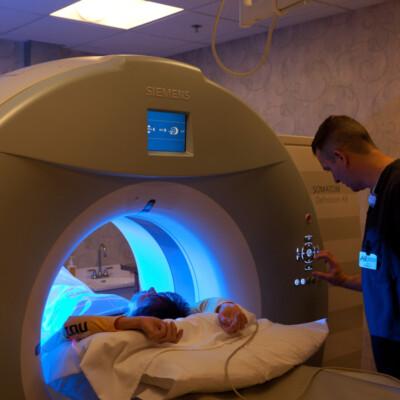
Physical basis of the method
The basic principle of the MRI machine is nuclear magnetic resonance. Let's consider this concept from the physical point of view.
Human body consists of atoms, their charged particles are neutrons and protons. The particles rotate chaotically inside the atomic nucleus, generating an internal magnetic field, which can interact with the external magnetic field. As a result of this process, protons line up in a certain sequence. The tomograph generates an energy pulse close to the protons' own rotation frequency (Larmor frequency). This contributes to the change of position of the particles and their synchronous rotation.
Protons of the internal magnetic field under the influence of the energy gradually change positions and align themselves in an order similar to the external field. This is denoted by the term "relaxation". There are two relaxation times: T1 and T2. The concentration of the nuclei and the relaxation time determine the magnitude of the spectrum and the brightness of the image.
Magnetic resonance imaging is suitable for imaging soft tissue because anatomical structures with few protons (bone, air) always have a weak signal, so are imaged dark. Fluids, particularly water, can appear both light and dark depending on the period (T1 or T2).
Additional features of the study
An additional value of MRI is the ability to enhance the sensitivity of the technique by introducing contrast compounds. The most widely used is gadolinium. The contrast accumulates in tissues, allowing the diagnosis of tumors and metastases. It is also used in cardiology practice to recognize aneurysms, malformations and other vascular anomalies.
There are specific MR examinations (magnetic resonance imaging studies) of the cardiovascular system.
- MR angiography is a highly effective method of rapid assessment of blood flow in the aorta and peripheral arteries. Magnetic resonance imaging allows viewing images of blood vessels in 2D and 3D modes.
- MR spectroscopy - based on spectrum formation from hydrogen and phosphorus nuclei, which is important for evaluation of biochemical processes in myocardium. The spectrum demonstrates relative concentrations of adenosine triphosphate (ATP) and phosphocreatine (PCr), marker enzymes of cardiac muscle damage. Decrease of FKr concentration in comparison with ATP indicates myocardial ischemia.
- Phase velocity mapping is a resonance method similar to cardiac ultrasound. It allows to visualize blood flow, calculate stroke volume and cardiac output at the level of aortic valve, as well as determine the presence of interventricular or interatrial septal defects.
Indications
The main indication for the study is the need for detailed visualization of the circulatory organs in case of inaccurate results of cardiac ultrasound. It can also be used as an alternative to multispiral computed tomography (MSCT).
In cardiology practice it is important to correctly calculate myocardial mass, chamber volumes, ejection fraction, and to establish the cause of development and progression of heart failure, which is perfectly demonstrated bycardiac MRI.
The high resolution of the tomography allows optimal assessment of the contractile function of the heart. The breath-holding techniques help to trace the localization of the coronary artery. The method makes it possible to assess valve function and indicate reverse blood flow or stenosis. Tomography is the "gold standard" for assessing pericardial thickness. The method provides clear images of the aorta, pulmonary arteries and veins, and assesses myocardial perfusion.
Indications for cardiac MRI are formed when the following conditions are suspected:
- ventricular aneurysm and pseudoaneurysm;
- dilated and hypertrophic cardiomyopathies;
- Congenital and acquired heart defects;
- myocarditis;
- cardiac fibrosis;
- arrhythmogenic myocardial dysplasia;
- Hemochromatosis, an infiltrative cardiomyopathy in which iron accumulates in the myocardium;
- cardiac remodeling;
- amyloidosis;
- sarcoidosis;
- Chagas disease;
- Tumors in the heart are also easily detected, which helps to recognize the disease in its early stages.
Informativeness
The informativeness of the method depends directly on the type of apparatus used, its power and settings.
Open (low-field) tomograph is recommended for examination of patients with claustrophobia and other complicating conditions. The power of the machine is usually between 0.23 and 0.5 Tesla. Whether to perform a cardiac MRI scan at such weak settings is a question of rationality, because the quality of the images is low.
High-field units have a power of 1-1.5-3 Tesla, which provides thin slices and, therefore, a more detailed picture. In addition, this type of machine is much faster.
Conclusions
Despite its high cost, cardiac tomography is widely used in modern medicine. The method is recognized as the most reliable for assessing the structure and function of the right and left ventricles, main and peripheral vessels. But it is worth noting that MRI is not the initial study in the diagnosis of cardiovascular diseases, and is performed more often to clarify the echocardiography data.
Post Your Ad Here
Comments