Top 5 Historical Places of Gujarat
Gujarat abounds in historical places. This is one land that
presents us with incredible archaeological monuments dating back to the times
of the Indus Valley civilization. Numerous heritage spots in Gujarat reflect a unique blend of our rich historic past and vibrant and colorful
culture. The many historical places that the state is dotted with show a real
intriguing fusion of myriad architectural styles such as those of bygone eras,
then the modern architectural styles, then international architectural
styles, then regional architectural styles, and so on. Thus architectural
tourism has already gained a strong foothold on the land of Gujarat. Some of
the top-rated historical places of Gujarat are listed below.
[ Suggested Tour: Gujarat Tour
Packages ]
Lothal
The Lothal ruins belong to the era of the Indus Valley
Civilization. Lothal projects marvelous town planning and seals excavated from
this site indicate that people belonging to this zone of Indus Valley
Civilization quite frequently engaged in trading activities with those
belonging to other ancient civilizations such as Egyptian, Mesopotamian, and
Persian. Archaeological research indicates that this port of Lothal came into
being somewhere around 1800-2400 BC and was, no doubt the first port of the
country. Many seals dating back to as much as 4,000 years, ancient bead jewelry, and terracotta artifacts excavated from Lothal ruins make history come
alive for the many passionate history lovers.
Champaner-Pavagadh
The travel sites of Champaner and Pavagadh have been recognized
by UNESCO as World Heritage Sites. At these destinations, you would get to
notice the merging of different historical eras. It reflects a clear confluence
between the Puranic ages and the chivalric Rajput ruling period; also it reflects a
vivid historical confluence between the Maratha ruling periods and the era when
the Islamic influences started to dawn up. In other words, visiting the historical
sites of Gujarat is a lifetime experience for anyone.
Laxmi Vilas Palace
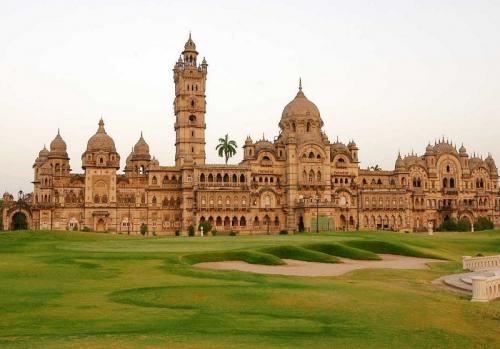
This highly ornate Laxmi Vilas Palace of Baroda was
constructed in the year 1980 by Maharaji Sayaji Rao III. The cost incurred in
constructing this lavish palatial 19th century building was about 60 lakhs
which is equivalent to 6 crores in this 21st century. The unique Indo-Saracenic
architectural style of the Laxmi villa palace makes it an immediate attention
grabber. The lavish and highly ornate darbar hall of this palace is something one should never miss. The Darbar Hall of the Laxmi Vilas Palace
exhibits a rare fusion of many intricate European architectural styles. The
Venetian patterned mosaic flooring, Stained Belgium glass windows, and pillars
embellished with multi-colored marble chips impart the Darbar hall a real breath-taking
royal touch.
Dholavira
Dholavira in Kutch falls within the Bhachau Taluka. The
Harappan ruins come alive in Dholavira which is why it is also differently
referred to as the ‘Harappan city’. Dholavira is counted among the top seven
wonders that the country has. J.P Joshi in the year 1967 discovered this
exquisite archaeological site. Of the 8 Harappan cities, Dholavira is perhaps
the largest one. During Dholavira's excavations, a whopping amount of gold,
silver, seals, animal bones, and reservoirs were found. This ancient rectangular metropolitan city of
Dholavira exhibits two different water channels - Mansar in the north and Manhar in the south. The many brick-made buildings dotting the city, and the highly sophisticated
systems for water conservation and urban planning that you get to visualize at
Dholavira will invariably make you feel, as it were you have traversed back in
time. Your visit to Dholavira would let you learn a lot about the
treasures hidden in our valued ancient civilizations.
Rani Ki Vav
So these are some of the major must-see historical sites of
Gujarat that no tourist should miss.
Post Your Ad Here
Comments