The Dawning of the Digital Age in Security Camera System and Video Surveillance Monitoring
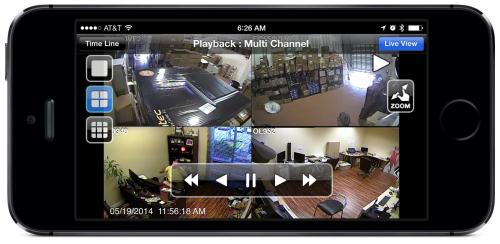
DVR (Digital Video Recorders) were introduced to answer many of the problems occurs in magnetic tape media libraries. Digital video surveillance system are recorded on hard disk drives just as a file is stored on a Computer and allows for redundancy, viewing decentralized, best quality of images and lifespan of recordings in a longer life possible.
Digital video surveillance system transmissions can be stored without the need for changing of tapes or human intervention. These video recording at times are greater due to compression algorithms within video streams and the devices. These video surveillance system recordings can viewed virtually anywhere and be instantly accessed in that security policies.
These typical DVR can multiplex 16 analog channels for video recording and playback. Other methods represent a great decrease with an equally significant in costs over increase in functionality and feasibility. Open standards, Internet Protocol (IP) addressable security camera system are as easy to integrate into the security network as a Computer. Data storage has seen an evident decrease in price with the emergence of NAS(Network Attached Storage) and SAN (Storage Area Networks) bringing CCTV security camera to yet another evolution on its course.
Digitized Video Camera recoding over IP.The plug and play approach allows IP address able security camera system to be placed anywhere on the infrastructure. Handling IP traffic in terms of electronics are now an integral part of the video surveillance system. These video surveillance system are stored in a digital format and they can be viewed anywhere on the network with new security capabilities.
These files are being administered as part of the network security policies. They can be also viewed simultaneously from multiple points on the network cabling system.It is also extremely versatile and not only is this easy to deploy. Network cabling systems are not burdened with another protocol and transmissions are native to the existing infrastructure which eliminates the need for separate network cabling systems.
TCP/IP has become the defect standard for networking cabling system. The open engineers allows for multiple network cabling systems to share network space and take advantage of advance technology to improve the capacity, reliability, scalability and accessibility of network resources. A building can become utilize an existing infrastructure with the ability to totally automated on one network cabling system. This automation can include not only security camera system, but also access control on fire,life and safety for building automation systems, voice and Voip business phone systems and of course, network traffic.
Network administrators and network cabling users are no longer bound to a desk as control and management of these security camera systems can be performed on any workstation with access to the network. They can be located anywhere and the single point of failure becomes the digital surveillance security camera, not the control center as it is extensively easy to make the digital servers redundant.
FOR YOUR INFORMATION check our website at www.carlsoncommcorp.com or CALL OR CONTACT US TODAY AT 310-213-1609 or 714-371-3682.
Post Your Ad Here
Comments