Textile Sublimation: Direct vs. Transfer , which is your choose?
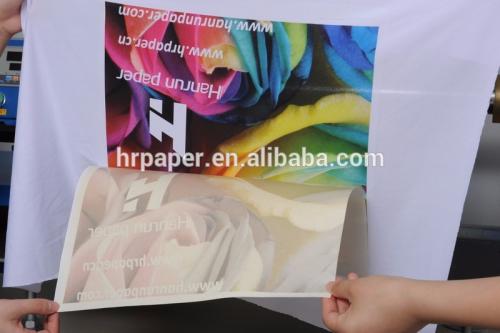 There are two different methods to digitally print textile:
 directly printing to textile or with the use of transfer paper.
There are pros and cons to both processes. To determine
which method to use, consider how the print will need to
perform in its final application using the following tips
and tricks.
Printing to transfer paper helps give better control over dot
gain immediately after the ink is jetted. There is less dot
gain on transfer paper than on fibrous textiles. Better control
over dot gain helps with edge definition and gives a high
quality appearance for closely viewed images.
Applications
best suited for transfer printing include pop-up displays and
in-store displays.
When printing direct to textile, the ink is jetted directly
onto the textile and then sublimated.
This process allows
the imagery to penetrate to the second side of the fabric,
resulting in a “see through” appearance. Wind socks that
you commonly see on roadsides by banks, gas stations and
mobile phone stores, for example, are often produced using
the direct to textile printing process.
Textiles intended for direct printing are manufactured with
coatings to assist in controlling the ink as it is applied.
The stronger the coating, the better the control of the ink.
Sometimes the coating can inhibit some of the dye from
migrating completely to the second side. At close viewing,
it’s possible to see the apparent density difference or
looser edge definition.
From a distance, however, these
appearances can be negligible.
Advertise on APSense
This advertising space is available.
Post Your Ad Here
Post Your Ad Here
Comments (1)
Hanrunpaper A.3
Marketing
Textile Sublimation: Direct vs. Transfer , which is your choose?