Key to Lose Weight
If
you're overweight, losing weight can reduce your risk of some potentially
serious health problems.
Most
people who need to lose weight can get health benefits from losing even a small
amount – about 5% – of their weight if they keep it off.
Health
problems linked to being overweight
If you're overweight or obese, you have a higher
risk of:
·
high blood pressure
·
heart disease
·
stroke
·
type 2 diabetes
·
some types of cancer
·
back pain
How can I lose weight safely?
The
best way to lose weight is to make small, realistic changes to your diet and
how physically active you are.
Get
tips from your fitness
experts on how to start
losing weight.
The
amount of physical activity you should do depends on your age. For example,
adults between the ages of 19 and 64 should do 150 minutes a week of
moderate-intensity physical activity. Find out more about the physical activity
guidelines.
Read
the answers to more questions about food
and diet.
Further information:
·
What
should my daily intake of calories be?
·
What
is an NHS Health Check?
·
Fitness
·
Lose
weight
·
Obesity
·
What’s
your BMI?
Exercise is the key to weight loss:
Consuming fewer calories and
including less fat in your diet is necessary to shed pounds. Adding exercise
increases the number of calories you burn so that you speed up your weight
loss. Plus, you build muscle, which keeps your metabolism in high gear to burn
calories more readily.
If you have any medical
conditions, see your doctor, especially if you’re over 40 years old. Your
physician can perform an exertion test, evaluate your overall health, and
suggest forms of exercise that are safe for you.
Exercise is important for
everyone. The fitter you are, the less your risk of having a heart attack or
stroke or developing diabetes or some other crippling and deadly disease. Here
are some of the tangible benefits exercising offers:
·
Curbing your appetite: True hunger has little to do with why
or how much people eat. Many people eat out of boredom or habit.
Some
people say that exercise increases their hunger. But exercise pulls stored
calories in the forms of glucose and fat out of tissues so that blood glucose
levels stay even and you don’t feel hungry.
When
you first start becoming more active, after a long stretch without any
exercise, you may feel hungry. After a day or so, sensations of hunger will be
replaced with feelings of well-being.
·
Increasing calorie burn: The more calories you burn over the amount
that your body needs to maintain its current weight, the greater your weight
loss. That’s why adding exercise to your reduced calorie plan speeds up your
weight-loss efforts.
Another
way that exercise burns calories is by increasing your metabolic rate. And
exercise helps you to lose fat but not muscle, which determines how fast or
slow your body burns calories. Fat is relatively inert, but muscle is active
and needs energy to maintain itself. So the more muscle you have, the more
calories your body needs.
·
Protecting against muscle loss: Many studies demonstrate that when a
person diets, they loose 75 percent fat and 25 percent muscle. As muscle is
lost, your body’s ability to burn and use calories efficiently decreases. To
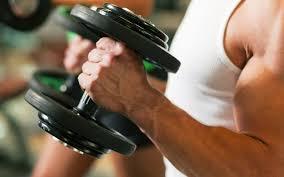
build muscle, add resistance training, such as lifting weights, to your
exercise program.
·
Improving self-esteem: Some psychologists prescribe daily
exercise for depressed patients and see mood improvements equal to those of
prescription antidepressant drug therapy.
So
much of the weight-loss process involves giving up, limiting, and cutting out.
But exercise is a positive addition. When you feel good about yourself, staying
with your weight-loss commitment is easy.
·
Losing weight more easily and keeping
it off: The
National Weight Control Registry maintained at the University of Colorado
includes more than 3,000 individuals who have lost more than 30 pounds and have
kept it off for more than a year. But amazingly, the average loss is 60 pounds, and the average
maintenance is six years.
Successful
losers expended about 2,800 calories in physical activity per week — about 60
minutes of activity a day. Typically, they combined walking with
medium-to-heavy exercise, such as cycling, running, stair climbing, aerobic
exercising, and weight lifting.
[source=
]
Post Your Ad Here
Comments