Immunoassay Analyzers – History and Development
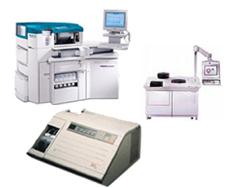 Immunoassay analyzers play an important role in clinical medicine by guiding diagnostic and therapeutic decisions.
An immunoassay analyzer is to run automated biochemical tests to detect the presence and concentration of substances in the samples. These analyzers typically include an autosampler, a reagent dispenser, a washer, and a detection system.
History
The development of immunoassays took place after the introduction of radioimmunoassay (RIA) in 1959 by Berson and Yalow. Their work won them the Nobel Prize in Medicine in 1977.
The first homogenous immunoassay (no separation step required) was the Enzyme Multiplied Immunoassay Technique (EMIT) in the 1970s, which enabled adaptation of this assay onto automated chemistry platforms. EMIT was also one of the first immunoassay that made use of non-isotopic labels. This homogenous enzyme assay was automated, did not require separation, and utilized spectrophotometers.
The EIA – Enzyme Immunoassay and ELISA – Enzyme Linked Immunoassay was developed independently and simultaneously by Perlmann and Engvall in Sweden and in the Netherlands by van Weeman and Schuurs. These tests incorporated the use of enzymes in place of radioisotopes to detect the presence of substances in blood. The earlier versions of these tests were not as precise and sensitive as the RIA, but over the time, they were utilized and further developed by automation process and further assay enhancements.
The development of other techniques such as FPIA – Fluorescence Polarization Immunoassay, KIMS – Kinetic Interaction of Particles and CEDIA – Cloned Enzymes Donor Immunoassay have advanced the field of homogenous assays. The availability of automation allows laboratories to select the immunoassay reagent system they prefer.
Advanced Analyzer Models
Ranging from floor to bench top and point-of-care models, today immunoassay analyzers play a prominent role in the analysis of many clinical laboratory analytes such as proteins, hormones, drugs, and nucleic acids. These analyzers can perform many types of tests, including testing for cancer markers and infectious diseases, cardiac analysis, therapeutic drug monitoring, and allergy testing.
Popular models available today include
* Point-of-care DCA Vantage Analyzer - The DCA Vantage® Analyzer from Siemens Healthineers help to monitor glycemic control and detect early kidney disease in environments ranging from the physician’s office to remote, point-of-care coordinated sites in hospitals and multisite practices. Self-contained cartridges facilitate easy, walk-away operation after sample loading.
* Bench-top Beckman Coulter Access II - The Access 2 provides users with greater control over quality, reliability and speed without sacrificing valuable floor space With an intuitive operator interface, enhanced sample handling and innovative menu, the state-of-the-art system delivers new levels of laboratory efficiency, standardization and cost effectiveness.
* Roche Elecsys 2010 – This system is available in the form of sample disk or a rack handling system that can be operated in both continuous and random access modes. The throughput rate of this laboratory equipment is 86 tests per hour and on-board capacity is of 15 tests.
Leading lab equipment suppliers offer both new and refurbished models of immunoassay analyzers. Reputable vendors supply refurbished analyzers with a 90-day parts warranty. They also offer analyzers for lease.
Advertise on APSense
This advertising space is available.
Post Your Ad Here
Post Your Ad Here
Comments