General resistance to aqueous corrosion by super metals and alloys
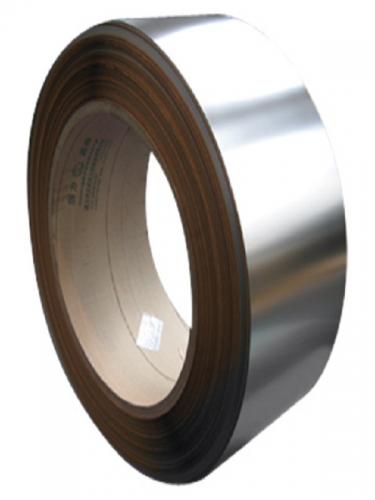
The objective of this article is to explain the general corrosion resistance properties of the standard super metals and alloys. However the information solely should not be used to make a decision on the material choice. Although the general resistance described for the variety of materials helps in determining the materials that offer the success in an application and will be useful in the material choice.
It is impossible to discuss the entire materials here. Therefore only a few of the typically used metals and alloys are discussed. The common material categories for example stainless steel grades are available that are formed for a particular aim. The manufacturer should be contacted to get sufficient information.
Carbon steel
Carbon steel offers limited resistance. it is not fit for use with dilute acids and hence it is not preferred to employ with below 90% sulfuric acid, from 90 – 98 % to boiling point, it can be used. It should not be exposed to media containing solutions of hydrochloric acid, phosphoric and nitric acids.
Carbon steel is attacked by caustic embrittlement when used with caustic soda. It can be controlled by stress relieving. But if the steel needs to be used with caustic soda, some iron addition is offered to the caustic solution.
Carbon steel offered suitable service in the various organic chemicals excluding organic chlorides. Normally the content of oxygen or acids will increase its corrosion rate, the material is not corroded in the alkaline media. The steel imbedded in the concrete is secured from the attack of corrosion of alkalines developed by the reaction of cement with water.
The carbon steel offers resistance to atmospheric corrosion on the base of environment. In the rural regions the corrosion is based on carbonate or oxide media. In the industrial regions involve the use of sulfuric acid, marine regions comprise of salts. The attack will be quick in the industrial and seawater conditions due to acid or salt, good electric conductivity of rainwater and potential to produce sulfates and chlorides that result in discarding the security oxide layer from the surface of carbon steel.
Although corrosion resistance can be enhanced by alloying. A low alloy and high strength steel comprising of the following compositions will be attack almost by half.
C – 0.12 %, Mn – 0.20 – 0.50 %, P – 0.07 – 0.16 %, S – 0.75 %, Cu – 0.30 – 0.50 %, Cr – 0.50 to 1.25 %, Ni – 0.55%.
Stainless
steels
Stainless steel has been being used on the vast rate in the various applications to prevent corrosion. It is feasibly known and employed as a construction material to prevent attack.
Stainless steel describes a complete family of steel grades where each material has exclusive set of mechanical, physical and corrosion resistance characteristics. The alloys are iron based containing chromium, nickel and nominal magnitudes of carbon, columbium, copper, selenium, titanium and others. These grades are categorized as austenitic, martensitic and ferritic.
Martensitic stainless steels
Martensitic stainless steels comprise of 12 – 20% chromium, limited magnitudes of carbon and other composition elements. Grade 410 is a common member. The general corrosion resistance offered by this grade is lower to austenitic stainless steels. They are used in nominally corrosive applications for example atmospheric, fresh water and organic conditions.
Although they have the potential to be heat processed to a large level of hardness and due to their oxidation resistance property they are significant in applications for cutlery, razor blades and dental equipments, springs for the elevated temperature applications ball valves and seats and other similar applications.
Ferritic
stainless steels
Ferritic stainless steels consist of 15 – 30% chromium and a low carbon concentration. Grade 430 is a standard member of this family. The general corrosion resistance offered by this group is better than martensitic stainless steels however lower to austenitic. Grade 430 is broadly used in nitric acid units. Nominally corrosive conditions and oxidizing media are handled in a better way. The ferritic stainless steels are commonly used for kitchen system, dairy machinery, interior decoration and automobile trimmings. They are significant in the various furnace components as increase in chromium magnitude to 30% superiorly prevents attack in oxidizing conditions at high temperatures.
Austenitic steel grades-
Austenitic steel grades are materials consisting of nickel and chromium. With the inclusion of large magnitudes of nickel to chromium, austenite stability is received at the standard room temperature. these grades make 200 and 300 steel series. Plain carbon steels and low alloy carbon steels show increased brittleness with reduction in temperature. Austenitic stainless steel grades do not show this behavior and hence they are significant in the several low temperature applications. The presence of high nickel magnitude reduces the feasible service limit.
Austenitic stainless steels offer protection from any type of attack with the development of oxide layer that is produced on the alloy’s surface therefore these materials have the widest corrosion resistance strength when used in the oxidizing media. Reducing media and the availability of chloride ions damage this layer and result in quick corrosion. Large tensile stresses and the availability of chloride ions reduce stress corrosion cracking.
Precipitation of chromium carbides is resulted by welding. It decreases the corrosion resistance of grade in the welded region. Suitable heat processing will recover the carbides in the solution. Stress relieving of welded metal will not recover the carbides due to insufficient temperature increase. The stainless steel grades superiorly resist attack in nitric acid at whole concentrations and temperature limits. in the various nitric acid units, stainless steel grade 304 is used. These grades have limited use in the sulfuric acid (H2SO4) plants.
Nickel
Nickel material is used in two alloys- Nickel 200 and 201 grades. The low carbon concentration of nickel 201 avoids graphitization and resulting loss in ductility hence it is recommended in the high temperature service above 316oC or 600oF.
Only silver or zirconium has wider resistance to attack of hot or cold alkalies than occurs in nickel. Below a content of 50% caustic, the attack rate of nickel is below 0.2 mpy in fact in the boiling solutions. Resulting, this grade is fit for use in manufacturing caustic evaporator tubing. The alloy is slightly affected with increase in concentration and temperature limits. The security from corrosion is offered by the development of nickel oxide layer on the surface.
Nickel 200 as a construction material for the elevated temperature chlorination or fluorination system, produces nickel chloride or fluoride security layers that prevent attack. Hence it is another significant application area.
Normally nickel is used in the service of dilute acids like hydrochloric, sulfuric and phosphoric. Although, if air or salts are available, corrosion rates will increase quickly. It becomes crucial to determine all parts occur in these streams prior nickel can be used in this application.
Generally nickel is suitable in dealing with food items as it can maintain their purity and is used in synthetic fibers and in structural applications where corrosion resistance is crucial.
Nickel-Copper
alloys
Broadly used grades are- Monel 400 and K-500. Alloy 400 offers identical characteristics with pure nickel in addition of some enhanced properties. The resistance to chloride stress corrosion cracking makes alloy 400 an outstanding option for use in brackish and marine solutions. Outstanding resistance to chloride stress corrosion cracking makes alloy 400 a premiere choice for use in brackish and marine applications. Prime use has been attained by this material when employed for propellers, propeller shafts, pump impellers and shafts, condenser tubes and other high velocity applications with brackish or marine waters. Inclusion of iron to alloy increases erosion and cavitation resistance properties in the heat exchanger tubes. However Monel 400 receives pitting attack in the stagnant marine water, the corrosion is lower as compare to alloy 200. It can handle hydrofluoric acid at all concentration and temperature limits. The oxidizing salts will improve the corrosion rate. For use in such services, it is essential to check out the presence of oxidizing salts. While use in liquid hydrofluoric acid, grade 400 is not attacked by SCC but in moist, aerated HF or hydrofluosilicic acid vapors, SCC occurs.
Alloy 400 offers enhanced resistance to non-oxidizing acids for example sulfuric, hydrochloric and phosphoric acids better than grade 200. The alloy is not suitable for handling oxidizing media for example ferric chloride, nitric acid, chromic acid, wet chlorine, ammonia or sulfur dioxide.
Monel K500 offers equivalent corrosion resistance properties as alloy 400 however with enhanced strength and hardness. It retains ductile at temperatures lower to -235oC or -423oF and keeps its strength up to 649oC or 1200oF. Its uses are comparable to alloy 400, specifically in the elevated or lower temperature limits or where enhanced strength is a requirement.
Nickel-Molybdenum
Alloys
However there are many alloys in this series, major alloy is Hastelloy B-2. It is significant for use in the reducing conditions. This grade is unique due to absence of chromium. Presence of chief agent molybdenum prevents attack in the reducing media.
Hastelloy B2 was mainly made for service in hydrochloric acid based conditions for example distillation, condenser and in handling the acid. It inhibits attack in the entire concentrations at a temperature limit from 70 – 100oC. Alloy B2 is significant for use with wet hydrogen chloride gas, pure sulfuric acid at all magnitudes and temperatures below 60% acid and offers supreme resistance to 100oC or 212oF for acid concentration above 60%.
Hastelloy B2 prevents corrosion in the various non-oxidizing conditions for example hydrofluoric and phosphoric acids, organic acids including formic, acetic and cresylic and chloride based salts such as ALCl3, MgCl2 and antimonyl chloride. Keep in mind that all service salts must be reducing in nature.
Alloy B-2is not suitable for use in the oxidizing media. It fails in handling nitric acid, ferric chloride, cupric chloride or other oxidizing media. The availability of such materials even in ppm in HCl or H2SO4 acids can widely increase the corrosion rate of this grade. Hence it is crucial to seriously evaluate the media type before using grade B-2.
Nickel-Chromium-Iron alloys
This group includes Inconel 600, Incoloy 800 and Incoloy 825. Alloy 600 prevents attack at the high temperatures specifically in the oxidizing media. It can be used with dry halogens up to 538oC or 1000oF. As the alloy 600 is a nickel based metal, it is resistant to stress corrosion cracking, therefore it is significant for service in water where stainless steel grades fail. It offers resistance to high purity therefore grade 600 is used in nuclear reactors for steam generator tubes and water pipes. Due to absence of molybdenum alloy 600 is mildly used in the reducing media.
Incoloy 800 is a significant material for used as an alloy for petrochemical industry at the high temperatures and in the oxidation conditions. It doesn’t attain brittleness even after prolong exposures at 649oC to 870oC or 1200 – 1600oF. It is ideal for use in the oxidation services to 1093oC or 2000oF. It is not fit for use in the reducing conditions. Minor uses are in aqueous media as its resistance to corrosion is moderate. Few applications for its enhanced resistance to SCC than stainless steel series 300 justify its higher price.
Incoloy 825 offers enhanced resistance to aqueous corrosion resistance than grade 800. It significantly resists attack in boiling sulfuric acid solutions about 40% weight and entire concentrations to the highest service limit of 66oC or 150oF. It also prevents attack in phosphoric acid solutions. Hydrochloric and hydrofluoric acid solutions corrode alloy 825 thus, it must not be used with these media.
Ni-Mo-Cr-Fe-Cu
alloys
Hastelloy G is used in handling and processing reducing media for example sulfuric and phosphoric acids and the presence of nickel makes it to prevent chloride based stress corrosion cracking. Therefore alloy G is significant in handling the combined solutions of H2SO4 and halides. Uses include sulfuric dioxide based scrubbing units for power generation units as it prevents attack in sulfuric acid and in conditions including concentrated chloride ions.
Hastelloy G3 contains lower carbon and columbium-tantalum content as compare to grade G and increased molybdenum concentration that offers enhanced localized corrosion resistance as well as better weldability. Due to these characteristics Hastelloy G3 is better than grade G in specific operations.
Hastelloy S has chemistry and corrosion resistance property comparable to alloy C276 and C4. Although the carbon concentration prevents its use in the aqueous media in the as-welded form. It was mainly used for gas turbine applications for its good stability, oxidation resistance and small thermal expansion coefficient.
Ni-Cr-Mo-Fe
alloys
Hastelloy X is known for its premier resistance to oxidation at high temperatures. It is crucial for catalyst grid supports in the production of nitric acid at 900oC or 1650oF. In fact at such limits, the alloy is resistant to oxidation, warpage and deformation.
It is also significant for use in the warm regions of gas turbine engines, furnace internal components, retorts etc.
Ni-Cr-Mo
Alloys
This group includes alloy 625, Hastelloy C276, alloy C4 and alloy S.
Inconel 625 can be employed in the welded form due to prevention of chloride based stress corrosion cracking as it contains large magnitude of nickel. It also offers good resistance to various aqueous solutions including organic acids, sulfuric acid and hydrochloric acid at limits down to 65oC or 150oF. It is also significant in preventing attack in hydrofluoric acid solutions. this grade is superior in dealing with phosphoric acid solutions as well as commercial acid types that comprise of fluorides, sulfates and chlorides. Contrast to many nickel based alloys that fail in dealing with nitric acid, Inconel 625 is suitable for handling solutions of nitric and hydrofluoric acids. In such media, stainless steel is attacked. Grade 625 is suitable for use in different pollution control services for example sulfur dioxide scrubbing units.
Alloy C276 is an enhanced deviation of grade C to prevent the corrosion issues of grade C that occur due to welding. It is an exclusive material that It offers suitable corrosion resistance to oxidizing conditions and reducing media including halogen ion contamination. It prevents attack in pitting and crevice corrosion makes it a supreme option for dealing acid chloride salts.
Alloy
C4
The general corrosion resistance of Hastelloy C4 is almost identical to C276 however grade C4 can be employed at the elevated temperatures and keeps its resistance properties in the both oxidizing and reducing environments. It can serve at the elevated temperatures without showing the corrosion signs.
Copper & its alloys
Copper has great electrical and heat conductivity and is machinable and flexible. It is corrosion resistant to urban, marine and industrial conditions, water and marine water. Hence, it is used in domestic and commercial water systems, marine applications, sheeting, roofing and outdoor applications. Copper metal has small mechanical characteristics it should be alloyed or cold processed to improve its strength.
Copper-Nickel alloys
The key alloys of this group are corrosion resistance that contain 90% copper and 70% copper. Other added elements are nickel, iron, manganese, niobium and silicon.
The prime application section of these materials is in dealing saltwater, use in pipes, pump casings, condenser tubes and plates. The corrosion rates are about 1 mpy and biofouling resistance is outstanding. The cupronickel alloys are resistant to stress corrosion cracking. However they prevent attack to some non-oxidizing acids, alkalis, neutral salts and organics, they are not widely used in these applications as economical alternatives exist.
Aluminum
Alloys
Types of wrought aluminum alloys are – nonheat treatable and heat treatable. Various nonheat processing alloys offer good resistance to general corrosion. The heat processing alloys offer identical resistance to general corrosion as the nonheat processing alloys. The heat processing alloys have a lower resistance to general corrosion as the nonheat treatable alloys.
Aluminum alloys prevent attack in the vast range of organic compounds including esters, aldehydes, ethers, hydrocarbons, ketones, mercaptans and various sulfur based compounds and nitro extracts. They prevent attack in the various acids, alcohols and phenols if these materials are not in the dry condition or near their boiling points.
Aluminum alloys are resistant to various organic compounds halogenated with fluorine and their resistance strength decrease with chlorine, bromine and iodine.
Aluminum is commonly used in food processing such as in cooking utensils, food and beverage packaging.
Titanium
Titanium offers corrosion resistance through the production of a stable, firmly adherent and secured oxide layer. As titanium has strong affinity for oxygen, it is used for healing the cracks in this security layer almost quickly. Therefore anhydrous conditions, without oxygen source should be prevented with titanium as the security layer cannot be reproduced if damaged. Pure titanium is commonly used for corrosion resistance.
Titanium is resistant to the various types of corrosive attacks in the marine and chloride salt solutions at ambient temperatures. It also prevents attack in the moist chlorine gas, chlorinated brines and hypochlorite solutions. Oxidizing acids like nitric and chromic can be handled effectively using titanium. Reducing environments for example hydrochloric, sulfuric and phosphoric acids are not suitable to employ titanium. Normally the metal is resistant to organic materials.
Comments