Cerber Ransomware Speaks About Its Encryption, Demands USD 500 in Bitcoins
In a way, Cerber
ransomware is true to its ancient name. A
Greek myth tells there is a ridiculous dog of many heads, Cerberus. The dog
prevents the dead from leaving the underworld. Likewise, the same-name
infection keeps your data in the encrypted world, so that anyone and anything
cannot properly read it.
To render the data readable, a victim is prompted to pay. This
strain of malware has gained a particular notoriety for its voice message. Once
the malicious scrambling completes, the rogue executes its media file. The
voice message states that all your documents etc. have been encrypted. It just
adds to the common written ransom note
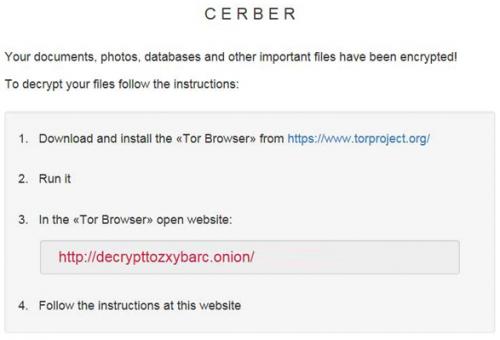
dropped into each folder with affected files and into the desktop. The written note provides more details, including the link
to further instructions.
A victim is requested to download and install TOR browser.
The note instructs the users to enter the
specific address in that browser. The
decryption page loads, which is an interface controlled by the crooks behind
the Cerber ransom virus. Available in
twelve languages, the service basically
scares its visitors to pay the amount ranging from
USD 500. The amount is payable in bitcoins.
Distribution of Cerber
ransomware involves a number of actors.
The trojan is provided on ransomware-as-a-service
terms at certain darknet Russian forums. That is, a number of unrelated teams propagate the virus in the wild. They
are free to choose a propagation method, as well as to adjust the ransomware
behavior. In most of the cases, they set the rogue to avoid running the
decryption, if the IP of affected PC is
registered in certain countries,
including Russia and some of its neighboring states.
Cerber ransomware applies an advanced encryption standard so that
the data coding cannot be undone without
the decryption key. It is the key that the ransom virus prompts its victims to
buy. If you have been unfortunate to have your computer data scrambled by Cerber for ransom, please take into account the
payment does not ensure the key is delivered, yet provides further incentives
to the black hats to propagate the ransomware and come up with its new strains.
The best practice of computer safety is to remove Cerber encryption virus while sticking to regular backups and
ransom-free recovery options.
Post Your Ad Here
Comments