Benefits of Hip Replacement Surgery in India With Best Orthopaedic Doctors
Overview
Hip replacement surgery is also known as Hip Arthroplasty.
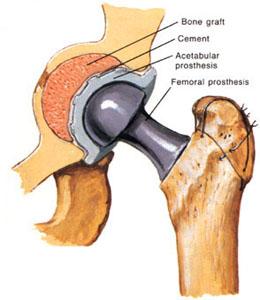
Hip replacement surgery is a common orthopedic procedure. Replacing the damaged
or infected hip joint with an implant or prosthesis helps the patient to get
rid of the pain and improves their mobility so that they are able to resume
their normal everyday activities. Hip replacement surgery is one of the most
complicated surgeries which is why orthopedic surgeons recommend this surgery
only in case of the patients where all other treatments have failed to provide
them with relief. This surgery can be performed with two approaches. The Traditional
Approach and the Minimally Invasive Approach. The traditional approach involves
a long incision and long recovery period whereas minimal invasive approach is a
new and technology advanced approach for performing Hip Replacement surgery.
Minimally invasive procedure involves many advantages but it is not recommended
to every patient.
Candidates for
Minimally Invasive Technique
Not everyone is a candidate for Minimally Invasive Total Hip
Replacement surgery before recommending this surgery the orthopedic surgeons
conduct a comprehensive evaluation and consider several factors before
determining if the procedure is a right option for the patient. Generally, the
candidates for hip replacement surgery are young, healthier, thin and ready to
make changes in the lifestyle and participate in the rehabilitation process
post-surgery. This technique is less suitable for patients who have already
undergone hip replacement surgery or patients who are overweight. Patients who
have a significant deformity of the hip joint, patients who are very muscular
or have a slow wound healing have higher risk problems from minimally invasive
total hip replacement surgery.
How is Minimal
Invasive Technique performed?
Minimally invasive hip replacement technique procedure is mostly
similar to the traditional procedure. But this technique involves less cutting
of the tissue in the surrounding of the hip. The artificial implants used are
the same as those used in traditional hip
replacement surgery. However in Minimally Invasive surgery specially
designed surgical instruments are needed to prepare the socket and femur so
that the artificial implants can be placed properly. Minimally invasive surgery
can be performed with either one or two small incisions. Smaller incisions lead
to less disturbance to the tissues.
Single-incision surgery: - In this type of minimally
invasive surgery, the surgeon makes a single incision which is around 3 to 6
inches. The length of the incision depends on the size of the patient,
difficulty of the procedure and the severity of the condition. The incision is
usually made outside the hip. The muscles and tendons are split or detached
from the hip. The surgeon repairs the implants and places the artificial ones
which encourages in healing and prevents the dislocation of the hip in future.
Two-incision surgery: - While performing two-incision
surgery the surgeon makes the first incision in the groin for placement of the
socket and makes the second incision the buttock for placement of the femoral
stem. While performing two-incision surgery the surgeon needs guidance from
x-rays. This surgery may require longer time as compared to traditional hip
replacement surgery.
Advantages of
Minimally Invasive Technique
·
Faster recovery.
·
Less scarring.
·
Less loss of blood.
·
Less post-operative pain.
·
Less time in the hospital.
·
Faster recovery.
·
Less effect on the immune system.
·
Less trauma to the muscles, nerves and tissues.
·
Improved mobility.


Post Your Ad Here
Comments