Bal Gangadhar Tilak
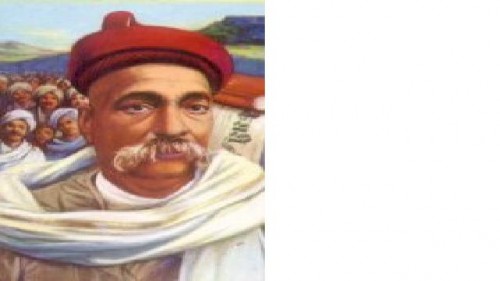
Bal Gangadhar Tilak
(29th Couplet) Described by British as "The Father of Indian Unrest "
Tilak was born on 23.07.1856. His slogan, "Swaraj (Self
Rule) is my birthright", inspired millions of Indians. His book
"Geetarahasya"a classic treatise on Geeta in Marathi was written by
him, in prison at Mandalay.Great journalist- editor, an authority on Vedas,
Sanskrit Scholar, mathematician and a natural leader of India. Died 01.08.1920
"Swaraj is our birthright," thundered Tilak, the Lion of India.He
founded schools andpublished newspapers, all for his motherland. He rotted in a
distant jail at Manda lay, in Burma. he wore himself out till his last breath,
to awaken his countrymen.
"If 5 sheep eat up
all the grass in a meadow in 28 days, how many sheep will eat up the grass in
20 days?"
"Seven sheep, sir," flashed back the answer even before the teacher
finished his question.
'Who is it that answered without working out the sum?" Thundered the
teacher.
Two or three voices shouted, "Bal, sir."
The teacher went near Bal. He took his note book and glanced through it. Should
he not at least take down the problem, let alone work it out?
"Where have you worked the sum?"
Bat, with a mischievous smile, pointed to his head with his index finger.
"You should work the problem in your. book," the teacher said.
'Why? I will do it orally," replied Bat.
Bal's classmates found it difficult to under- stand certain problems even when
the teacher did them thrice. But, to Bat mathe- matics was as easy as drinking
Water. Sanskrit, of course, was like peeled banana to him!
Intelligent But Mischievous
Bal's father Gangadhar
Ramachandra Tilak was a Sanskrit scholar and a famous teacher. Because of his
scholarship, he had become'Gangadharpant' to every one.
Bal learnt all the . lessons at home and there was noth ing left to learn at
school.
Though Bat was very intelligent, he was not his teachers' favourite because of
his mischievousness. From his childhood, he used to form independent views. He
took an independent stand always. He was very much different from boys of his
age.
Those were the days of
his schooling in the primary school at Ratnagiri.
One afternoon the teacher entered the class after the interval and
foundgroundnut shells scattered in the classroom. Naturally he grew angry.He
took his cane andasked, "Who scattered the groundnut shells like
this?"
There was silence. The teacher's anger rose.
"Speak, who ate the groundnuts?" No one confessed. The teacher lost
his temper. He decided to punish the entire class. He began to give each boy
two cuts with his cane. When Bal's turn came, he did not hold out his
hand."I did not eat the ground- nuts. So I will not receive the
cuts."
"Then who ate the
groundnuts?" "It is said that carrying tales is bad. So I won't
tell."
Bal's straightforwardness and truthfulness made the teacher himself
uncomfortable.
He became angry, too. He
sent him out of the school.And Bal's fatherGangadharpant received a complaint
against his son.
Next day, the father brought Bal to the school. He said that what his son had
said was true. Bal was not in the habit of eating anything outside his home and
he, the father,never gave his son money to buy anything.
Even at that young age it was Tilak's nature to protest against injustice.

Post Your Ad Here
Comments