A Window to History-Abhaneri
There
is hardly anyplace on the globe that outdoes India with regards to culture and
tradition. Every few miles in India give birth to a new art form. This majestic
and time tested art and tradition of India is evident in many palaces, forts
and stories and tales of India. One such place that is famous for its unique
architectural patters is Abhaneri situated in the Dausa district of Rajathan.
As the name suggests Abhaneri casts an ‘Abha’ that can be interpreted as imagery in English of the old life and times. Situated on the Jaipur Agra Road, a few kms away from Sikandra, this small town used to be the capital of the sprawling lands of Rajas. Rajas were known as Raja Bhoj and Raja Chandra in those times. Going by the determinations of the archaeological departments the forts of Abhaneri can easily be a whooping three thousand year old property, based on the calculations and facts available. It is believed that gurjar Maharaja Samrat Mihir Bojh once ruled at the property. He was also known as Raja Chand. The Abhaneri fort wasn’t originally named Abhaneri initially. It was called Abhanagri. Eventually with time it was given the name. Raja Chand constructed a number of magical things and places here which made the Turkey invaders get envious of his accomplishments and broke them. Even today the remnants of the pieces of sculptures and architecture speak volumes about the grandeur and majestic constructions. They speak volumes about the excellence and epitome of architecture. Immersed amidst the abstracts of nature the art form here seems to be weeping and whining exuding the pain of ravin and despoliation it suffered years back. It seems to be flashing a smile at the same time because even the contemporary scientists with upmarket and upgraded technology cannot make and match up to the excellence of architecture and stone art. Many of the artefacts procured from the Abhaneri fort have been installed and kept in the Albert Hall Museum, which is enlisted among the places to visit in Jaipur.
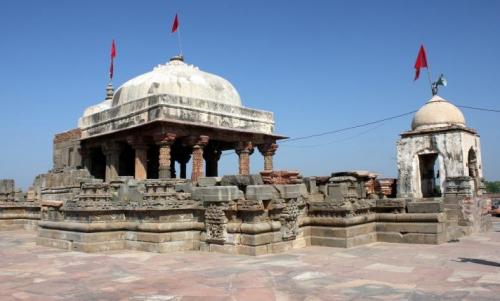
Harshat Mata Mandir &
Chand Bavdi
Abhaneri
got noticed and highlighted on a global level once when the archaeological
department procured and recovered the relics of third and fourth century from
the venue. Later the archaeological department confiscated the items at the
property and took it under their own ownership. Now the Harshat Mandir and
Chand Bavdi of Abhaneri are National Preserved Memorials. Situated on the
golden triangle of Delhi, Jaipur and Agra the number of visitors are increasing
here with every passing year. Its situation as Jaipur Agra highway and
proximity to the city of Jaipur has definitely helped it in gaining better
tourists. It is about 95 kms away from the city of Jaipur. It is basically
situated on the Jaipur-Agra Road, a few kms away from Sikandra. Jaipur is
famous for its Rajputi food like Daal Baati Choorma. To get the taste of Rajasthani
Platter, visit Virasat SheeshMahal, which is among the Best Restaurants in Jaipur.
The Dravid Style of South
Currently
Abhaneri is a small village. What is found from the sources is that Raja Chand
used to rule here in the ninth century. He was the same king who ruled over the
Gurjar dynasty. A lover of architecture and art Raja Chand constructed a number
of memorials and monuments during his reign. The design patters of those times
were highly influences by the Dravid pattern of style that belong the Southern
part of the country. He also constructed the Harshat Mandir and Chand Bavri is
his princely state. Both the monuments are a symbol and signifier of old
architectural patterns and style. Chand Bavdi is situated exactly in front of
the Harshat Mandir.
Chand Bavdi
Chand
Bavdi is one of the largest and oldest water reservoirs in Rajasthan. More than
9 meters deep this Bavdi was built by Raja Chand himself. This is a perfect
destination for Candid Photography. Abhaneri was earlier known as Abhanagri.
Due to a majestic pattern of stairs woven together it looks very different and
interesting to see and visit. Due to deep rungs on both the sides it is also
called as step wells. The surroundings of the Bavdi is lined by dual opened
verandas all around while the right of the entry door and the left of the small
ganesh temple has premise of the memorials and their work office. To get to the
lowest floor there are three rungs situated at the sides. The northern part has
multi storey gallery that is constructed over giant pillars. Beautiful statues
of Ganesha and Mahishasurmardini are installed in the gallery. The destination
is popular among couples for Pre marriage shoot. The type of Bavdi, its
verandah and entry area were not a part of the original landscape plan. They
were constructed later on. A three feet high wall of iron has been created
around the bavdi.
Post Your Ad Here
Comments