While Porch Pirate Booby Trap Videos Are Fake, Porch Piracy Is Real
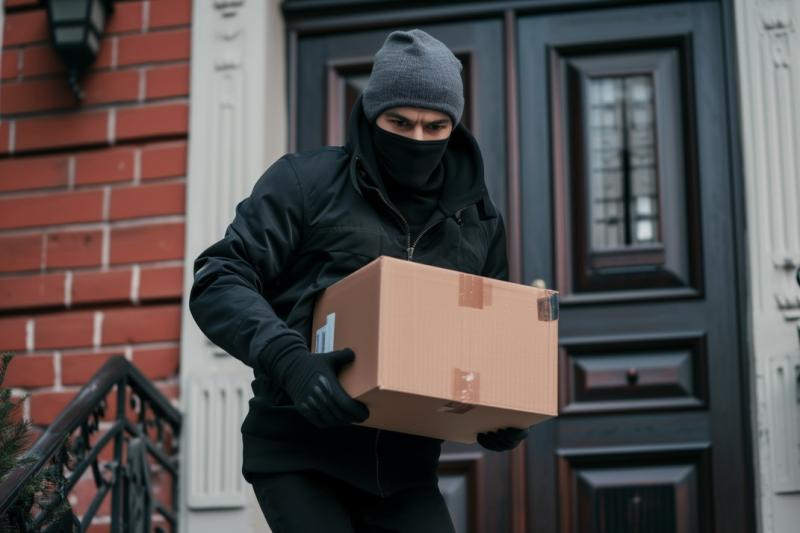
If you spend a considerable amount of time on YouTube, TikTok, or Instagram, you have undoubtedly seen videos portraying porch pirates being hit by booby traps that spray them with colorful dye. But here is the dirty little secret: most of them – if not all of them – are fake. They are AI-generated or staged, according to experts.
The videos are quite entertaining and even satisfying to a point. I am guessing the average consumer would love to see a porch pirate get his comeuppance with an exploding dye pack that paints him neon pink in a millisecond. But setting a booby trap for a porch pirate is not only impractical, but it could also land you in trouble with the law.
The Typical Video Scenario
If you have not seen one of these viral videos yet, the scenario is pretty straightforward. A typical video usually opens with a shot of the alleged porch pirate approaching a doorstep. As the individual reaches down to take the targeted package, the package itself explodes. The criminal is covered in a colorful dye. He might go into a verbal tirade that includes cursing and other forms of colorful language.
If the videos were real, they would be extremely helpful investigative tools. Brightly colored dye doesn't easily wash off. Therefore, perpetrators would be easy targets for police investigators. Yet the reality is most of the videos are AI-generated or staged by creators and their willing accomplices.
Booby Traps as a Deterrent
In fairness, there have been a few isolated incidents in which homeowners legitimately created booby traps against porch pirates. Their motivations were likely either revenge or to deter thieves from continuing the steel package. Let us go with the deterrent. How effective would a booby trap be?
I can't speak for every thief, but I do know being showered in a colorful dye that does not wash off in the shower would probably cause me to think twice before I stole another package. I am sure I could find a way to rationalize my way to another attempted theft. But if it happened a second time, I would find another line of work.
Interestingly enough, the idea of deterrence also fuels the rise in interest in video doorbells over the last 5 years or so. Unlike a booby trap, a video doorbell is perfectly legal. It also provides helpful evidence investigators can use to track down criminals. Best of all, a video doorbell with onboard audio allows homeowners to communicate with people as they approach the front door. An audible warning from a homeowner could be enough to scare away a thief.
The Crime Is Real Enough
Despite the fake nature of so many viral booby trap videos, the crime of porch piracy is very real. It cost American consumers an estimated $15 billion last year. That amounts to more than 104 million stolen packages, at a rate of 250,000 per day.
Porch piracy continues unabated because it is one of the easiest crimes to pull off. An experienced thief can walk up, grab a package, and make it back to his car in under 30 seconds. It does not take long at all. And at a time when so many families are dual income, it is common to find neighborhoods almost entirely empty during the workday. No one is paying attention, giving porch pirates free rein.
Perhaps that's why video doorbells have become so popular. Have homeowners cannot be there to watch their homes around-the-clock, a video doorbell at least gives them a leg up by alerting them to strangers approaching.
Better Methods Than Booby Traps
Getting back to the idea of setting booby traps for thieves, homeowners should understand they are taking quite a risk. Booby traps are generally considered illegal by the states. So if a burglar is ever hurt by a booby trap, they could press charges. At the very least, a homeowner could be open to civil liability in the event of an injury.
The good news is this: there are better methods for stopping porch pirates than setting booby traps. The aforementioned video doorbell is one suggestion. According to Vivint Home Security, a leading provider of video doorbells and other security equipment, combining a video doorbell with a complete home security package can be a powerful deterrent.
Other options suggested by Vivint include:
- Enlisting a Neighbor – Enlisting a willing neighbor to accept your deliveries just about solves the problem. As long as that neighbor will be home when delivery is expected, there is no need to leave packages exposed on the front porch.
- Remote Delivery – Most urban and larger suburban areas provide for remote package delivery via centralized locker locations. Packages are delivered to a secure locker located in a public place. You can pick your packages up at that location whenever you are ready.
- Home Package Locker – Homeowners can also invest in package lockers for their own homes. A locker is secured to the porch or exterior wall. Meanwhile, the delivery company is provided with the security code to unlock and lock the device at the time of delivery.
- Garage Access – By installing a smart garage door opener, homeowners can give delivery drivers temporary access to their garages. A driver sends a text when he arrives and waits for the homeowner to open the door remotely. The homeowner then closes the door once the driver has left.
Regardless of the solutions a homeowner chooses to utilize, it goes without saying that he should take advantage of delivery notifications. Homeowners should also try to plan deliveries as strategically as possible. The idea is to give porch pirates the least amount of opportunity to steal.
All those viral porch pirate and booby trap videos are fake. They may be entertaining, but do not fall for the myth that they are real. If anything, understand that porch piracy is a very real problem costing consumers billions. Protect yourself by using your head when it comes to home deliveries.


Comments