Cellophane vs Plastic Wrap
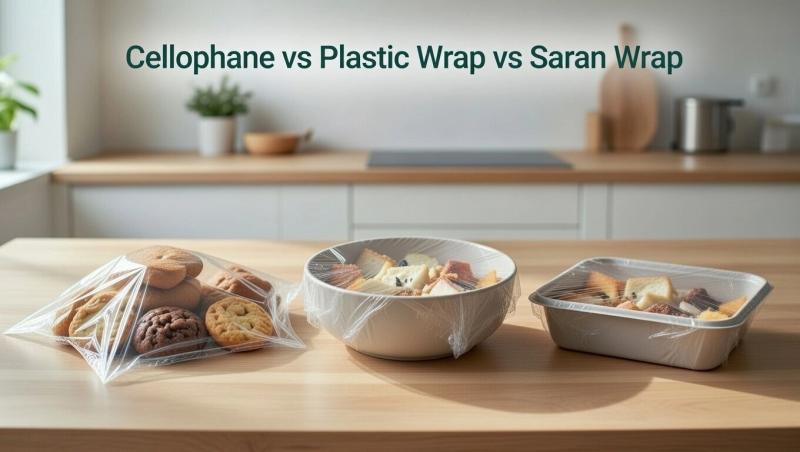
Cellophane vs Plastic Wrap and Saran Wrap: The Ultimate Eco-Friendly Packaging Guide
What is cellophane and why is it a standout choice for eco-conscious packaging? Unlike common plastic film, genuine cellophane is made from plant-based cellulose, offering a biodegradable and compostable solution. With distinctive features like breathability, heat resistance and a crisp texture, it’s the go-to material for everything from bakery goods to gift wrapping.
What Is Cellophane?
- Material: Regenerated cellulose (wood pulp, cotton, or hemp)
- Features: Breathable, biodegradable, heat-resistant
- Uses: Bakery goods, crafts, gift packaging
Cellophane originates from plants. It is a thin, transparent film made of regenerated cellulose, which is a natural polymer. It is a very distinctive material that is often confused with plastic film.
Distinctive Features of Cellophane
- Material: Sourced from renewable plant sources.
- Appearance and Texture: Has a characteristic crisp, crackly feel and holds its shape when creased.
- Heat Resistance: High temperature resistance; it burns like paper (turning to ash) rather than melting.
- Moisture Properties: Breathable to water vapor, which prevents condensation and mold growth in food.
- Eco-Friendly: Uncoated cellophane is biodegradable and compostable, breaking down in weeks.
What Is Plastic Wrap?
Plastic wraps (cling film) are thin, flexible petroleum-based films used to cover food. Their most prominent features are that they are stretchy and airtight. Brands like Glad and Reynolds are common household names in the U.S. market.
What Is Saran Wrap?
Saran Wrap is a specific brand of plastic film. Originally made from PVDC, it shifted to a polyethylene (PE) blend in the early 2000s due to environmental and safety concerns regarding chlorine. It is FDA-approved for food contact and known for its strong cling.
Which One Is More Eco-Friendly?
Cellophane is the clear winner. It is made from renewable materials and is biodegradable. Plastic and Saran wrap are made from oil, are not biodegradable, and can exist in the environment for hundreds of years.
Which One Should You Use?
For Food Storage
- Plastic/Saran Wrap: Best for leftovers, meat, or seafood in the refrigerator where an airtight seal is needed.
- Cellophane: Better for fresh produce, baked goods (like cookies or bread), and certain cheeses where breathability is beneficial.
For Gifting & Crafts
Cellophane is preferred for gift wrapping and floral arrangements because it is structured, holds its shape, and offers a professional "crinkle" finish. Plastic wrap is rarely used here due to its clingy, messy nature.
As a Final Point
The main difference is that cellophane is plant-based and breathable, while plastic wrap is petroleum-based and airtight. Use plastic wrap when you need a tight seal, and use cellophane when you prioritize freshness, aesthetics, or the environment.

Comments