Why Regression Testing Is Critical for Continuous Software Quality?
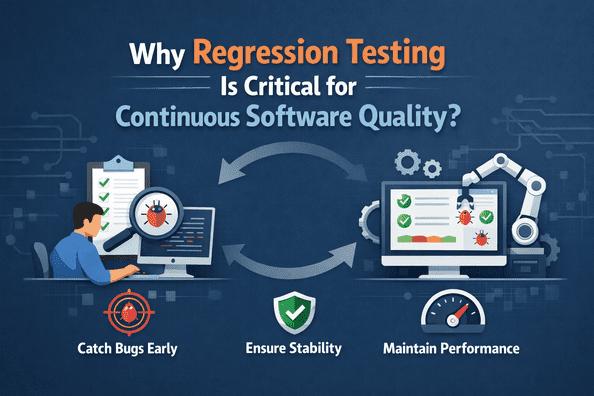
Modern software applications evolve constantly through bug fixes, feature enhancements, and performance improvements. While these changes are necessary, they can unintentionally impact existing functionality. This is why regression testing plays a vital role in maintaining continuous software quality throughout the development lifecycle.
What Is Regression Testing?
Regression testing is a type of software testing that ensures existing features continue to work as expected after code changes. Whenever developers modify code—whether to fix bugs, add new functionality, or optimize performance—there is a risk of introducing new defects. Regression testing helps identify these issues early by re-running test cases on previously tested features.
This approach is especially important in environments where frequent updates and releases are common, such as Agile and DevOps-driven projects.
Importance of Regression Testing in Continuous Development
Continuous development emphasizes rapid delivery without compromising quality. Regression testing supports this goal by validating that recent changes have not disrupted existing functionality. It acts as a safety net, allowing teams to confidently introduce updates while maintaining system stability.
Without proper regression testing, defects can slip into production, leading to poor user experience, increased support costs, and potential damage to business reputation.
How Regression Testing Supports Software Quality
Regression testing contributes to software quality in multiple ways:
-
Early detection of defects caused by recent changes
-
Consistency in application behavior across releases
-
Reduced risk of production failures
-
Improved confidence in frequent releases
By continuously verifying core functionalities, regression testing ensures that software remains reliable even as it evolves.
Role of Regression Testing in Agile and DevOps
Agile and DevOps practices involve frequent code changes, continuous integration, and rapid deployments. In such environments, regression testing becomes essential for maintaining quality at speed.
Automated regression test suites are often integrated into CI/CD pipelines, allowing tests to run automatically whenever new code is committed. This ensures immediate feedback and prevents faulty code from progressing further in the pipeline.
For QA teams, regression testing enables collaboration with developers by providing clear insights into the impact of code changes.
Manual vs Automated Regression Testing
Regression testing can be performed manually or through automation, depending on project needs.
Manual regression testing is useful for small applications or exploratory scenarios. However, as applications grow in size and complexity, automated regression testing becomes more efficient. Automated tests can run repeatedly without additional effort, saving time and reducing human error.
A balanced approach often works best—automating stable, repetitive test cases while reserving manual testing for complex or newly developed features.
Common Challenges in Regression Testing
Despite its importance, regression testing comes with challenges. Maintaining large test suites can be time-consuming, and poorly designed tests may produce false failures. Additionally, selecting the right test cases for regression can be difficult as applications evolve.
To overcome these challenges, teams should prioritize test cases based on business impact, maintain test scripts regularly, and remove outdated or redundant tests.
Best Practices for Effective Regression Testing
QA teams can improve the effectiveness of regression testing by following these best practices:
-
Focus on critical business workflows
-
Automate repetitive and stable test cases
-
Integrate regression tests into CI/CD pipelines
-
Regularly update and optimize test suites
-
Analyze test results to improve coverage
These practices help ensure that regression testing remains efficient and valuable over time.
Conclusion
Regression testing is critical for ensuring continuous software quality in modern development environments. By validating that existing functionality remains intact after changes, it helps teams deliver stable, reliable software with confidence. As release cycles become shorter and systems more complex, regression testing continues to be a key pillar of effective quality assurance and long-term software success.

Comments