Understanding Hydraulic Reversible Plate Compactors for Industrial Applications
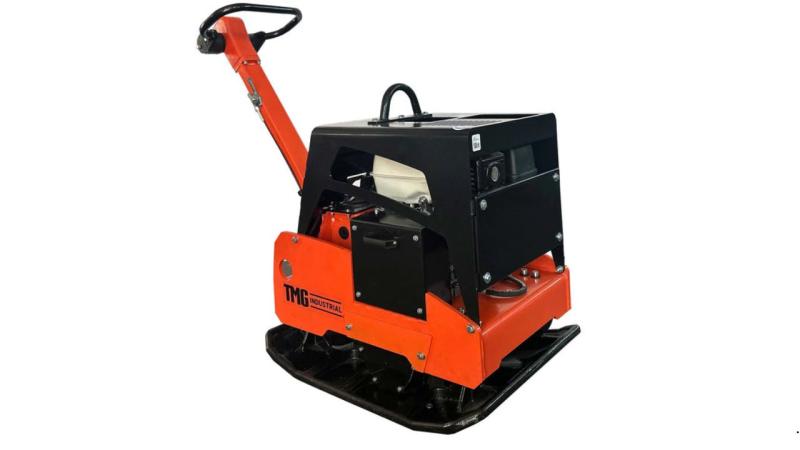
Introduction: The Role of Compaction
in Site Development and Maintenance
Creating stable and durable surfaces is a fundamental
requirement for industrial yards, access roads, and foundational work. Proper
soil and aggregate compaction increases load-bearing capacity, prevents
settlement, and provides a solid base for pavement or structures. A PC35H
Contractor Hydraulic Reversible Plate Compactor is a key piece of
equipment designed to deliver high-performance compaction for these critical
tasks.
Technical Overview and Operational
Method
This machine is a heavy-duty plate compactor that uses a
hydraulically driven eccentric mechanism to generate powerful vertical force.
The "reversible" feature allows the operator to change the direction
of travel without manually turning the machine, which is essential for
efficient work in confined areas.
Primary Applications in Industrial
and Logistical Settings
This compactor is suitable for:
- Compacting
granular base materials like gravel or crushed stone for parking lots and
driveways.
- Preparing
subgrade and backfill around foundations, utility trenches, and pipe beds.
- Performing
patch repairs and maintenance on asphalt surfaces.
- Compacting
sand or stone dust for paver and slab foundations.
The Importance of Compaction Quality
and Efficiency
Inadequate compaction leads to surface failure, costly
repairs, and safety hazards from uneven ground. A machine with sufficient
compaction force and productivity ensures density specifications are met
efficiently. The reversible function significantly reduces operator fatigue and
time spent maneuvering, directly impacting project timelines and labor costs.
Technical Fundamentals and
Performance Specifications
Selecting the right plate compactor involves understanding
key performance metrics:
- Compaction
Force: Measured in kilonewtons, this indicates the impact force delivered
to the ground. Higher force is needed for cohesive soils and deeper lifts.
- Plate
Size and Frequency: A larger plate covers more area per pass. Vibration
frequency affects compaction efficiency in different materials.
- Power
Source and Drive System: The hydraulic system, powered by a gasoline
engine in this case, provides smooth, controllable power to the plate.
- Centrifugal
Force and Amplitude: These specifications relate to the intensity and
depth of the compaction effect.
Factors Affecting Performance and
Compaction Results
Performance is highly dependent on material type and
moisture content. Lift thickness must be appropriate for the machine's
capabilities; overly thick layers will not compact properly. Operator
technique, including overlap between passes and maintaining a steady speed, is
crucial for uniform density. Regular maintenance of the hydraulic system,
engine, and exciter bearings is vital for consistent performance.
Safety Considerations and
Operational Best Practices
Plate compactors generate intense vibration and noise.
Adherence to safety protocols is mandatory.
- Always
wear appropriate personal protective equipment, including hearing
protection, safety glasses, steel-toed boots, and gloves.
- Inspect
the work area for underground utilities, holes, or debris before starting.
- Maintain
a firm, two-handed grip on the handlebars. Keep a safe distance from edges
of trenches or slopes.
- Never
operate the machine on slopes that exceed the manufacturer's recommended
grade.
- Follow
the manufacturer's maintenance schedule for the Hydraulic
Reversible Plate Compactor, paying special attention to vibration
isolators.
Equipment Types and System Components
The primary machine is the reversible plate compactor. Key
components include the gasoline engine, the hydraulic pump and motor, the
exciter assembly that generates vibration, the compaction plate, and the
directional control system. It is a self-contained unit requiring only fuel and
routine checks.
Advantages and Practical Limitations
Understanding the scope of a Contractor Grade Plate Compactor is
important for task assignment.
- Advantages: High
compaction force suitable for a range of soils and base materials.
Reversible operation greatly enhances maneuverability and productivity.
Hydraulic drive offers smooth power transfer and control. Designed for
heavy-duty, continuous use.
- Limitations: Not
a soil compactor for cohesive clay; a rammer is better suited. Can be less
effective on pure, dry sand. Requires regular maintenance of both the
engine and hydraulic system. Larger models can be heavy and require
transport equipment.
Real-World Application Scenario
A logistics company is expanding its gravel truck yard.
After spreading a new layer of crusher run gravel, the crew uses a hydraulic
reversible plate compactor. The operator can compact large, open areas
efficiently and easily maneuver around light poles and building corners using
the reverse function, ensuring a uniformly solid and stable surface for heavy
truck traffic in a single day.
Conclusion and Industry Outlook
For site supervisors and equipment managers, a high-quality
reversible plate compactor is a fundamental tool for ensuring the longevity and
safety of prepared surfaces. Its value is measured in the quality of compaction
and the time saved on projects. Future trends may focus on enhanced vibration
damping for operator comfort, more fuel-efficient and lower-emission engines,
and possibly remote monitoring of machine health. Integrating the right
compactor into a site work plan is a critical decision that affects the
durability and performance of industrial groundworks.
Post Your Ad Here
Comments