Commercial Refrigerator Buying Guide for Restaurants & Hotels
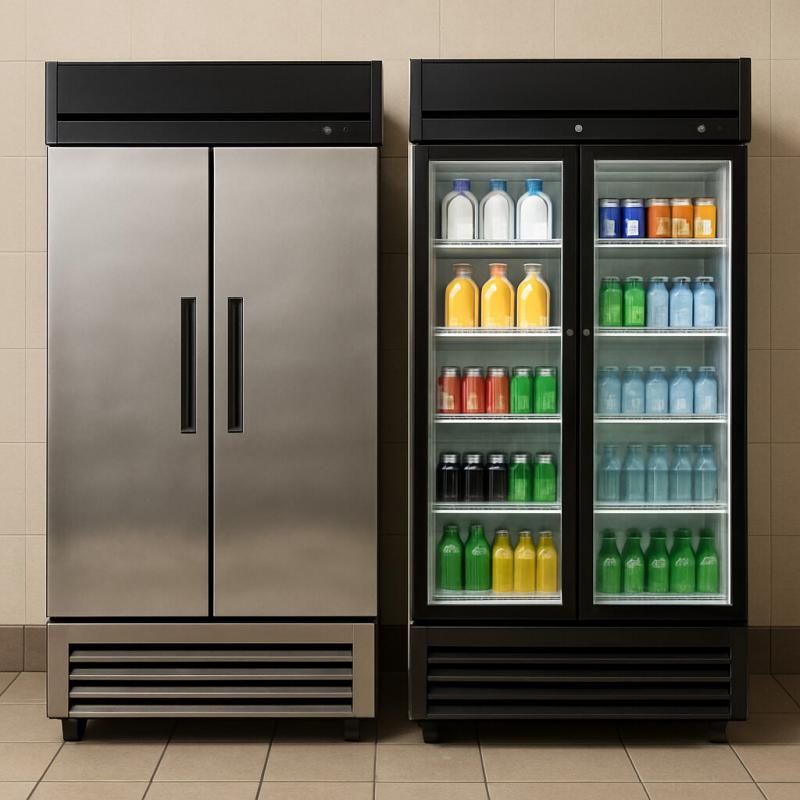
Buying your first commercial refrigerator can feel overwhelming. You’re not just purchasing a bigger version of the fridge in your home; you’re investing in a critical piece of equipment that protects your inventory and your reputation. A mistake can be costly, but getting it right means fresher ingredients, lower energy bills, and peace of mind.
The crucial difference between a home and commercial unit lies in performance under pressure. During a busy lunch rush, a commercial unit is built for rapid cooling recovery time—its ability to get back to a safe temperature quickly. This is a non-negotiable feature for food safety. Furthermore, health inspectors require health code compliance. This means looking for an NSF (National Sanitation Foundation) certification, which proves the refrigerator is built with food-safe materials and is easy to properly clean.
This guide will help you match a unit to your business—from a small café to a busy hotel kitchen—and provides a pre-purchase checklist that could save you thousands. You'll learn what you need to keep your business running safely and efficiently.
What Kind of Commercial Refrigerator Do You Need?
The first question to answer is: what job does this refrigerator need to do? Unlike residential models, commercial refrigerators are specialized tools. For general back-of-house storage, the Reach-In Refrigerator is the classic workhorse. These are the tall, upright units you see in most professional kitchens, perfect for holding boxes, food pans, and bulk ingredients. They are the standard for high-capacity storage when you don't yet need a massive walk-in cooler.
If your primary need is to add cold storage without sacrificing workspace, an Undercounter or Worktop Refrigerator is the ideal solution. These compact units slide neatly beneath a counter, keeping essential items chilled and accessible right where you need them. A "worktop" model adds a durable steel top, giving you a valuable extra surface for prep.
For businesses built on assembly—like sandwich shops, salad bars, or pizzerias—the Refrigerated Prep Table is a game-changer. It combines an undercounter refrigerator with a top rail of chilled containers, keeping all your chopped vegetables, meats, and cheeses organized and safely cooled. This setup drastically speeds up workflow by putting every ingredient within arm's reach.
Finally, if your goal is to sell chilled products directly to customers, you need a Merchandiser Refrigerator. These are the glass-door refrigerators you see in cafes and convenience stores, designed specifically to showcase drinks, pre-made sandwiches, and grab-and-go items, encouraging impulse purchases while keeping everything perfectly chilled. Each of these commercial kitchen refrigeration types is designed for a specific workflow, so matching the unit to your business's daily tasks is the most important first step.
What Size Commercial Refrigerator Do I Need? A No-Nonsense Guide
Commercial refrigerator capacity is measured in cubic feet (cu. ft.), which tells you the total volume of storage space inside. The most important rule? Don't buy for your average day; buy for your busiest day. Consider your stock during peak season or before a big event. It's far better to have a little extra room than to run out of space when you need it most, which can lead to food waste and lost sales.
This capacity is often categorized by the number of doors, a great way to visualize the size you need. More doors not only mean more space but also better organization and energy efficiency, as you only open the section you need. Here’s a quick guide to common reach-in cooler sizes:
- 1-door (approx. 23 cu. ft.): Ideal for a small café, an office breakroom, or as a secondary unit.
- 2-door (approx. 49 cu. ft.): The standard workhorse for most small-to-medium restaurants and delis.
- 3-door (approx. 72 cu. ft.): Best for high-volume kitchens that require significant bulk storage.
While planning for inventory is key, don’t forget to measure your physical space. Ensure you have enough room for the unit itself, plus several inches of clearance around the back and sides for proper airflow—this is critical for the refrigerator to run efficiently and avoid overheating.
Glass Door vs. Solid Door: Is Seeing Your Stock Worth the Cost?
The decision between a glass door versus a solid door comes down to visibility versus insulation. A solid stainless steel door is packed with high-density foam that excels at keeping cold air in, forcing your compressor to run less often. For pure back-of-house storage, a solid door is the undisputed champion of commercial refrigerator energy efficiency.
Glass doors, while less insulating, allow staff—or customers—to see what’s inside before opening the door. In a busy kitchen, this prevents long searches that dump cold air and spike energy use. This quick-glance advantage makes a glass door reach-in refrigerator ideal for a fast-paced prep line or for showcasing drinks and grab-and-go items to customers.
Your choice should follow a straightforward rule: solid doors are the workhorses for back-of-house storage where long-term efficiency is king. Glass doors shine in customer-facing areas or busy prep stations where seeing the contents saves time and encourages sales.
Your Final Choice: A Confident Refrigerator Purchase
Making a smart commercial refrigerator purchase comes down to a few key decisions. The right choice is a critical business partner that provides safety, efficiency, and peace of mind for years to come.
By matching the refrigerator type to your daily workflow and the size to your inventory needs, you ensure operational efficiency. Choosing the right compressor location and door style—solid for storage, glass for merchandising—further optimizes energy use and staff productivity. Finally, prioritizing NSF and ENERGY STAR certifications protects your business from compliance issues and high utility bills.
Armed with this knowledge, you can look past the price tag and invest in a reliable appliance that truly fits your needs, making an informed choice for your business's future.
Post Your Ad Here
Comments