DSL vs Fiber Speed Whats the Real Difference.
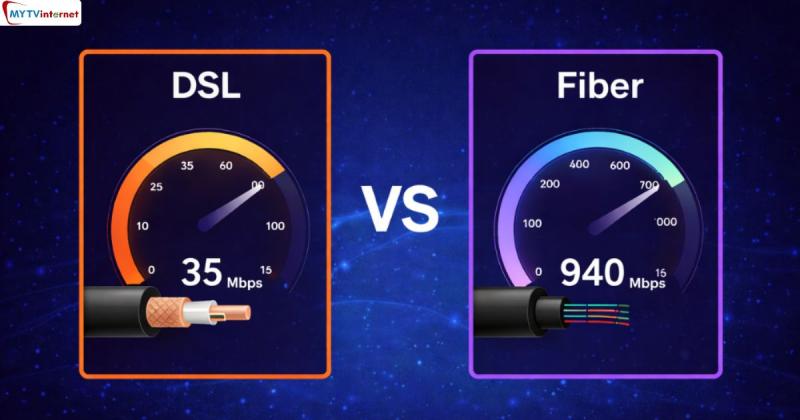
The choice of a perfect Internet connection takes you to DSL vs Fiber. Both Internet providers cover most regions but differ in performance, speed and overall experience. You must know the real difference between these two providers so that you can select the best Internet for gaming, streaming, online work from home or daily surfing necessities. Go through the article below to know about the major distinctions between DSL vs Fiber speed, cost and features.
What is DSL Internet?
With the use of conventional copper phone lines, DSL offers fast home Internet service to its users. It is one of the most cost-effective and common alternatives, particularly in small or rural regions where fresh structure is not present.
How DSL Speed Works?
DSL speeds rely completely on your distance from the provider’s main office. The farther you travel, the slower your Internet connection. Common speed is between 1 and 100 Mbps, but most users access a lower speed.
Pros and Cons of DSL
Pros
DSL is broadly present in multiple regions.
Budget-friendly Internet packages.
Convenient setup.
Cons
Steadier speeds.
Speed downgrades with distance.
It is not perfect for huge gaming or streaming.
DSL is perfect for small Internet usage such as emailing, basic video streaming, and surfing.
What is Fiber Internet?
A fiber Internet service provider utilizes fiber cables that supply data more like light signals. The advanced technology enables data to travel more reliably compared to copper connections.
How Fiber Speed Works?
Fiber offers consistent speeds with download and upload speeds that are equivalent. Fiber packages begin at 300 Mbps and can approach up to 1 Gbps or more.
Pros and Cons of Fiber
Pros
Immense quick speeds.
Efficient performance.
Excellent for gaming, streaming, and distant work.
Cons
Restricted presence.
Expensive price in a few regions.
Fiber is perfect for families with several attached devices and data-intensive tasks.
DSL vs Fiber Speed - Key Differences
Speed Comparison
DSL - 1 to 100 Mbps, with most lower range.
Fiber - 300 Mbps to 1 Gbps or more.
Fiber is quicker and more continuous than DSL rural Internet providers.
Upload Speed Matters
DSL upload speeds are steadier than downloading speeds that impacts cloud uploading and video calling. Fiber delivers downloading and uploading speeds that make it excellent for rural workers and content developers.
Reliability and Performance
Fiber is less impacted by distance, weather or network disturbance. DSL performance can overlap during peak usage hours and over long distances.
Which Internet Type Is Right for You?
Choose DSL if
Fiber is not present in your region.
Users have basic Internet necessities.
Users need an affordable alternative.
Choose Fiber if
Users need the quickest Internet speeds.
You can game, stream or operate online quickly.
Several users distribute a single connection.
Final Words
The original distinction between DSL vs Fiber speed depends on futuristic preparation, efficiency and performance. DSL broadband Internet plans are experimental formulas for restricted regions and basic requirements, whereas fiber offer stability and unparalleled speed for advanced online lifestyles. If fiber is present in your region, it can be a better option but DSL stays an efficient downgrade where fiber has not approached till now. To know more about Internet plans, get in touch with the My TV Internet customer care number.
Post Your Ad Here
Comments