What are The Business Consequences of Fraud on Mobility Platforms?
Mobility platforms don’t lose to fraud in one dramatic blow. Instead, they bleed out quietly.
Every fake driver onboarding, every GPS-spoofed trip, every incentive-abusing account chips away at margins, trust, and safety in real time.
What starts as “acceptable loss” quickly compounds into revenue leakage, inflated insurance exposure, regulatory scrutiny, and operational drag.
In an industry where speed, scale, and trust define competitive advantage, fraud is a business performance killer hiding in plain sight.
As ride-hailing, delivery, and mobility apps scale across cities and borders, fraud scales faster. Fraudsters exploit device spoofing, emulators, and synthetic identities to stay one step ahead of rule-based and delayed detection systems. When fraud decisions arrive after the ride is completed or the payout is released, the damage is already done.
The result? Platforms spend more time firefighting losses than building sustainable growth.
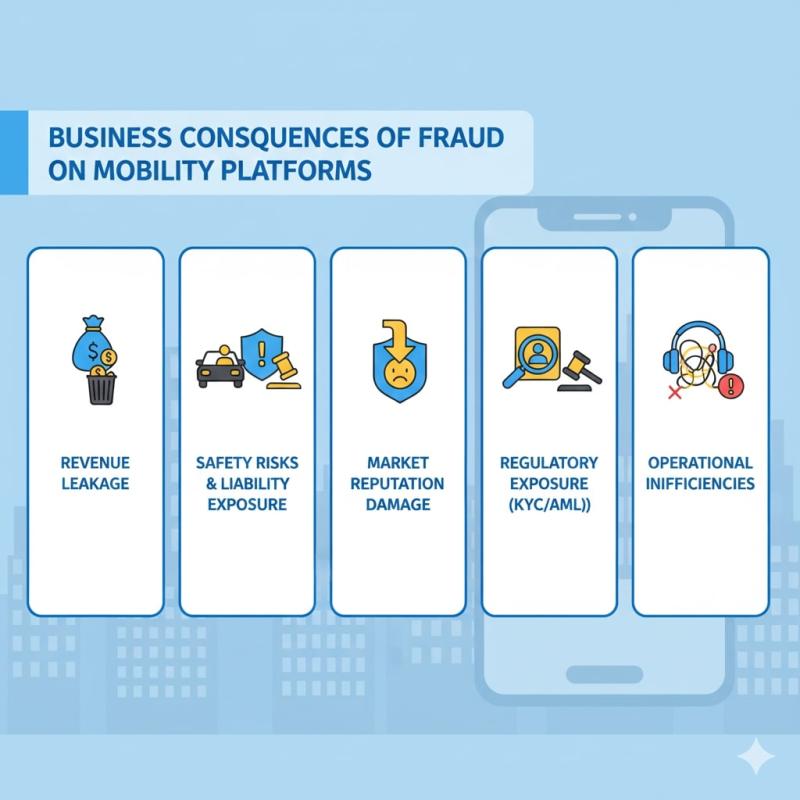
Once fraud enters the system, its impact ripples far beyond a single ride or delivery. It majorly surfaces across five business-critical fault lines.
Revenue leakage:
Incentives, payouts, and operational budgets are quietly drained by fake drivers and fraudulent rides.
Safety risks & liability exposure:
Impersonation puts customers at risk and exposes platforms to legal and insurance fallout.
Market reputation damage:
Trust erosion, negative PR, and declining brand value follow repeated fraud incidents.
Regulatory exposure (KYC/AML):
Ineffective driver identity verification invites compliance scrutiny and potential penalties.
Operational inefficiencies:
Fraud-driven disputes, blocked rides, and support overload slow down platform performance.
How Businesses Can Overcome Fraud on Mobility Platforms
The only way to break this cycle is to prevent fraud from entering the ecosystem. Device-first fraud intelligence shifts fraud prevention from reactive damage control to real-time decisioning, analyzing device integrity, signals, and risk at the very first interaction. By identifying emulators, GPS spoofing, VPN abuse, and repeat fraudsters at the device level, mobility platforms can block high-risk activity before incentives are paid, rides are completed, or trust is compromised. Device intelligence effectively prevents fake account creation, thwarting the hopes of fraudsters from even entering the platform.
This is where SHIELD sets the benchmark for mobility fraud prevention. Built for high-velocity, real-time platforms, SHIELD combines deep device intelligence with machine-learning risk scoring to deliver instant, accurate fraud decisions across onboarding, trip execution, and payouts. The result is simple but powerful: lower fraud losses, safer riders and drivers, stronger compliance, and operations that scale without friction. In mobility, the platforms that win aren’t the ones reacting faster to fraud—they’re the ones that never let it in.
Post Your Ad Here
Comments