Top 5 Multichannel Inventory Management Software for Ecommerce Sellers
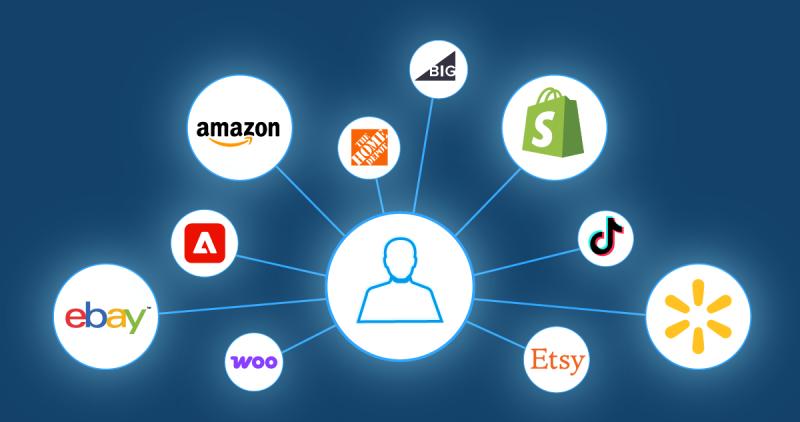
Selling on multiple channels sounds great until you realize you just oversold the same product on Amazon and your Shopify store at the same time. And now you're staring at two angry customer emails while frantically updating spreadsheets that should have been automated years ago.
This is the reality for a growing number of ecommerce sellers. According to industry data, only about 39% of ecommerce supply chains operate across multiple sales channels, and a surprising 55% still rely on manual processes for inventory tracking. The gap between where sellers are and where they need to be is significant.
Multichannel inventory management software solves a specific set of problems:
It keeps stock levels accurate across multiple sales channels and marketplaces.
Prevents overselling caused by delayed or inconsistent inventory updates
Routes orders to the correct warehouse or fulfillment location
Gives sellers a clear, real-time view of available inventory
Addresses a real operational gap, with average inventory accuracy in the US at around 63%
Reduces downstream costs such as chargebacks, cancelled orders, and lost repeat customers
The platforms below each approach these challenges differently. Some focus on deep marketplace integrations, others prioritize warehouse operations, and a few try to do everything. Understanding those differences matters more than any feature checklist.
1. Willow Commerce
Willow Commerce is an omnichannel ecommerce platform designed to centralize day-to-day operational workflows for sellers managing multiple sales channels. It brings inventory synchronization, order management, catalog control, and shipping into a single system, reducing the need to operate across disconnected tools.
The platform maintains a unified inventory view while allowing channel-specific rules, helping teams manage stock accuracy, listings, and fulfillment without duplicating data. Orders from different marketplaces are consolidated into a single interface, where they can be reviewed, routed, and processed according to predefined logic.
It connects with more than 80 marketplaces and sales platforms, including Amazon, Walmart, Etsy, Wayfair, eBay, TikTok Shop, and a range of regional and niche marketplaces. This breadth of integrations makes it suitable for sellers operating across both large global platforms and localized sales channels.
Core Capabilities
Real-time inventory synchronization across connected channels and warehouses
Centralized order processing with automated routing and fulfillment workflows
Catalog and SKU management with listing tools for multiple marketplaces
Warehouse management, including picking, packing, and label creation
Shipping automation with carrier rate comparison
Demand forecasting and inventory replenishment alerts
Best Fit For
Willow Commerce works well for sellers operating across multiple marketplaces who need a consolidated view of their entire operation. The platform handles high-SKU catalogs and supports sellers scaling from moderate order volumes to more complex scenarios. Businesses that sell on Amazon, Walmart, Target, and other major marketplaces alongside their own storefronts will find the breadth of integrations useful.
Considerations
The platform's extensive feature set may exceed what very small sellers with simple operations actually need. Sellers focused exclusively on a single channel, such as Shopify, might find a more channel-specific tool sufficient for their needs.
2. Ordoro
Ordoro combines shipping, inventory management, and dropshipping tools into a modular platform. Sellers can choose which components they need and add functionality as their business grows.
Core Capabilities
Automatic inventory writeback across connected sales channels
Multi-warehouse inventory tracking with transfer management
Purchase order generation and supplier management
Kitting and bundle support with component-level stock updates
Dropship order routing to suppliers
Barcode scanning for cycle counts and receiving
Best Fit For
Ordoro suits small to mid-sized ecommerce businesses that want to start with shipping or inventory management and expand over time. The modular pricing structure makes it accessible for sellers who do not need every feature on day one. Businesses with dropshipping operations benefit from the integrated supplier management.
Considerations
Ordoro does not operate warehouses or provide fulfillment services directly. Sellers looking for an all-in-one platform that includes accounting functionality will need to integrate with external tools like QuickBooks. The platform serves ecommerce sellers specifically and may not be a good fit for businesses with significant offline retail operations.
3. Cin7
Cin7 positions itself as a connected inventory management platform that includes point-of-sale, warehouse management, and light manufacturing capabilities. The system integrates with several applications, including accounting software like QuickBooks and Xero, ecommerce platforms, and major marketplaces.
Core Capabilities
Real-time inventory tracking across unlimited locations
Multi-channel sales management for online and physical retail
B2B ecommerce portal for wholesale customers
Manufacturing tools, including the bill of materials and production tracking
POS integration for brick-and-mortar operations
Demand forecasting with AI-assisted reorder suggestions
Best Fit For
Cin7 fits omnichannel retailers and distributors who sell through both online marketplaces and physical stores. Businesses that handle simple assembly or kitting operations benefit from the built-in manufacturing features.
Considerations
The platform has a learning curve, and implementation requires dedicated time for data migration and training. Cin7 does not include a native accounting module, so integration with external accounting software is required. Complex manufacturers, particularly those in process manufacturing or food and beverage, with strict traceability requirements, may find the manufacturing features insufficient for their needs.
4. Linnworks
Linnworks provides inventory and order management software designed for multichannel retailers. The platform connects with 30+ marketplaces and sales channels and emphasizes automation through customizable rules and workflows.
Core Capabilities
Real-time inventory synchronization across all connected channels
Rules-based automation for order routing and fulfillment
Warehouse transfer tracking between locations
Stock forecasting based on sales velocity
Best Fit For
Linnworks suits growing multichannel retailers processing high order volumes who need to automate repetitive tasks. The platform works well for sellers expanding across marketplaces like Amazon, eBay, and Shopify who want centralized control. Businesses with established operations looking to reduce manual work through automation will find the rules engine particularly useful.
Considerations
The platform's depth can feel overwhelming for newer sellers with straightforward needs. Pricing tends toward the higher end of the market, making it less accessible for minimal operations. Some advanced warehouse management features require the separate SkuVault product.
5. Zoho Inventory
Zoho Inventory is a cloud-based inventory management application designed for small to medium-sized businesses. It integrates with marketplace selling and connects with other Zoho applications, including Zoho Books for accounting and Zoho CRM for customer management.
Core Capabilities
Multichannel inventory synchronization with marketplace integrations
Purchase order management with automated reorder points
Serial number and batch tracking for product traceability
Multi-currency support for international transactions
Reporting on sales channels, inventory levels, and product movement
Best Fit For
Zoho Inventory is well-suited for small to medium-sized businesses looking for an affordable entry point into multichannel inventory management. Companies already using other Zoho products benefit from native integrations across the suite. Sellers on marketplaces with moderate catalog sizes and straightforward fulfillment will find the feature set sufficient.
Considerations
The marketplace integration options are more limited than those on platforms that support dozens of channels. Businesses high SKU counts may outgrow the platform's capabilities. Some features, including higher-order limits, require upgrading from the free tier.
Comparison at a Glance
Comparison Summary
These five platforms address multichannel inventory challenges at different scales and with different emphases.
Willow Commerce offers the broadest functionality, covering everything from marketplace integrations to warehouse operations and manufacturing. It works for businesses managing complex operations across multiple channels.
Ordoro takes a modular approach that lets sellers start small and scale up, making it accessible for businesses that do not need every feature immediately. Linnworks emphasizes automation and high-volume processing, making it well-suited to established sellers looking to reduce manual intervention in their operations.
Zoho Inventory provides an affordable starting point with solid fundamentals, particularly for businesses already embedded in the Zoho ecosystem or selling on a handful of major marketplaces.
The trade-offs generally come down to breadth versus simplicity, and cost versus capability. Platforms with deeper feature sets require more setup time and typically carry higher subscription costs. Simpler tools get sellers started faster but may require migration later as operations grow.
Post Your Ad Here
Comments