Merit-Based Hiring Isn't Just a Slogan: How to Reduce Bias Without Slowing Down Your Hiring
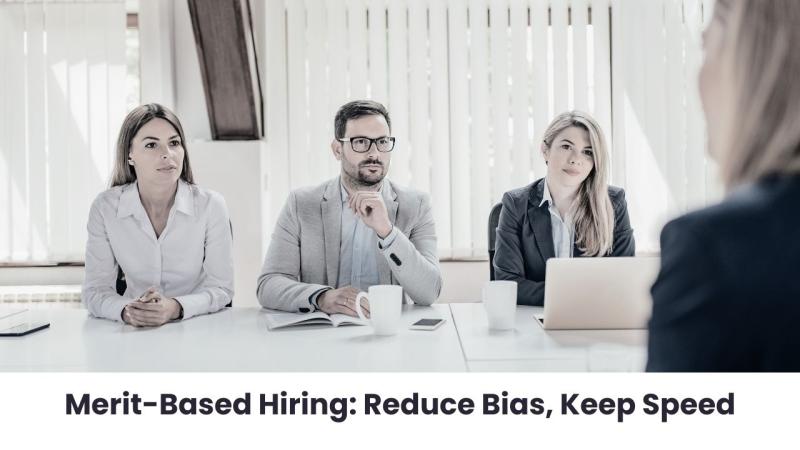
Introduction
Every hiring manager believes they make merit-based decisions. They
consider qualifications, experience, and fit. But what they don't see—because
it's unconscious—is how small, unrelated details shape their choices long
before they evaluate actual skills. A candidate's name, their university, a
shared hobby with the interviewer—these trigger snap judgments that override
the facts. Many organisations still don’t have consistent systems to catch this,
which means bias becomes baked into hiring decisions at scale.
The good news? Merit-based hiring isn't impossible. It's just not
accidental. It requires structure, intention, and tools. And when done
properly, it doesn't slow hiring down—it speeds it up.
Note: Written based on
practical hiring experience in Singapore and Asia by Base Camp Recruitment.
Why "Trusting Your Gut" Costs More Than You Think
Our brains are wired
for mental shortcuts. Historically, these shortcuts kept us safe and helped us
make quick decisions. In modern hiring, they do the opposite.
The
most common hiring biases include:
·
Confirmation
bias: You form an initial impression of a
candidate, then actively seek information that confirms it—while ignoring
contradictory evidence.
·
Halo effect: One strong
credential (like a prestigious university degree) makes you overlook weaker
areas. You assume someone is excellent across the board based on a single
positive trait.
·
Affinity
bias: You favour candidates who remind you of
yourself—similar background, interests, even communication style. It feels like
chemistry, but it's homogeneity.
·
Contrast
effect:
You judge candidates against each other rather than against the job
requirements, which means a mediocre candidate looks great after interviewing a
weak one.
The financial stakes
are real. Research shows a single bad hire costs roughly 30% of an employee's
annual salary when you factor in lost productivity, turnover, and replacement
hiring. A 2024 LinkedIn study found that 67% of recruiters admit hiring mistakes
are more likely when decisions are rushed or made without structure.
But here's the irony:
unstructured hiring feels fast. It's
not. It just appears fast until you
count the cost of a bad fit four months later.
The Singapore Context: Fair Consideration Framework and
Beyond
In Singapore, merit-based hiring isn't just good practice—it's a
regulatory requirement. The Ministry of Manpower's Fair Consideration Framework
(FCF) explicitly requires employers to consider candidates fairly based on
merit, regardless of nationality, age, or other non-job-related factors. All
companies must advertise vacancies on MyCareersFuture for at least 14 days and
demonstrate that they've fairly evaluated local candidates before hiring
foreign professionals.
But the FCF is about
more than compliance. It reflects a broader shift across Asia-Pacific
organisations toward inclusive, skills-based hiring. Research shows 90% of APAC
employers now view skills-related initiatives as essential to their workforce
strategy. Yet Singapore's own workplace data tells us there's a gap between
stated values and practice: one in three employees reported experiencing
discrimination at work in 2024, up from 25% in 2023.
This suggests that
knowing what merit-based hiring is
doesn't automatically make it happen. It requires systems.
How Structured Processes Actually Speed Up Hiring
Organisations often
assume that adding structure slows hiring down. It's the opposite. Here's why:
Structured
hiring reduces decision fatigue. When you have clear criteria for every
role, interviewers don't waste time debating whether a candidate is "good
enough." They evaluate against a standard. This cuts interview cycles by
up to 50%, according to research from companies like Netflix and Airbnb that
overhauled their processes.
Blind
screening removes non-job-related noise. By redacting names,
universities, and other personal identifiers from early screening, you force
evaluators to focus on skills and experience. Studies show candidates with
"white-sounding names" receive 75% more interview callbacks than
equally qualified candidates with Asian names on otherwise identical resumes. Blind
screening can reduce the impact of these signals at the earliest stage.
Standardised
interviews make decisions faster. When every candidate answers the same
questions in the same order and is scored against the same rubric, comparison
is straightforward. You're not trying to remember how Candidate A answered
question X versus how Candidate B answered a different question Y. The data is
consistent, which makes deciding between finalists faster and more defensible.
Evidence-based research
suggests that data-driven or algorithm-supported selection can outperform human
judgement by at least 25% in many hiring contexts, especially when there are
large candidate pools and consistent performance signals.
Building a Fair Hiring Process: Four Practical Moves
1. Define Success Before You Hire (Not After)
Start with your strongest hire in a similar role. What makes them
exceptional? Not their degree or their previous company—what are they doing that drives results?
Identify 8 to 10 success factors (skills, behaviours, or characteristics) that
genuinely predict performance in the role.
This sounds basic, but
most organisations skip this step. They post a job description that's a wish
list, then wonder why interviews feel aimless. When you're clear on what
success looks like before candidates
apply, you have a measuring stick for every evaluation decision.
Why
this matters for speed: Vague criteria lead to long deliberations.
Clear criteria lead to quick decisions.
2. Anonymise Applications at First Pass
Before a human ever
reviews a resume, remove names, universities, graduation years, photos, and
other personal identifiers. Keep skills, experience, achievements, and
measurable outcomes.
Use software to do this
(manual redaction introduces error). Then, run initial screening against your
success criteria. This first pass eliminates non-job-related bias immediately
and forces evaluators to focus on job-relevant factors.
You don't need to anonymise the entire process—just the early stages.
Once you've created a shortlist based on skills, candidates' identities
naturally come back into play during interviews. But by then, you've already
eliminated the most dangerous moment for bias.
Why
this matters for fairness: Hiring managers often aren't aware of their
own biases. Blind screening removes the opportunity to act on them.
3. Use Structured Interviews with Consistent Scoring
Design a set of 6 to 8
questions that directly test your success factors. Ask every candidate the same
questions in the same order. Score each response on a predefined scale (e.g., 1
to 5 against specific competency levels).
Behavioural questions work best here: "Describe a time you had to
handle conflicting priorities. What did you do?" This approach surfaces
how candidates actually think and act—not how well they guess what you want to
hear.
Train your interviewers
on the scoring rubric beforehand so they understand what a "3" versus
a "5" looks like. This consistency is where the magic happens. It
removes the influence of charisma, rapport, or whether the interviewer had a
good morning.
Why
this matters for speed: Structured interviews cut interview duration
by reducing follow-up questions and false tangents. Everyone knows what they're
assessing, so the conversation stays focused.
4. Use a Diverse Hiring Panel (and Hold Them Accountable)
One interviewer's bias is one person's limitation. Two interviewers'
aligned bias is a pattern you might not catch. A diverse panel—in background,
experience, and thinking style—flags assumptions and balances out individual
blind spots.
Crucially, debrief as a
panel using your scoring rubric, not impressions. "I gave her a 4 on
problem-solving because she explained her approach, considered two options, and
explained trade-offs" is objective. "She seemed really sharp" is
not.
Document these
decisions. This serves two purposes: it creates accountability (people think
harder when they have to write it down), and it gives you data to audit your
own fairness over time. Are certain groups consistently scoring higher or
lower? That's a signal to adjust your questions or your criteria.
Addressing the "But That Takes Time" Objection
Yes, designing these
systems requires upfront investment. But the payoff is enormous. Companies that
implement structured hiring report:
· Faster hiring cycles: 2 to 4
weeks shorter, on average.
· Better retention: Hires made against
clear criteria tend to stay longer because they're genuinely fit for the role.
· Reduced legal risk: Documented, fair
processes are defensible if hiring decisions are ever challenged.
· Stronger employer brand: Candidates who experience a fair, structured process are more likely
to accept offers (research shows a 38% uplift) and to refer others—even if they
don't get the job.
The real cost of not doing this is hidden. It's the
turnover rate that's slightly higher than industry average. It's the retention
data showing women or minorities leave at higher rates (which often signals
they didn't feel fairly treated in hiring). It's the diversity you aimed for
but never achieved because your process unconsciously filtered certain groups
out at early stages.
Starting
Small: Where to Begin
You don't need to
overhaul your entire hiring process at once. Start with your highest-volume or
most critical role.
Month 2: Design your success criteria and build your first structured interview guide. Anonymise your next 3 to 5 hiring rounds.
Month 3: Review outcomes. Did candidates experience a better process? Did you hire faster? Did quality improve? Use this data to refine and expand to other roles.
The Bigger Picture: Why This Matters Now
Singapore and Asia-Pacific organisations are competing for talent in a
region where the best candidates have options. Fair, efficient hiring isn't a
compliance checkbox—it's competitive advantage.
Research from the
Asia-Pacific region shows that younger workers, and women are more likely to
leave roles where they experienced bias or didn't feel fairly evaluated. If
your hiring process reflects bias, your retention and internal progression will
too.
Conversely, organisations known for fair, transparent hiring processes
attract stronger candidate pools, experience lower turnover, and build teams
with genuine diversity—not just demographic diversity, but cognitive diversity
that drives better decision-making and innovation.
Merit-based hiring is
achievable. It's not a slogan when you build systems that enforce it. And
counterintuitively, these systems don't slow you down. They speed you up by
removing noise, creating clarity, and helping you make confident decisions
faster.


Post Your Ad Here
Comments