How Digital Twins Enhance MEP System Performance in 2026 in the USA With Real-Time Data, Predictive Maintenance, and Lifecycle Optimization
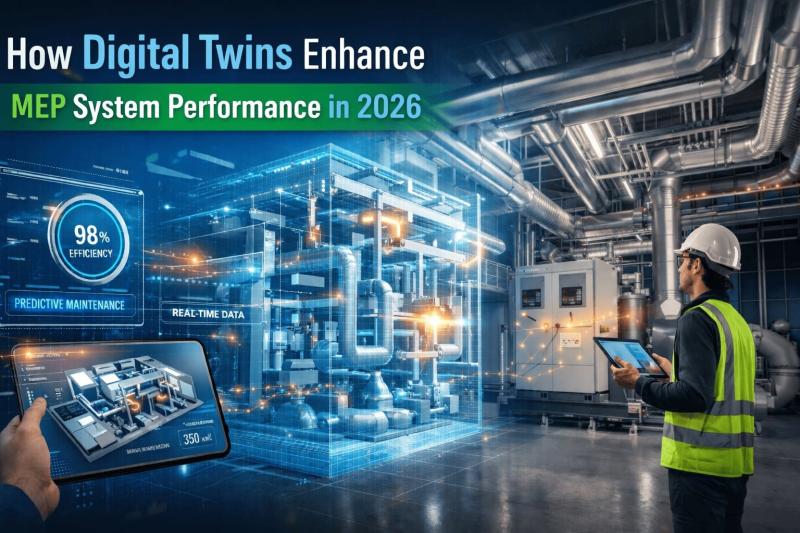
In 2026, the U.S. construction and facilities management industry is experiencing a major shift in how MEP systems are designed, operated, and maintained. Across commercial offices, data centers, healthcare facilities, and federal buildings in the United States, owners are demanding higher system reliability, energy efficiency, and operational transparency.
This demand has accelerated the adoption of Digital Twins for MEP systems in the USA, enabling real-time performance monitoring, predictive maintenance, and data-driven lifecycle optimization. Unlike traditional BIM models that often remain static after construction, Digital Twins create continuously updated virtual replicas of physical MEP systems connected to live operational data.
Digital Twins and the Evolution of MEP Engineering in the United States
In the U.S., BIM adoption has been driven by:
-
Federal and state infrastructure projects
-
Large commercial developers and institutional owners
-
Data center operators and healthcare networks
However, BIM alone does not address post-occupancy performance challenges. Digital Twins bridge this gap by integrating:
-
BIM models with U.S. building management systems (BMS)
-
IoT sensors deployed across HVAC, electrical, and plumbing assets
-
Energy monitoring aligned with U.S. sustainability and ESG goals
In 2026, leading U.S. MEP consultants and facility managers are using Digital Twins to maintain as-built accuracy, ensure operational efficiency, and support long-term asset planning.
Real-Time MEP Monitoring for U.S. Buildings Mechanical Systems in the USA
Digital Twins enable continuous monitoring of:
-
HVAC equipment performance in compliance with ASHRAE standards
-
Chiller plants, boilers, VRF systems, and air handling units
-
Temperature, humidity, and airflow performance across occupied zones
For U.S. climates ranging from extreme heat in Texas to cold conditions in the Northeast, real-time HVAC visibility helps maintain comfort while reducing energy consumption.
Electrical Infrastructure for U.S. Facilities
Electrical Digital Twins provide:
-
Load tracking aligned with NEC (NFPA 70) requirements
-
Power quality analysis for commercial and mission-critical buildings
-
Monitoring of generators, UPS systems, and emergency power circuits
This is especially critical in U.S. data centers, hospitals, and federal facilities where power reliability is a top priority.
Plumbing and Water Systems
In the U.S., where water efficiency and code compliance are growing concerns, Digital Twins help monitor:
-
Domestic water usage and pressure stability
-
Drainage system performance
-
Leak detection to prevent property damage and water loss
Predictive Maintenance Reducing Downtime Across U.S. MEP Systems
U.S. facility owners face rising maintenance costs, skilled labor shortages, and strict uptime requirements. Digital Twins address these challenges through predictive maintenance strategies.
By analyzing historical and real-time data, Digital Twins can:
-
Predict HVAC equipment failures before they impact operations
-
Identify electrical components at risk of overheating or overload
-
Optimize maintenance schedules for pumps, valves, and motors
For large U.S. portfolios—including corporate campuses, hospitals, and industrial facilities—predictive maintenance significantly reduces emergency repairs, downtime, and operational risk.
Lifecycle Optimization of MEP Systems for U.S. Building Owners
MEP systems account for a major share of lifecycle costs in U.S. buildings. Digital Twins support smarter lifecycle management by enabling:
Data-Driven Capital Planning
-
Asset condition monitoring instead of age-based replacement
-
Prioritized retrofit planning for energy and performance upgrades
-
Improved budgeting accuracy for long-term capital expenditures
Energy Performance and Sustainability
Digital Twins help U.S. building owners:
-
Track energy usage against benchmarks
-
Support LEED, ENERGY STAR, and local energy compliance programs
-
Achieve decarbonization and electrification goals
Digital Twins in Critical U.S. Facilities Data Centers in the United States
Digital Twins ensure:
-
Cooling redundancy validation
-
Power load forecasting
-
Continuous uptime protection
Healthcare Facilities
Hospitals and medical centers use Digital Twins to:
-
Maintain strict HVAC and ventilation standards
-
Monitor medical gas systems
-
Reduce operational risk in patient-critical environments
Federal and Institutional Buildings
U.S. government and institutional projects benefit from:
-
Enhanced asset transparency
-
Improved operational accountability
-
Long-term infrastructure performance tracking
Best Practices for Implementing MEP Digital Twins in the USA
Successful Digital Twin deployment in the U.S. requires:
-
High-quality BIM models aligned with U.S. codes and standards
-
Reliable sensor and BMS integration
-
Coordination between MEP engineers, BIM teams, and facility operators
-
A clear focus on long-term operational value, not just design visualization
U.S.-based MEP firms that integrate Digital Twins early in the project lifecycle achieve stronger ROI and better system performance.
The Future of MEP System Performance in the United States
By 2026, Digital Twins have become an essential tool for high-performance buildings across the USA. They enable MEP systems to operate as intelligent, data-driven assets rather than static infrastructure.
For U.S. MEP engineers, BIM consultants, and facility owners, Digital Twins deliver:
-
Proactive maintenance strategies
-
Improved system reliability
-
Optimized lifecycle costs
-
Greater confidence in operational decision-making
As regulatory requirements tighten and performance expectations rise, Digital Twins will continue to redefine MEP system management in the United States.
Post Your Ad Here
Comments