How Are Cloud Technologies Transforming Business Operations in 2025?
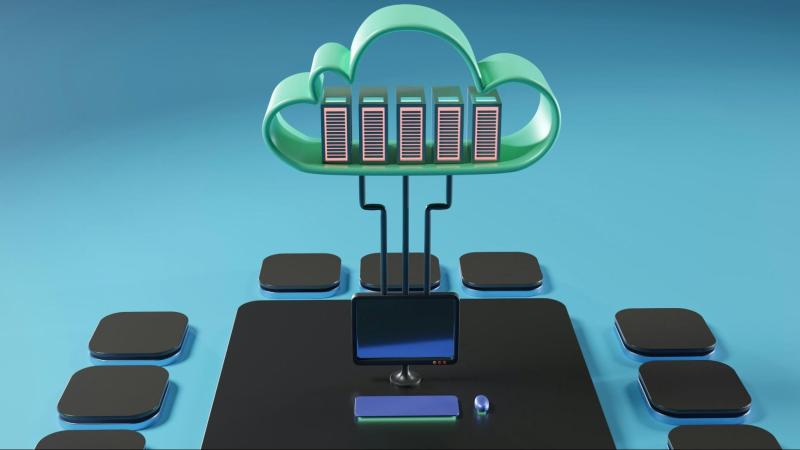
Cloud computing has evolved from a convenient storage solution into the backbone of modern business operations and digital transformation across industries. Global IT spending will reach $5.74 trillion in 2025, with businesses spending $1.3 trillion on cloud solutions alone. Cloud technology is no longer just a tool for storage or computing but has become fundamental to how businesses innovate, operate, and compete in the digital age.
The very scope of cloud computing has grown massively in a short span of time. Today, it serves as the backbone of every digital transformation program imaginable. We stand at the cusp of a new era of cloud computing, firmly supported by a series of innovative and powerful trends such as serverless computing, multi-cloud adoption, and artificial intelligence integration that are reshaping the landscape.
What Is Driving Cloud-Native Development?
Cloud-native development will be the main way that new projects are made in 2025. Cloud-native software is built with methods like microservices, containerization, Kubernetes, and DevOps that make it scalable and flexible. By 2025, cloud-native approaches will have cemented themselves as the foundation of modern applications. According to Gartner, over 95% of new digital workloads will be deployed on cloud-native platforms, up from 30% in 2021.
This shift reflects the demand for agility, scalability, and resilience in application development. Companies adopting cloud-native architectures are better positioned to deliver seamless user experiences while significantly reducing their time-to-market. When companies like Netflix, Uber, and Spotify successfully use cloud-native designs, it sets a standard for other companies to follow.
More businesses will switch from traditional applications to cloud-native ones, using AI to automate DevOps processes and container orchestration. Containerization platforms and container orchestration services like Kubernetes remain important drivers of cloud computing innovation in 2025. Together, containerization and orchestration make it faster and easier for organizations to develop applications that can run in multiple environments, operate complex IT systems, and drive innovation.
How Is Serverless Computing Changing Development?
Serverless computing is a cloud model where businesses and developers don't have to manage or worry about servers. The cloud provider takes care of infrastructure management, allowing developers to focus solely on code. Cloud service providers, such as Google Cloud and Amazon Web Services, take on the responsibility for provisioning and managing the cloud infrastructure according to the specific needs of the software application or development team.
The increasing usage of serverless computing represents one of the most promising trends. Serverless computing is a cloud computing execution model that lets development teams build and run applications at the speed of business. The computing model abstracts the complexities of server management from the app development process.
Startups and small businesses can particularly benefit from this model, as they no longer have to invest heavily in IT infrastructure upfront. Instead, they can start small and scale as needed without the burden of managing hardware. This pay-as-you-go approach reduces costs and allows organizations to focus resources on innovation rather than infrastructure maintenance.
What Role Does Artificial Intelligence Play in Cloud Computing?
These days, cloud development is mostly due to artificial intelligence. Cloud companies are adding predictive analytics, machine learning, and automation driven by AI to the services they offer. In 2025, businesses will depend on AI-powered cloud services even more to run their businesses more efficiently, protect their data, and ensure users have the best experience possible.
Artificial intelligence and machine learning are becoming integral to cloud computing strategies. Cloud providers are embedding AI into their services, enabling businesses to automate operations, enhance decision-making, and extract insights from vast data volumes. Research by Forrester predicts that by 2025, enterprises utilizing AI-enabled cloud services will see a 30% boost in operational efficiency.
AI-powered cloud applications enable businesses to analyze vast amounts of data quickly, gaining insights that would be impossible for humans to uncover manually. This drives innovation in sectors like e-commerce, healthcare, finance, and more. In 2025, AI-powered applications will be essential for businesses looking to maintain competitive edges. AI can enhance data processing and security, automate routine tasks, and offer highly personalized user experiences.
Why Are Multi-Cloud and Hybrid Strategies Gaining Adoption?
Organizations are moving away from single-cloud dependency to adopt multi-cloud and hybrid cloud strategies. This trend is driven by the need to avoid vendor lock-in, ensure data sovereignty, and enhance disaster recovery capabilities. A Flexera report reveals that 89% of enterprises already embrace multi-cloud strategies, and this number will likely reach near-universal adoption by 2025.
We expect more organizations to use hybrid and multi-cloud solutions. Both models allow businesses to spread their data and workloads across multiple cloud platforms and on-site infrastructures. Businesses can enjoy the best of various cloud providers while retaining control and agency over their apps and data.
Application programming interfaces are what make cloud computing work so well. They make it easy for different services and apps to work together. It will be even more important for businesses in 2025 to use API-driven development as they move to more complex cloud environments. By letting cloud services talk to each other, APIs help businesses combine different apps, systems, and platforms.
How Is Edge Computing Reshaping Data Processing?
Edge computing refers to the practice of processing data closer to the location where it is generated, rather than relying solely on centralized cloud data centers. This approach reduces latency, speeds up data processing, and makes applications more responsive. As Internet of Things devices proliferate and 5G networks mature, businesses require real-time processing to support applications like autonomous vehicles, smart cities, and industrial IoT.
A Grand View Research study forecasts the edge computing market to grow at a compound annual growth rate of 37.4% from 2023 to 2030, driven by the demand for low-latency solutions. Cloud providers are integrating edge computing capabilities into their offerings, blurring the lines between cloud and edge environments.
As businesses seek faster response times and real-time analytics, edge computing and Internet of Things integration will become increasingly prevalent. By 2025, many applications will leverage edge computing to deliver faster performance and more efficient data processing. Leading cloud service providers, such as Amazon Web Services, also provide edge computing services to their customers to help them respond faster to information.
What Are Low-Code and No-Code Platforms Enabling?
Low-code and no-code cloud solutions, supercharged by AI, are new conversation topics among the development community and tech and business leaders. An increasing number of startups and established tech giants have invested heavily in low-code and no-code development. Because they need less code, low-code platforms let developers make and use apps quickly.
These seemingly magical cloud-based solutions abstract away the complexities of coding and make it more democratized across organizations. This trend is accelerating application development and reducing the reliance on specialized developers, making it easier for businesses to adopt cloud-based solutions and develop cloud-native applications.
Companies want to speed up the digital transformation process without relying only on skilled engineers. No-code and low-code platforms make it easy for apps to grow quickly. These platforms are used for things like customer service, process management, and business automation. Businesses will be able to make powerful cloud apps, automate processes, and easily add AI models as AI-enhanced no-code and low-code systems get better.
How Are Security Concerns Being Addressed?
Cloud-native security is a proactive approach to securing applications and data in cloud environments. One of its foundational principles is zero trust, which establishes a framework where no user or device is inherently trusted, regardless of its location or network. Recent research found that 82% of breaches involve cloud-stored data, underscoring the critical need for robust security frameworks.
Enterprises will prioritize providers that offer end-to-end security solutions, including continuous monitoring and automated threat detection. DevSecOps is a more refined, secure, and collaborative approach toward software development. As the term suggests, DevSecOps brings together development, security, and operations teams with a vision to produce secure software faster.
By shifting security to the left, DevSecOps makes security a key priority across the software development lifecycle, from design to development. In 2025, more organizations will embrace DevSecOps to build highly secure software as cybercrimes are getting worse. Many cloud service providers provide various tools and services to help businesses apply DevSecOps methods, providing all the required security to deliver secure systems to users.
What About Sustainability in Cloud Computing?
Energy consumption in data centers is significant. They'll consume around 536 terawatt-hours in 2025, representing 2% of global electricity demand, and that number will grow by 14.7% annually. Consequently, sustainability is a growing concern in cloud computing, with companies like Microsoft, Google, Amazon, and Meta among the most sustainable data center companies in the world.
The green data center market size is growing at a compound annual growth rate of 18.56%. Cloud providers are increasingly investing in initiatives to reduce their environmental impact. AI is changing how cloud data centers work by making them more secure, efficient, and environmentally friendly. It will be normal practice for big cloud providers to use AI to run their data centers by 2025.
This focus on sustainability extends beyond environmental responsibility to business optimization. More efficient data centers reduce operating costs while meeting increasingly stringent regulatory requirements. Companies that prioritize sustainable cloud computing gain competitive advantages while contributing to global environmental goals.
How Is Internet of Things Integration Evolving?
Due to the adoption of trending technologies in 2025 such as the Internet of Things, blockchain, artificial intelligence, machine learning, Kubernetes, and Docker, we can expect other technologies such as quantum computing, cloud gaming, and augmented and virtual reality in the upcoming years. With the help of cloud computing, these technologies are possible as there is no need to install special infrastructure and resources, thus cutting the cost and focusing on development.
Internet of Things collects data from various sensors and devices and acts as an intermediator between remote systems and smart device management. Smart connectivity plays a major role in making the Internet of Things a trend in cloud computing. Cloud platforms provide the scalability and processing power needed to handle massive volumes of IoT data while enabling real-time analytics and automated responses.
The combination of cloud computing and Internet of Things creates powerful new applications across industries. Smart cities use IoT sensors connected to cloud platforms to optimize traffic flow, reduce energy consumption, and improve public services. Manufacturing facilities leverage IoT and cloud computing for predictive maintenance, quality control, and supply chain optimization.
What Does Financial Operations Mean for Cloud Management?
Fifty-nine percent of organizations have a dedicated FinOps team, an increase from 51% last year. This trend is expected to continue as cloud consumption continues to grow year over year. FinOps, or financial operations, represents a cultural practice and set of technologies focused on managing cloud costs effectively.
As cloud spending increases, organizations recognize the need for dedicated teams and tools to optimize costs, allocate resources efficiently, and ensure cloud investments deliver maximum value. FinOps teams work across departments to provide visibility into cloud spending, implement cost optimization strategies, and align cloud consumption with business objectives.
Many organizations have repatriated about one-fifth of their workloads in the last year, moving from the cloud to on-premises or data center environments. However, the overall footprint of workloads in the cloud increased. While repatriation may seem like a small hole in the bucket, the flow in still far exceeds the flow out, resulting in net new growth of cloud-based workloads.
How Should Organizations Prepare for Cloud Computing's Future?
In our 2025 Technology & IT Modernization Report for Mid-Sized Businesses, 47% of survey respondents identified lack of internal skills or talent as a major obstacle to cloud computing innovation. Investing in cloud skills can mean investing in internal skill development or augmenting existing IT teams to help fill skills gaps.
Setting the standard for a supportive environment from the beginning will make it easier for innovation to take root and evolve. Team members should be encouraged to stay up-to-date on the latest cloud trends and technologies. Innovation projects can be collaborative efforts that involve group brainstorming and all-hands meetings. The more organizations encourage a culture of curiosity, the more they'll get early adopters on their side, pushing more cloud innovation projects forward.
Various cloud options for different industries, distributed computing models, and automation powered by AI will all help define cloud computing by 2025. Companies that stay on top of these trends will be able to stay ahead of the competition in terms of efficiency, safety, and innovation. To get the most out of cloud software, businesses need to adapt to the times.
Embracing the Cloud-Powered Future
Cloud computing, IT infrastructure, and application development in 2025 represent a convergence of powerful technologies and methodologies. From cloud-native architectures and serverless computing to artificial intelligence integration and edge computing, these trends reshape how organizations build, deploy, and manage applications.
The future of application development will be driven by cloud-native solutions, AI and machine learning integration, heightened cybersecurity, low-code and no-code platforms, customer-centric design, edge computing, and DevSecOps. Businesses proactively embracing these trends will accelerate innovation, deliver superior customer experiences, and maintain strategic competitive advantages.
Understanding and preparing for these key trends today ensures organizations remain agile, innovative, and competitively positioned in the rapidly evolving digital economy. The cloud touches every aspect of modern life, and those who master its capabilities will define the next era of technological advancement and business success.
Post Your Ad Here
Comments