The PC gaming hardware market is experiencing unprecedented growth, reaching [$ in 2025, representing a remarkable 35% increase from the previous year. This surge stems from multiple converging factors including Windows 11 hardware requirements, increasingly demanding game engines, and the proliferation of advanced technologies such as AI-enhanced rendering and ray tracing capabilities. The market is projected to maintain momentum above $40 billion through 2028, demonstrating sustained confidence in PC gaming's future.
Modern gamers face critical decisions about when to upgrade their systems, balancing performance requirements against budget constraints and the rapid pace of technological advancement. Graphics cards lead upgrade frequency at an average of 22 months, while central processing units follow at 26 months. The gaming accessories market is projected to expand at a compound annual growth rate of 12.4% from 2025 to 2032, growing from $11.2 billion to $28.9 billion.
Why Are Graphics Cards Still the Primary Focus?
Graphics cards remain the primary focus for consumers and enthusiasts, playing critical roles in gaming and AI-driven applications. Two whole new generations of graphics cards launched from AMD and Nvidia in 2025. Both had much to offer, though marketing and product positioning issues complicated their releases rather than actual hardware problems.
For the first time in what feels like forever, AMD finally has a somewhat competitive product in the discrete GPU space that feels intentional rather than a reaction to Nvidia. The RX 9070 XT is a great GPU that stands on its own in raster performance, but the jump in ray tracing performance was really promising to see. Despite stock and MSRP issues, these cards represent solid wins for the PC hardware community.
Modern games often feature ray tracing, which simulates realistic lighting and shadows. To run these games effectively, gaming PCs must have GPUs capable of real-time ray tracing and CPUs that can handle complex calculations without bottlenecking performance. Support for 4K and even 8K gaming ensures stunning visuals and immersive experiences. With multi-core processors and high clock speeds, these systems deliver unparalleled performance.
How Is Windows 11 Driving Hardware Upgrades?
Never before in the history of the Microsoft Windows operating system has there been a forced hardware migration requirement. This cannot be solved by swapping out a graphics card. It requires a CPU upgrade for over 100 million gamers, which in turn requires a motherboard upgrade and most likely RAM as well.
Most PC gamers are simply buying new prebuilt systems rather than attempting component-level upgrades of existing platforms. DIY gamers are also prepared for this transition, and many have been building new computers alongside their existing Windows 10 PCs instead of trying to Frankenstein their current systems. This allows them to continue using their PCs until their Windows 11 builds are complete.
The Windows 10 end-of-life will necessitate upgrades for millions of devices, particularly in regions like China where approximately 200 million aging devices are in use. The market for premium systems over $1,000 is expanding, projected to reach 19.3% of the market by 2028, indicating a trend toward higher-value components and builds.
What Are the Latest Processor Innovations?
AMD's Ryzen processors with 3D V-Cache technology have contributed to notable increases in the company's market share, surpassing 40% in Steam hardware surveys as of mid-2025. The Ryzen 9 9950X3D takes the title as the best CPU with no real competition, representing a win for any kind of PC user based on its own merits.
Processor upgrades have accelerated due to AMD's 3D V-Cache technology and the general push toward processors with eight or more cores. The Ryzen 7 9800X3D consistently outperforms competing CPUs in gaming workloads, driving complete platform upgrades rather than simple processor swaps. These chips provide the processing power needed for unmatched performance in gaming PCs, handling even the most demanding games and applications.
DDR5 memory adoption has reached critical mass in gaming systems, with DDR5-6000 establishing itself as the performance sweet spot for most users. Gaming PCs in 2025 feature the latest CPUs and GPUs capable of handling demanding workloads, including AAA titles with cutting-edge graphics and physics engines requiring powerful GPUs, high-speed CPUs, and ample RAM to deliver smooth gameplay at high resolutions and frame rates.
How Are Pricing and Supply Dynamics Changing?
Three major supply-side forces converged in late 2025, reshaping the PC hardware landscape. Memory and storage have been hit particularly hard. AI accelerators depend on High Bandwidth Memory, a product dramatically more complex and wafer-intensive than consumer DDR5. Memory manufacturers like Micron, SK Hynix, and Samsung are prioritizing HBM because demand and margins are soaring.
Contract DRAM prices have surged 70% to 170% year-over-year, with immediate impact on system RAM pricing, especially 32GB and 64GB kits commonly used in modern gaming PCs. Enterprise SSD demand is reshaping NAND allocation. Large quantities of NAND are now diverted to data centers, tightening supply for consumer NVMe SSDs, particularly high-volume models like 2TB and 4TB Gen4/Gen5 drives.
Memory and SSDs, once predictable and steadily declining in cost, are now experiencing their steepest rise in years. Enthusiasts wanting to upgrade or build new rigs are truly stuck between a rock and a hard place. However, prebuilt gaming PCs may cost less and offer better balanced hardware than assembling the same system yourself, though this doesn't mean DIY is dead. It means DIY requires a smarter, more strategic approach.
What Role Does Artificial Intelligence Play in Gaming?
AI PCs are projected to account for 44% of 2025 shipments, driven by the need for high-performance CPUs, GPUs, and NPUs to future-proof builds. Artificial intelligence is deeply embedded in new hardware, with GPUs designed for AI rendering capabilities and NPUs becoming standard for on-device AI tasks. This trend is expected to make 2025 a pivotal year for the custom PC experience, with AI features enhancing gaming, content creation, and system optimization.
Artificial intelligence is playing an increasingly important role in gaming, from NPC behavior to procedural content generation. Gaming PCs in 2025 must be equipped to handle AI workloads, which often involve machine learning algorithms and large datasets. For developers, AI-assisted tools can streamline game design and testing, while gamers benefit from dynamic environments and smarter opponents.
AI integration in gaming peripherals represents a significant trend driving upgrade cycles. AI-powered mice with adaptive DPI switching, predictive keystroke keyboards, and smart headsets with environmental audio processing are reshaping user expectations. These workloads require a combination of powerful hardware and optimized software frameworks to deliver seamless experiences.
How Is Virtual Reality Changing Hardware Requirements?
The rise of VR and AR gaming has transformed the gaming landscape. Gaming PCs in 2025 must support high refresh rates, low latency, and advanced tracking systems to ensure immersive VR and AR experiences. These workloads demand not only powerful hardware but also optimized software to minimize motion sickness and enhance realism.
For VR enthusiasts, the ability to run games at 120 Hz or higher is crucial, as it reduces lag and provides a smoother experience. AR applications require seamless integration with real-world environments, necessitating precise tracking and rendering capabilities. Gaming peripherals demonstrate the highest upgrade frequency among all hardware categories, with an average cycle of 20 months, fueled by technological innovations including haptic feedback and wireless connectivity improvements.
While PCIe 5.0 SSD adoption remains limited due to marginal real-world gaming performance improvements over PCIe 4.0 solutions, capacity-focused upgrades continue driving this market segment. The average gaming system in 2025 features between one to two terabytes of primary storage, with many enthusiasts maintaining secondary drives for game libraries.
What About Gaming Laptops and Handheld Devices?
Gaming laptop preferences have evolved, with 70% of esports players choosing desktop systems due to superior upgradeability and performance. However, gaming laptops excel for those needing portability. The Lenovo Yoga 9i 2-in-1 Aura Edition combines a stunning 14-inch 2880×1800 OLED display with HDR and 120Hz refresh rate, beastly specs including an Intel Core Ultra 7 258V CPU, 32GB of RAM, 1TB SSD, and Intel Arc 140V graphics.
The Steam Deck emerged as a standout handheld gaming device, offering comfortable and intuitive gameplay with gorgeous aesthetics. Generally speaking, users can expect a few hours of play out of the device, often reaching between 30 to 60 fps in most games. It may not play absolutely everything thanks to Linux, but what it can play, it plays well, with near top-tier performance under $1,000.
SteamOS makes for a somewhat more console-like experience, which proves attractive for many users. The 2-in-1 design versatility becomes especially valuable when working with limited space like in airplane seats. Tri-folding phones and foldable devices are also influencing portable gaming expectations, though dedicated gaming handhelds maintain advantages in controls and performance.
How Is Cross-Platform Gaming Affecting Hardware Decisions?
Cross-platform gaming adoption continues accelerating, with 42% of players using multiple gaming systems. This trend influences hardware upgrade decisions as gamers balance investments across different platforms. The ability to maintain game progress and social connections across PC, console, and mobile devices reduces pressure for immediate upgrades on any single platform.
Game developers increasingly prioritize cross-platform compatibility, which affects hardware optimization strategies. Games designed to run across diverse hardware configurations from current-generation consoles to high-end gaming PCs necessitate different upgrade considerations. This shift means that while cutting-edge hardware still provides advantages, mid-range systems remain viable for longer periods.
The global PC gaming market reached $76.73 billion in 2024 and is projected to grow to $86.12 billion in 2025, representing approximately 12% year-over-year increase. Market forecasts indicate robust expansion through the end of the decade, with projections suggesting the PC gaming market will reach approximately $152.16 billion by 2032, representing a compound annual growth rate of 8.47%.
What About Peripherals and Accessories?
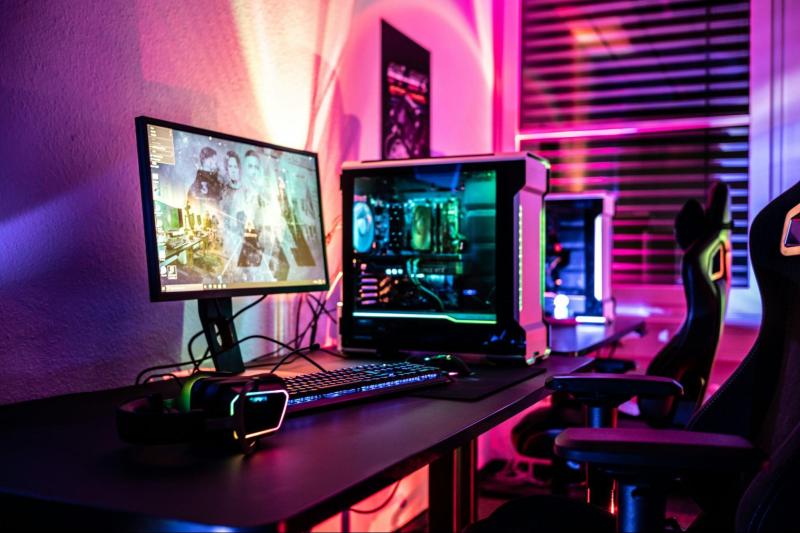
Gaming peripherals deserve as much attention as core components. Mechanical keyboards with customizable actuation points, high-DPI gaming mice with precise sensors, and headsets with spatial audio capabilities significantly impact gaming experiences. RGB lighting has evolved from simple aesthetics to synchronized ecosystem experiences that respond to in-game events.
Monitors represent another crucial investment. High refresh rate displays at 144Hz, 240Hz, or even 360Hz provide smoother gameplay and competitive advantages in fast-paced titles. Adaptive sync technologies like G-Sync and FreeSync eliminate screen tearing. HDR support enhances visual quality in supported games. Ultrawide and curved displays provide immersive experiences for single-player adventures.
Cooling solutions have advanced significantly. Liquid cooling systems offer superior thermal performance with lower noise levels compared to traditional air cooling. All-in-one liquid coolers simplify installation while delivering excellent results. Custom loop cooling allows enthusiasts to achieve maximum performance with unique aesthetics, though it requires more maintenance and expertise.
Powering the Next Generation of Gaming
PC gaming gear in 2025 represents the pinnacle of performance, customization, and innovation. Whether building from scratch or upgrading existing systems, gamers have access to unprecedented power and capabilities. The Windows 11 migration, combined with advancing game engines and new hardware generations, creates both challenges and opportunities.
Success in navigating this landscape requires understanding the interplay between components, recognizing where to invest for maximum impact, and timing purchases to balance performance needs against market dynamics. The future promises even more exciting developments as AI integration deepens, ray tracing becomes standard, and new form factors emerge. For those passionate about PC gaming, 2025 stands as a transformative year offering exceptional experiences for players at every level.
Post Your Ad Here
Comments