Revolutionizing Performance Reviews: The Ultimate Guide to 360 Degree Feedback
In the traditional corporate world, the "annual performance
review" often felt like a one-way street. An employee would sit across from
their manager, receive a top-down critique of their year’s work, and leave
feeling either relieved or misunderstood. However, the modern workplace is
collaborative, interconnected, and fast-paced. A single perspective is no
longer enough to capture the full picture of an individual's contribution.
Enter the 360 degree feedback model—a comprehensive approach to employee evaluations that
is transforming how organizations grow their talent.
What is 360 Degree Feedback?
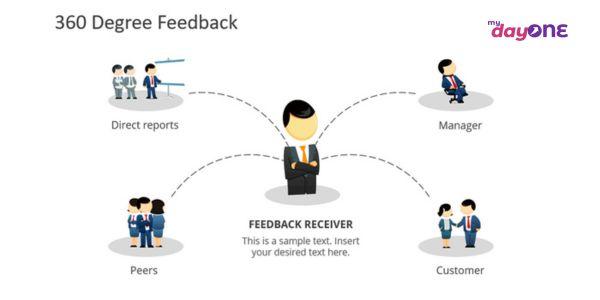
At its core, 360 degree feedback is a multi-rater assessment
process. Instead of relying solely on a supervisor’s opinion, this system
gathers confidential observations from an employee’s entire professional
circle. This typically includes:
·
Direct Supervisors: For strategic alignment and goal
tracking.
·
Peers: For insight into teamwork, reliability, and
day-to-day collaboration.
·
Direct Reports: To evaluate leadership style and
management effectiveness.
·
Self-Assessments: To gauge self-awareness and personal
career goals.
·
External Stakeholders: (Optional) Feedback from
clients or vendors for customer-facing roles.
By collecting data from all "360 degrees"
around an employee, organizations gain a holistic view of performance that a
single manager might miss.
Why Modern Companies are Moving Beyond Traditional
Reviews
The shift toward a 360 degree feedback tool isn't just a trend; it’s a
response to the complexity of modern work. In a flat organizational structure,
an employee might work more closely with a cross-functional peer than their own
boss.
1. Reducing Unconscious Bias
We all have biases. A single manager might favor an
employee based on personality (halo effect) or judge them harshly based on a
recent mistake (recency bias). By aggregating data from multiple sources, these
individual biases are smoothed out, leading to a fairer, more objective
evaluation.
2. Boosting Self-Awareness
One of the greatest benefits of this tool is uncovering
"blind spots." An executive might think they are an excellent
communicator, but if five direct reports mention they feel "out of the
loop," that executive now has a specific, actionable area for growth.
"Feedback is the breakfast of champions. In a
360-degree environment, that breakfast is a buffet of perspectives that fuels
long-term professional evolution."
3. Enhancing Team Dynamics
When peers provide feedback to one another, it fosters
a culture of accountability. It reminds team members that their actions impact
everyone, not just the person signing their paycheck.
Key Features of an Effective 360 Degree Feedback Tool
If you are looking to implement a tool in your
organization, not all software is created equal. To ensure high participation
and meaningful data, look for these essential features:
User-Friendly Interface
If the tool is clunky or takes an hour to navigate,
employees will rush through the survey. A good tool should be intuitive,
mobile-friendly, and quick to complete.
Strict Anonymity Protocols
Psychological safety is the backbone of honest
feedback. The tool must guarantee that responses are aggregated so that
individuals (especially direct reports) feel safe providing candid critiques
without fear of retaliation.
Actionable Analytics
Raw data is just noise without context. Leading 360 degree feedback platforms
provide visual reports, competency heatmaps, and year-over-year growth
comparisons to help HR teams identify talent gaps.
Best Practices for Implementing a 360 Degree Program
Simply buying a tool isn't enough; you need a strategy.
Poorly managed feedback can lead to resentment and confusion.
Define the Purpose
Is this for development (helping people grow) or appraisal (determining raises
and promotions)? Experts generally recommend using 360-degree tools primarily
for development. When money is on the line, people tend to "rate
high" for their friends, which skews the data.
Train Your Staff
Before launching the tool, explain why you are doing it. Teach
employees how to give constructive feedback. Instead of saying "You're a
bad leader," teach them to say "I would appreciate more clarity
during our weekly stand-ups."
Focus on the "Now What?"
The biggest mistake companies make is filing the report
away and never looking at it again. The true value of 360 degree feedback lies in the
follow-up. Every evaluation should end with a development plan and a
scheduled check-in.
"A 360-degree report without a follow-up plan
is just a list of opinions. It is the subsequent coaching and action that turns
data into a competitive advantage."
The ROI of Multi-Rater Assessments
Investing in a 360 degree feedback tool offers significant returns
for the bottom line. Organizations that prioritize feedback see:
·
Lower Turnover: Employees feel seen and valued when
their growth is prioritized.
·
Stronger Leadership Pipelines: It identifies
high-potential employees (HiPos) early.
·
Improved Culture: Transparency and open communication
become the "new normal."
Choosing the Right Path Forward
In the era of remote and hybrid work, staying connected
to how your team is performing is harder than ever. A 360 degree feedback system acts as the pulse of your
organization. It bridges the gap between how employees think they are
performing and how the world actually perceives them.
Key
Takeaways:
·
Holistic Insight: It gathers data from peers,
subordinates, and managers for a 360-degree view.
·
Bias Mitigation: Multiple perspectives create a fairer
assessment than traditional top-down reviews.
·
Growth-Focused: Its primary power lies in identifying
blind spots and professional development opportunities.
·
Anonymity is Non-Negotiable: To get honest data,
participants must feel their identity is protected.
Frequently Asked Questions (FAQ)
1. Is 360 degree feedback anonymous?
Yes, in almost all professional implementations, the
feedback is kept anonymous. Responses are typically aggregated (e.g.,
"Peer Average") so the recipient cannot pinpoint who said what. The
only exception is usually the direct supervisor’s feedback, which is often
identifiable.
2. How often should we conduct 360 degree evaluations?
While traditional reviews happen once a year, many
agile companies use 360 degree feedback every six months or at the end of major projects. However, doing
it too often can lead to "survey fatigue," so finding a balance is
key.
3. Can this tool be used for small teams?
Absolutely. While it’s popular in large corporations,
small teams benefit immensely from the increased communication. However, in
very small teams (3-4 people), maintaining true anonymity can be more
challenging, so the process should be handled with extra care.

Comments