The Strategic Power of Employee Training Programs: Investing in Growth, Not Expense
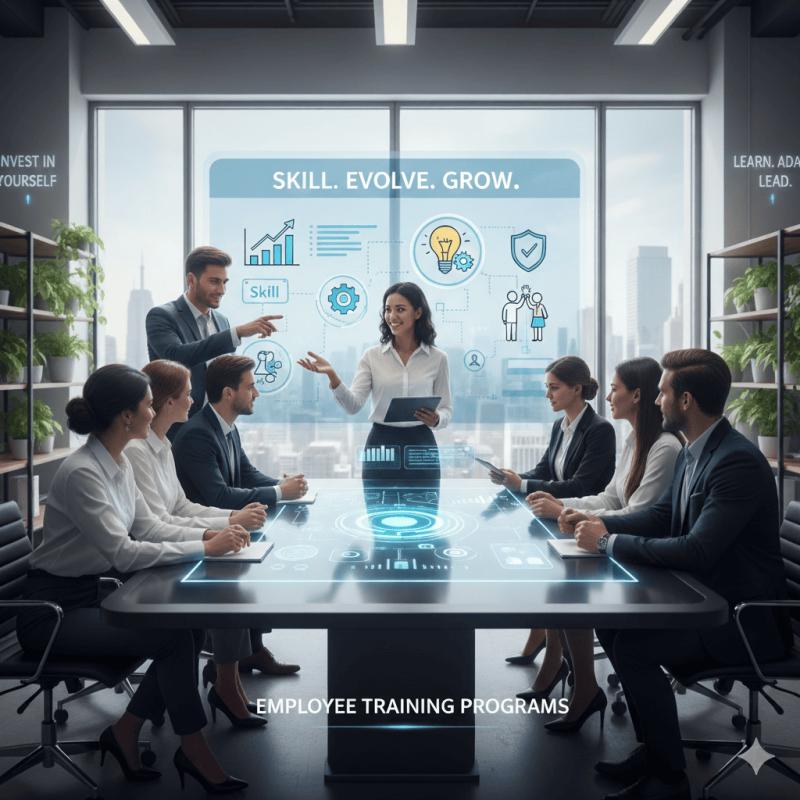
In today’s volatile business
landscape, the only constant is change. Technology evolves at warp speed,
market demands shift overnight, and competitors are always seeking an edge.
Faced with this reality, businesses often look to external solutions, complex
software, or aggressive marketing campaigns. However, the most powerful
competitive advantage often lies right within the office walls: your people.
Effective employee training programs are no longer a regulatory tick-box or an optional overhead; they
are the strategic bedrock of organizational agility and sustained success. When
viewed as an investment—a commitment to fostering talent and expertise—training
programs directly translate into higher productivity, superior service, and,
crucially, a motivated workforce. This post will explore how a robust approach
to continuous learning fuels both the bottom line and the well-being of your
employees, ensuring your business is not just keeping up, but leading the pack.
The
Strategic Imperative of Robust Employee Training Programs
Why do top-tier organizations
dedicate massive resources to continuous learning? The answer is simple: the
investment pays for itself manifold. Training is the mechanism that ensures
your team’s capabilities align precisely with your company’s strategic goals,
transforming potential into performance.
Bridging
the Skills Gap in a Dynamic Market
The skills required to succeed today
are often different from those needed five or even two years ago. From
mastering new AI tools and understanding evolving data privacy regulations to
developing advanced soft skills in leadership and collaboration, the competency
bar is constantly rising.
A well-designed employee training
program acts as a proactive defense against skill obsolescence. By focusing
on both upskilling (enhancing current skills) and reskilling (teaching entirely
new skills), companies ensure their workforce remains relevant and valuable.
This minimizes the need for costly and time-consuming external hiring every
time a new technology or market trend emerges.
Key Takeaway: Consistent, focused
training allows companies to build future-ready talent internally, drastically
reducing time-to-market for new initiatives and cutting recruitment costs.
The
Direct Link to Higher Retention and ROI
High employee turnover is a
notorious drain on resources, encompassing recruiting costs, onboarding time,
and lost productivity. When employees feel stagnant or undervalued, they look
elsewhere. Training changes that equation entirely.
Companies that prioritize learning
and development demonstrate a tangible commitment to their employees’
professional futures. This investment fosters loyalty and significantly boosts
retention rates. Furthermore, trained employees make fewer mistakes, work more
efficiently, and require less supervision, all of which directly enhance your
return on investment (ROI). In fact, studies consistently show a strong
correlation between per-employee training expenditure and higher profit
margins.
Catalyzing
Employee Motivation: The Hidden Benefit
While improved skills and reduced
risk are tangible benefits, one of the most transformative outcomes of
investing in employee training programs is the powerful effect they have
on Employee motivation. People want to feel competent, capable, and on a
path of advancement. Training fulfills these core psychological needs.
Creating
a Culture of Continuous Learning
When training is an occasional
event, it feels like a burden. When it is woven into the very fabric of the
company culture, it becomes an exciting opportunity. A culture of continuous
learning signals to employees that their growth is paramount, sparking a desire
to engage, share knowledge, and contribute more meaningfully.
This commitment fosters a
high-engagement environment where staff are not afraid to take on challenges
because they know the company will equip them with the tools and knowledge to
succeed. This sense of readiness dramatically improves initiative and problem-solving
skills across all levels of the organization.
Training
as a Form of Recognition and Investment
For many ambitious professionals,
the opportunity to learn new skills is more valuable than a small raise.
Providing high-quality, relevant training is a powerful non-monetary form of
recognition. It tells the employee, "We see your potential, and we are
willing to invest in you."
This gesture deeply impacts Employee
motivation and job satisfaction. Employees feel respected and valued,
leading to higher morale and a renewed commitment to the organization’s
mission. When staff feel like they are constantly improving, their enthusiasm
is infectious, contributing to a more dynamic and optimistic workplace.
"We often forget that the
biggest driver of motivation is not external reward, but internal conviction.
When employees are given the tools to excel, they build the conviction that
they can achieve great things, and that internal drive is priceless."
Boosting
Team Morale and Internal Collaboration
Training isn't always about solitary
learning; it's also about shared experiences. Team-based training, especially
around soft skills like communication, conflict resolution, or project
management methodologies, improves team cohesion.
When colleagues learn together, they
establish a common language and set of expectations, making internal
collaboration smoother and more efficient. This collective upskilling elevates
the overall performance of departments, making work less frustrating and more
rewarding—a direct boost to Employee motivation.
Designing
Effective Employee Training Programs: From Theory to Practice
Simply putting employees in a room
for eight hours with a presentation does not constitute effective training.
Modern, impactful employee training programs must be strategically
designed, engaging, and relevant to both the individual and the business.
Types
of Training: A Blended Approach
A successful learning strategy
employs a blend of modalities to meet diverse needs:
- Onboarding:
The foundational training for new hires. This must cover not just
technical skills, but also company culture, values, and compliance basics.
- Compliance and Regulatory Training: Essential for mitigating legal risk. This should be
frequent, concise, and tracked diligently.
- Technical Upskilling & Reskilling: Focused training on new software, specific industry
tools, or emerging technical skills necessary for job evolution.
- Leadership and Professional Development: Crucial for retaining high-potential employees. This
includes mentorship, coaching, and training in communication, strategic
thinking, and emotional intelligence.
Key
Components for Maximum Impact
To ensure your employee training
programs resonate and drive real behavioral change, incorporate these
components:
- Interactivity and Engagement: Use simulations, gamification, scenario-based
learning, and peer-to-peer teaching. Passive listening rarely leads to
retention.
- Immediate Application: Training should provide opportunities to use the
learned skills immediately in a safe environment. Follow-up projects and
assignments that integrate the new knowledge into daily work are vital.
- Reinforcement and Spaced Repetition: The "forgetting curve" is real. Follow up initial
training with short, digestible refreshers (microlearning) over a period
of weeks to cement the knowledge.
- Feedback Loops:
Collect data on training effectiveness. Did the training meet its
objective? Did performance improve? Use this data to continually refine
your programs.
Conclusion
The decision to invest in
comprehensive employee training programs is perhaps the most crucial
long-term investment a company can make. It is the catalyst that transforms a
group of individuals into a unified, high-performing powerhouse. By proactively
closing skills gaps, fostering a deeply engaged culture, and using education as
a powerful tool for Employee motivation, businesses do more than just
improve compliance—they future-proof their operations.
The return on this investment is
clear: highly capable employees, lower attrition, stronger internal controls,
and a competitive edge that cannot be easily replicated. Make learning a core
value, and watch your people, and your pipeline, thrive.
Frequently
Asked Questions (FAQ)
What
is the ideal frequency for employee training?
The ideal frequency is continuous.
While intensive training for complex topics might be annual or quarterly, basic
compliance, software updates, and soft-skill refreshers should be incorporated
into the weekly or monthly workflow using microlearning modules (short videos,
quizzes) to promote continuous skill development and retention.
How
do employee training programs directly impact revenue?
They impact revenue in several ways:
1) Increased Efficiency: Trained employees complete tasks faster with
fewer errors, lowering operating costs. 2) Innovation: Skilled teams are
better equipped to develop new products or services. 3) Customer
Satisfaction: Training in customer service and product knowledge leads to
better client interactions, higher sales, and stronger retention.
Should
we focus more on technical training or soft skills?
A balanced approach is best. Technical skills are the 'what' (the hard requirements of the job), but soft skills (communication, collaboration, leadership) are the 'how'—they determine how effectively the technical skills are deployed. Neglecting soft skills can cripple team productivity, even if technical expertise is high


Comments