Key Features of a Stretcher Elevator for Hospitals and Healthcare Buildings
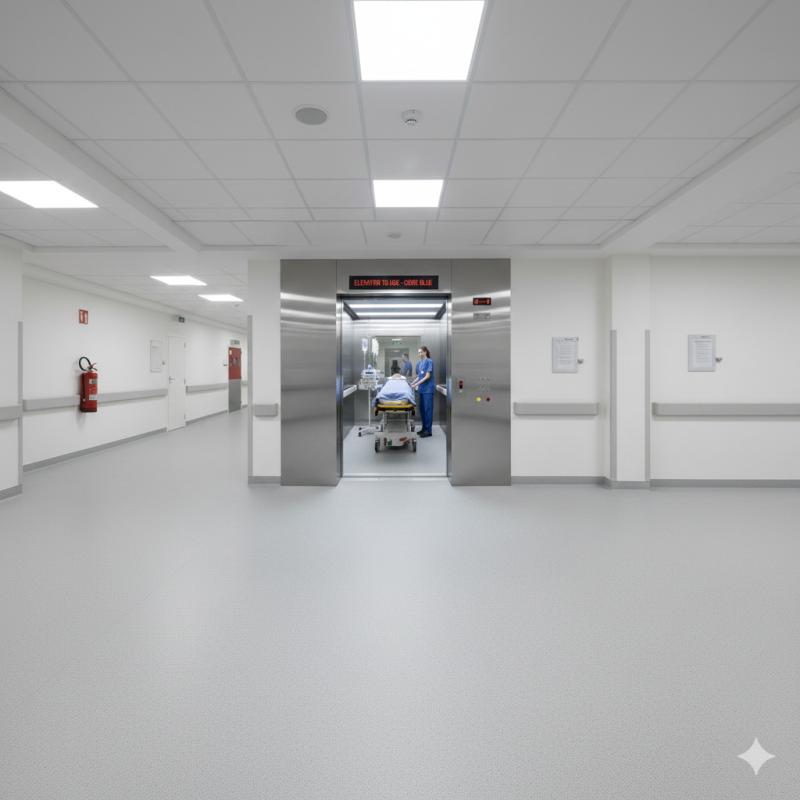
In hospitals and healthcare facilities, stretcher elevators must have facility and act as a critical part of patient care infrastructure. Among all lift types, stretcher elevators play a vital role in ensuring safe, fast, and smooth movement of patients, medical staff, and emergency equipment between floors. Designed specifically for healthcare environments, stretcher elevators must meet strict functional, safety, and hygiene standards.

Here are the key features that define a reliable stretcher elevator for hospitals and medical buildings.
Spacious Cabin Design
A stretcher elevator is designed to comfortably accommodate a patient stretcher along with medical attendants. The cabin is wider and deeper than standard passenger lifts, allowing easy maneuvering of stretchers, wheelchairs, oxygen cylinders, and emergency trolleys without congestion. Adequate space ensures smooth patient transfer, especially during emergencies.
High Load Capacity
Healthcare elevators are built to carry heavier loads than residential or standard passenger lifts. A stretcher elevator typically supports higher weight capacity to safely transport patients, attendants, and medical equipment together. This ensures stability, safety, and long-term durability even with frequent usage.
Smooth and Jerk-Free Movement
One of the most important features of a stretcher elevator is smooth start and stop operation. Sudden jerks or vibrations can cause discomfort or risk to patients, especially those in critical condition. Advanced drive systems ensure quiet, stable, and seamless travel between floors.
Wide and Fast-Opening Doors
Stretcher elevators are equipped with wider door openings to allow easy entry and exit of stretchers. Automatic sliding doors with quick response time reduce delays during emergency situations. Door sensors ensure safe operation and prevent accidental closure when movement is detected.
Emergency Power Backup
Hospitals cannot afford elevator downtime. Stretcher elevators are integrated with emergency power backup systems such as Automatic Rescue Devices (ARD) or generator connectivity. In case of power failure, the lift safely moves to the nearest floor, ensuring uninterrupted patient transport.
Easy-to-Clean and Hygienic Interiors
Healthcare environments demand high hygiene standards. Stretcher elevator cabins are designed using materials that are easy to clean, corrosion-resistant, and bacteria-resistant. Stainless steel finishes, smooth surfaces, and minimal joints help maintain cleanliness and reduce infection risks.
User-Friendly Control Panels
Control panels in stretcher elevators are positioned for easy access by medical staff. Large, clear buttons, floor indicators, and emergency controls allow quick operation even in high-pressure situations. Some systems also include priority control to override regular calls during emergencies.
Advanced Safety Systems
Safety is non-negotiable in healthcare lifts. Key safety features include overload protection, door interlocks, emergency stop buttons, alarm systems, and communication devices. These features ensure passenger safety and immediate response in case of unexpected issues.
High-Speed Performance with Precision Leveling
Stretcher elevators are designed to travel at optimal speeds to reduce patient transfer time without compromising safety. Precision leveling ensures the cabin aligns perfectly with the floor, preventing any gap that could make stretcher movement difficult.
Compliance with Healthcare Standards
A good stretcher elevator complies with medical building codes and elevator safety standards. Proper ventilation, fire-rated doors, and reliable braking systems ensure the lift performs effectively under demanding hospital conditions.
Durability for Continuous Use
Hospitals operate 24/7, and elevators experience constant use. Stretcher elevators are built with heavy-duty components to withstand continuous operation while maintaining performance and reliability over time.
Customizable for Hospital Layouts
Each hospital has unique structural and operational requirements. Modern stretcher elevators can be customized in size, door configuration, speed, and control features to fit the building design and workflow efficiently.
Conclusion
A stretcher elevator is an essential lifeline within hospitals and healthcare buildings. If you are into hospital business or a personal clinic with 3-4 floors, contact best elevator company in Delhi for consultation, installation and commissioning. From spacious cabins and smooth operation to advanced safety systems and hygienic interiors, every feature is designed to support patient care and emergency response. Choosing the right stretcher elevator ensures faster patient movement, improved safety, and smoother hospital operations making it a critical investment for any healthcare facility. You can also check our modern Car Elevator to make convenient parking at your hospital space.
Post Your Ad Here
Comments