Hidden Himalayan Villages Only Riders Can Reach
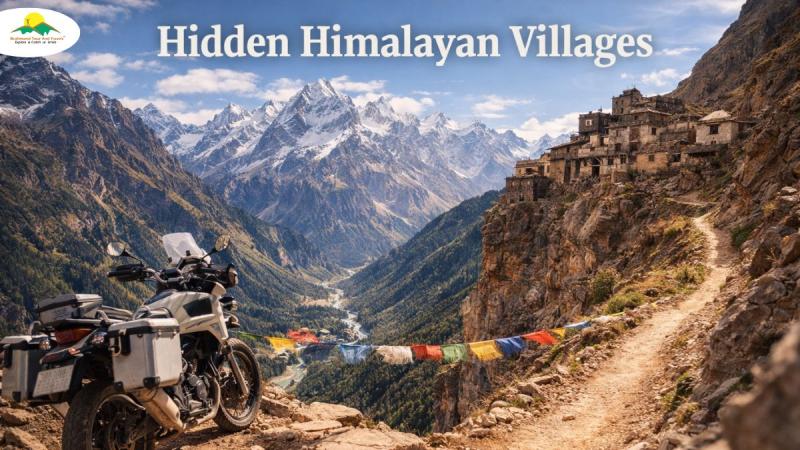
When most travelers think of the Himalayas, they imagine the bustling markets of Leh or the paragliding hills of Manali. However, for the serious rider, the true magic lies in the places where the asphalt ends and the "hidden" India begins. These are villages tucked away in deep valleys or perched on high-altitude cliffs that large tour buses simply cannot navigate.
If you want to experience a side of the mountains that remains untouched by mass tourism, you need to trade four wheels for two.
The Gateway to the Unseen: Why Bikes Rule the North
The narrow, winding tracks of the high Himalayas often feature "cliff-hanger" roads where a single car barely fits. On a motorcycle, these obstacles become part of the thrill. A bike allows you to stop at a moment's notice when you spot a tiny trail leading to a cluster of stone houses that aren't even on Google Maps.
Joining a professional motorbike tour india is often the best way to find these spots. While a solo rider might miss the turn-off, experienced guides have spent years building relationships with local villagers, ensuring you get a warm "Julley" (greeting) and a hot cup of butter tea when you arrive.
1. Malana: The Hermit Village of Himachal
Malana is perhaps the most famous "hidden" village, known for its unique democratic system that is said to be one of the oldest in the world.
The Access: While a road now goes closer than it used to, the final approach is a steep, rocky path best handled by an adventure bike like the Royal Enfield Himalayan.
The Rule: You are a guest here, but you cannot touch the walls or the people. This isolation has kept their culture perfectly preserved for centuries.
2. Chitkul: The Last Village on the Border
Located in the Sangla Valley, Chitkul is the final inhabited settlement before the Indo-Tibetan border.
The Ride: The road leading here is carved directly into the granite mountainside. It is a terrifyingly beautiful stretch of road that demands total concentration.
The Reward: Reaching the "Last Dhaba of Hindustan" for a plate of steaming noodles while looking out at the turquoise Baspa River.
3. Komic: Riding to the Edge of the World
Sitting at an elevation of 15,027 feet, Komic is one of the highest villages in the world connected by a motorable road.
The Experience: The air is thin, and the landscape is a stark, lunar desert. Most travelers skip this for the main town of Kaza, but riders who make the climb are rewarded with a 360-degree view of the Spiti Valley that feels like standing on the roof of the planet.
4. Gue: The Village of the Mummy
Deep in the Spiti Valley lies Gue, a tiny hamlet that houses a naturally preserved 500-year-old monk mummy.
The Access: It requires a significant detour off the main highway onto a dusty, winding track that discourages casual tourists.
The Highlight: Seeing the mummy-which was uncovered after an earthquake-sitting in a small glass chamber overlooking the silent, brown mountains.
Seasonal Planning: Best Time to Ride in the Himalayas
Timing is everything when exploring these remote settlements. Because these villages sit at extreme altitudes, the Best Time to Ride in the Himalayas is a narrow window between late May and mid-September. During these months, the heavy winter snow has melted enough to clear the high passes like Rohtang, Kunzum, and Khardung La.
If you visit in June, you will witness massive walls of snow lining the roads, while a September ride offers crystal-clear blue skies and the golden hues of autumn. Riding outside of this window is often impossible, as heavy snowfall can block access to villages for months at a time, leaving them completely cut off from the outside world.
Respecting Remote Traditions and Etiquette
When you visit these isolated pockets, you are stepping back in time. It is vital for motorcycle tourists to practice responsible tourism. Many of these villages have survived for centuries by following strict social codes. Always ask for permission before taking photographs of the locals or their religious shrines.
Furthermore, because resources are scarce at 14,000 feet, be mindful of your consumption. Water is often piped in from glacial streams, and electricity can be intermittent. Leaving no trace is the golden rule; carry your plastic waste back to the larger towns where waste management systems are in place. By showing respect, you ensure these paths remain open for future riders.
Trusting the Experts: International Support
Because these villages are remote, safety is paramount. The best international tour operators in india understand that a mechanical failure in a place like Gue isn't just an inconvenience-it’s a major logistical challenge. These companies provide satellite support in areas where there is zero cell service and carry oxygen supplies for riders struggling with the 15,000-foot altitudes of Komic or Langza. They also employ expert mechanics who can perform "field surgery" on a bike using only basic tools, keeping the expedition moving through even the harshest terrain.
Why You Should Go Now
As India invests more in infrastructure, many of these "hidden" villages are becoming easier to reach. The "adventure" of the dirt track is slowly being replaced by smooth tarmac and modern bridges. For the true biker, the time to go is now-while the water crossings are still deep, the roads are still narrow, and the villages still feel like they belong to a different century. The window to experience the raw, unfiltered Himalayas is shrinking, making this the perfect year to plan your journey.
Post Your Ad Here
Comments