Future-ready and Fully Electric. Meet the Nissan Leaf
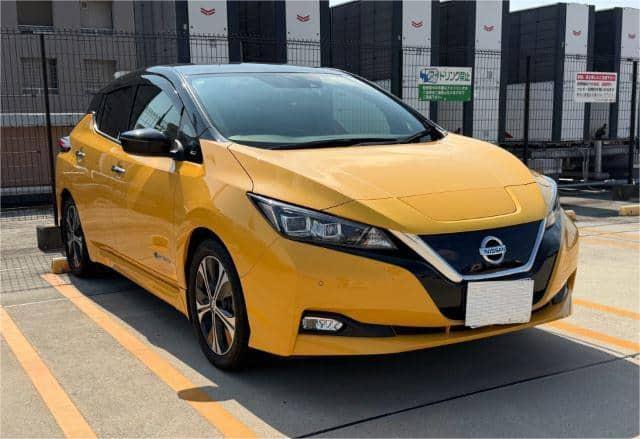
The Nissan Leaf is an early electric vehicle pioneer, has demonstrated the viability of clean driving prior to the emergence of brands like Tesla. This article reviews its evolution, daily performance, and purchasing considerations, highlighting its strengths and weaknesses for those transitioning from hybrids to electric vehicles. Ideal for practical and budget-conscious buyers, the Leaf offers an impressive range, low running costs, and leasing options, making it a sustainable choice for environmentally-conscious drivers.
History of Nissan Leaf
The Nissan Leaf has evolved significantly since its launch, becoming a well-known electric vehicle (EV). The 2012 model set a precedent for mainstream EVs with its practicality, smooth ride, and zero emissions, appealing to environmentally-conscious consumers. The 2013 model improved upon this with better battery efficiency, increased cargo space, and faster charging. The 2018 model marked a major transformation, featuring a bold design, advanced technology, and an extended driving range, making electric driving more exciting and accessible. Overall, the Nissan Leaf exemplifies that choosing electric does not sacrifice comfort, style, or performance, but rather encourages smarter, cleaner, and more confident driving into the future.
2024 - 2025 Nissan Leaf
The 2024 and 2025 Nissan Leaf are budget-friendly electric cars, available in S and SV Plus trims. The 2024 model features a 40 kWh battery for a range of 149 miles on the S trim and a 60 kWh battery for a range of 215 miles on the SV Plus, with power outputs of 147 hp and 214 hp, respectively. Both trims include standard features like an 8.0-inch touchscreen, Apple CarPlay, Android Auto, and Nissan's Safety Shield 360. The 2025 model remains largely unchanged, continuing to offer reliable performance and value, making them suitable for commuters and families looking to adopt electric vehicles without breaking the bank.
2026 Nissan Leaf
The 2026 Nissan Leaf represents a significant evolution for Nissan's electric vehicle, transitioning from a traditional hatchback to a bold crossover SUV. This redesign enhances aesthetics and functionality with a sportier stance, increased ground clearance, and improved road presence. It will feature an upgraded 75 kWh battery with an estimated range of up to 300 miles, supporting fast charging and wider compatibility with charging networks. The interior boasts modern amenities, including dual digital displays and Google-integrated infotainment, along with Nissan's Zero-Gravity seating for added comfort. Overall, the 2026 Leaf aims to redefine the experience of electric driving.
Trims Levels and Features
Owners and experts agree that the Nissan Leaf offers excellent value, comfort, and simplicity, making it a great introduction to electric vehicles (EVs). It is praised for its smooth ride, low running costs, and quiet cabin. However, its range and fast-charging capabilities are noted as less competitive compared to newer EVs. Buyers typically choose between the Leaf S, which has a 40 kWh battery and a range of up to 149 miles, and the Leaf SV Plus, which features a 60 kWh battery and an estimated 212-mile range, along with additional comforts and technologies. The S model is ideal for affordability and short commutes, while the SV Plus caters to those needing longer distances and more comfort.
Battery, Range, and Charging
Whenever inquiring about the Nissan Leaf, two battery options arise: the 40-kWh and 60-kWh packs. The 40-kWh version offers an EPA-estimated range of up to 149 miles, suitable for daily commutes, while the 60-kWh version provides around 212 miles, ideal for longer trips. Charging options include Level 1 (120 V), suitable for very light driving; Level 2 (240 V), recommended for daily use; and DC fast charging, allowing rapid top-ups in 40–60 minutes. Battery life is a concern, as like all EV batteries, Leaf batteries gradually lose capacity. Replacement costs vary: older 24-kWh packs can cost $3,000–$5,000, mid-generation 30-kWh packs range from $3,500–$8,000, newer 40-kWh packs go for $6,500–$7,500, and 62-kWh Leaf Plus batteries can exceed $10,000. Many Leaf owners avoid full replacements with careful charging habits, making it a predictable long-term investment.
Finally
The Nissan Leaf is an affordable and practical electric vehicle (EV) known for its low operating costs and user-friendly features, ideal for city commuting. It lacks the driving range and fast-charging capabilities of newer models, making it less suitable for those requiring longer distances or quicker charging. Overall, it remains a reliable option for everyday use and is particularly appealing to cost-conscious drivers. You can now check the Nissan stock list for available models and purchase parts here.
Post Your Ad Here